Showing posts with label Military Chaplaincy. Show all posts

Monday, October 18, 2021

My Interview With Inside Your Head Podcast on Grief and Loss

In my yesterday (Oct 17) I referenced an interview I did with an English-based podcast,  Inside Your Head, that's dedicated to mental health.    The host, Henry Hyde, is mostly interested in psychology and secular definitions of what constitutes positive mental wellbeing, but he was interested in my story of how faith and religion helped my late wife Kay and I get through the difficult two years of her experience of cancer and my own experience of grief and loss.  

The interview also talks about my own work as a military chaplain, which Henry was interested in hearing about.  

Here's the link for those who are interested.

M+


Tuesday, May 11, 2021

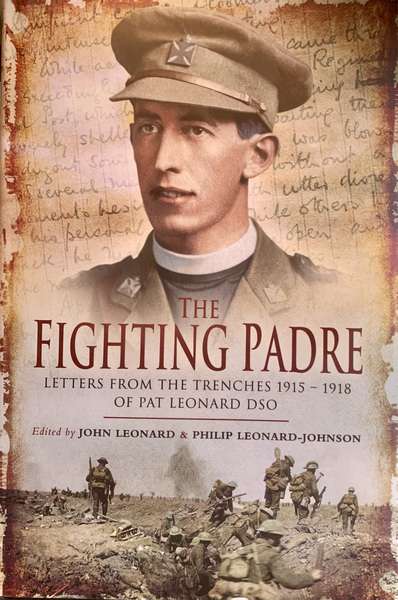
Books on the Go: The Fighting Padre, the Great War Letters of Pat Leonard

 I made the mistake of browsing the excellent Pen and Sword website recently and in due course three books arrived in the post (trans-Atlantic mail has improved remarkably since the start of Covid) including this collection of letters from a British infantry chaplain of the Great War, Pat Leonard.


Leonard was a young Anglican clergyman whose youth and vigorous physique (he was an accomplished boxer, hence his nickname “The Fighting Padre”) allowed him to thrive in the trenches when older clergymen quickly broke down under the physical demands of frontline service.    He was attached to a British Army infantry brigade, and later in the war transferred to the Royal Flying Corps, supporting a number of different squadrons and aerodromes and earning a respectable amount of flying time in the observer’s seat.

Chaplain memoirs and letters are a fairly niche subject.   For the clerical reader, it’s always interesting to see how frontline padres tried to support the men under their care, often travelling long distances between units to bury the dead, offer the sacraments, counsel and encourage.  For the general reader, they offer a fascinating look at daily life in a war zone, in and behind the front lines, and glimpses of the culture of the men they served.  Chaplains were almost all civilians before the war and thus lacked much military knowledge, but they were observant, intelligent and articulate, and so they offer a great “fish out of water” look at the war around them.

I wanted to read this especially because Leonard was friends with a chaplain hero of mine, Philip (Tubby) Clayton, who ran “TocH” or Talbot House, a soldier’s rest centre in Poperinghe, a town within the Ypres Salient.  Tubby’s picture is on the left of this blog’s header - his own memoir, “Tales of Talbot House”, is a brilliant book in is own right.  

I’ve just started and haven’t met Tubby or any aircraft, but have found Leonard an engaging and friendly guide to life in the trenches.  I've just finished a difficult account of him having to break the news to a soldier that a court martial had sentenced him to death for murder, and spending the night with him before his execution - a remarkably common account in Great War chaplain memoirs, I find.  Leonard praises the man for his courage in turning to God and facing the firing party, but the story interrupts the generally cheery tone of his letters and for a moment we see the cost that this young men of faith had to bear.  I doubt I could have born such a cost for any length of time.  Huge respect for these Great War padres.

Cheers and blessings,

MP+


Sunday, May 24, 2020

Coming to the End


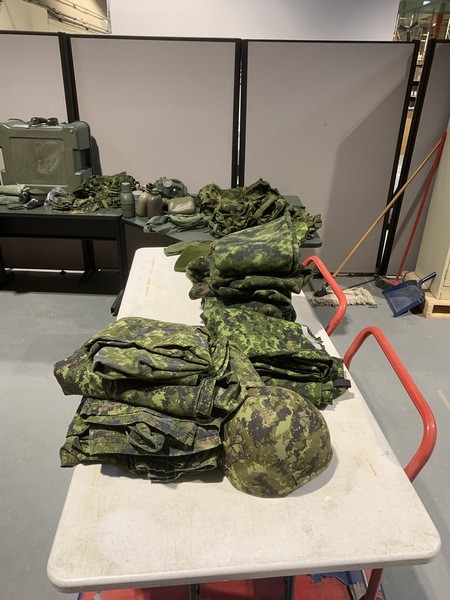
Last week I went to Base Supply and turned in the last of my issued kit.   The stuff in the photo is part of it.   The rucksack, sleeping bags, and winter warfare kit all got turned in last fall.

 This week I will be completing the last bits of paperwork before I retire from the Canadian Armed Forces on 2 June.  It’s been a great career if relatively short (14 years) and not terribly exciting (no deployments, though the two week trip to Australia in 2019 was nice).  It has however been an immensely satisfying career that allowed me to work with the Army, the Air Force, and Military Personnel and Generation (training systems).   The Canadian Armed Forces paid me for two years to be a graduate student, and to work thereafter on chaplain training and to be reassured by the devotion and competence of the next generation of chaplains.

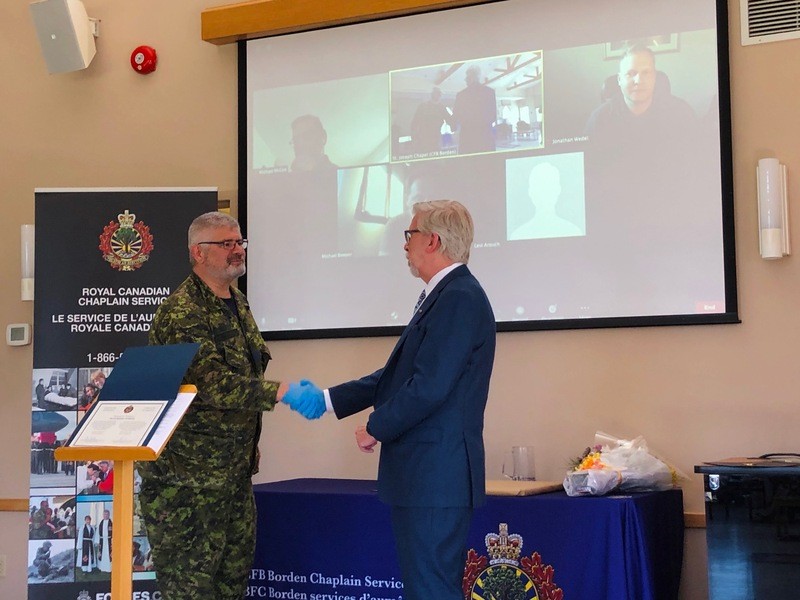
It was also immensely gratifying to shake hands (note precautionary Covid19 gloves) with my dear friend and boss, Lt. Col. Gordon Mintz, an Anglican colleague and the best man at my wedding last June.  Gord and I were roommates during Basic Training at Borden 12 years ago, and we’ve both come a long way since.

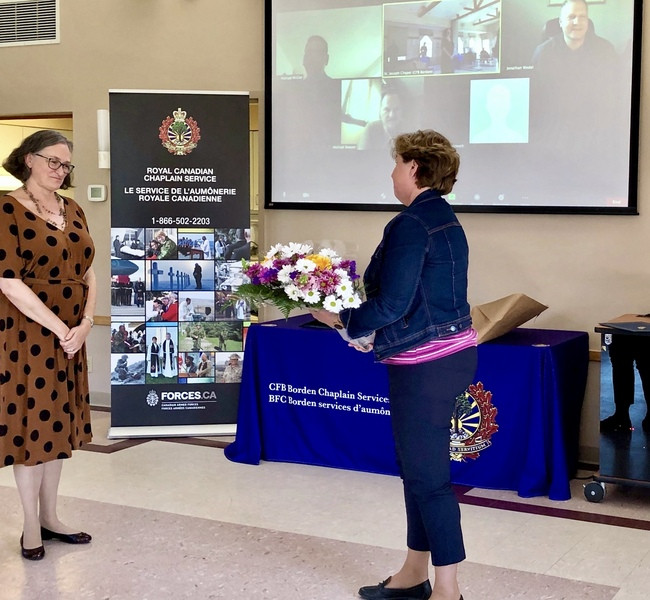
It was equally gratifying to see my lovely bride, Joy, on the left, recognized for her brief but supportive tenure as an army wife.  Here she receives a bouquet of flowers from Gord’s wife Margaret.  

Finally, the team of CFB Borden chaplains that I’ve had the pleasure to lead this last year were incredibly kind and gave me a very heartfelt sendoff.

When I started this blog, I had more of a focus on military chaplaincy and over the years I’ve had colleagues tell me that they read this blog before they started their careers.   That also is gratifying.   I may have one more post on the subject of what I learned during my career, but I’ll save that for another day.

MP+


When

Friday, July 5, 2019

The Chaplain Kit: An Online Resource for Chaplains

Hello:

I am posting a link to a US website called The Chaplain Kit, an online resource centre for military chaplaincy in an American context.

Some interesting resources including a guide to chaplains as depicted in films and movies.

I have a soft spot for this photo found on the site, as the reference to Hattiesburg in the caption gives it away as being taken in Camp Shelby, Mississippi.   My late wife Kay grew up in Hattiesburg and worked in the PX there as a teenager.  Not sure how that's relevant to anything, but there you go.


Blessings,  MP+

Tuesday, November 13, 2018

Canadian Armed Forces Chaplain General's Prayer, Remembrance Day, 2018


We gather today on this hallowed ground on which is interred Canada’s Unknown Soldier, to remember all those who made the ultimate sacrifice. On the Centennial of the signing of the Armistice, we honour those whose names we know, and those whose names are known to God alone.
 
 
For those of you who wish to join me in prayer,
in the respect of our freedom of religion, I invite you to turn your hearts to the God of your understanding or to take this moment in personal reflection.
 
 
Please join me in prayer or in a moment of personal reflection.
 
 
(Choir starts humming I vow to Thee my country until the end of the prayer)
 
Loving God,
We give thanks for those who have given their lives in the service of justice and peace. 
 
 
We know that peace is more than tolerating one another, it is recognizing ourselves in others, and realizing that we are all on the path of life together. 
 
Lord of peace and justice, enable us to lay down our own weapons of exclusion, intolerance, hatred, and strife. Make us instruments of your peace that we may seek reconciliation in our world. 
 
 
As we remember those who returned from past wars with injuries, both visible and invisible, inspire us to care for all military personnel who are wounded in body, mind, and soul.
 
 
Help us to have compassion for our brothers and sisters, who, for reasons known and unknown, have considered or attempted suicide.  May we be compassionate for the families and friends impacted by these tragedies.


We remember the families, friends, comrades, and caregivers of those who, in time of war and peace, have paid the ultimate sacrifice to restore peace. Be their refuge and strength in moments of grief


We pray for all military members who are deployed around the world in dedication to the welfare of humanity, and the preservation of justice and peace. Inspire them to give their best in the cause of freedom.
 
 
We pray for our Sovereign Lady, Elizabeth II, Queen of Canada, for the Governor General, the Prime Minister, our Chief of Defence Staff and all in authority: that they may have the wisdom, and compassion to meet the call of their offices.


On this Centennial year of the Armistice, we remember and pay respects to our fallen by answering their call to peace.


In sure and certain hope, we pray. 
Amen.
 
Nous sommes réunis aujourd’hui en ce lieu sacré où repose en paix le soldat canadien inconnu, pour nous rappeler de tous ceux et celles qui ont fait l’ultime sacrifice. En ce jour du centenaire de la signature de l’armistice, nous voulons rendre hommage à ceux et celles dont nous connaissons les noms et ceux et celles dont les noms sont connus de Dieu seul.
 
Dans le respect des croyances individuelles, j’invite toutes les personnes qui veulent se joindre à moi dans la prière à tourner leur cœur vers le dieu de leur foi ou à prendre un moment de réflexion personnelle.
 
 
Je vous invite à vous joindre à moi dans la prière ou prendre un moment de réflexion personnelle.
 
(La chorale commence à fredonner I vow to Thee my country jusqu’à la fin de la prière)
 
Dieu d’amour,
Nous te rendons grâce pour ceux et celles qui ont donné leur vie au service de la justice et de la paix.
 
 
Nous savons que la paix c’est plus que tolérer l’autre; c’est se reconnaître dans les autres, c’est réaliser que nous sommes tous ensemble sur le chemin de la vie.
 
Dieu de justice et de paix, aide-nous à laisser tomber nos propres armes d’exclusion, d’intolérance, de haine et de conflits. Fais de nous des instruments de ta paix afin d’apporter la réconciliation dans le monde.  
 
Alors que nous nous rappelons ceux et celles qui ont été marqués par des blessures, visibles ou invisibles, inspire-nous de prendre soin de tous nos militaires qui ont été blessés dans leur corps, leur esprit et leur âme.
 
Aide-nous à être plein de compassion à l’égard de nos frères et sœurs qui, pour des raisons connues ou inconnues, ont envisagé ou tenté de se suicider.  Rends-nous sensible à la souffrance des familles et des amis touchés par ces tragédies.


Nous nous souvenons des familles, des amis, des collègues et du personnel soignant de ceux et celles qui, en temps de guerre et de paix, ont fait le sacrifice de leur vie pour restaurer la paix. Sois leur soutien et leur force dans les moments de deuil.
 
Nous prions pour tous les militaires déployés autour du monde, dévoués au mieux-être de l’humanité et à la promotion de la justice et de la paix. Inspire-leur de donner le meilleur d’eux-mêmes pour la cause de la liberté.
 
Nous prions pour notre souveraine, Sa Majesté Elizabeth II, Reine du Canada; pour la gouverneure générale, le premier ministre, le chef d’état-major de la Défense et toutes les personnes en autorité; que la sagesse et la compassion les accompagnent dans l’exercice de leurs fonctions.


À l’occasion de cette année du centenaire de l’armistice, nous nous souvenons et rendons hommage à nos disparus en répondant à leur appel à bâtir la paix.
 
Dans cette espérance, nous te prions.
Amen.


Guy Chapdelaine OMM, CD, QHC

Major-General / Major-général

Chaplain General Canadian Armed Forces /  Aumônier général des Forces armées canadiennes

Monday, November 12, 2018

Faithful Till The End: Canadian Military Chaplains in the Last Days of the Great War


No Canadian scholar knows the history of Canadian military chaplaincy in the Great War better than my friend, Dr. Duff Crerar.   In these notes which Duff kindly shared with myself and CAF chaplain colleagues, Duff describes the ministry of Canadian padres in the last months of the war and on to demobilization.   It is a harrowing story of chaplains pouring themselves into their work and in some cases working themselves to death.  My thanks to Duff for telling their stories.  MP+
The Pursuit to Mons and the Padres

The Canadians captured Cambrai on 9 October, having again surprised the Germans by a night attack. Already attempting to make a general withdrawal, the enemy gave way before they could blow all the critical bridges. The Second Division’s 20th and 21st Battalions saw off a surprise counter-attack by German tanks, but it was clear that the Germans were making another retreat.

The Canadians had broken through at the critical point of the Siegfried line.  Valenciennes was the next fallback for an army rapidly running out of men. Over twenty German divisions were disintegrating because they could not be reinforced. Crown Prince Rupprecht doubted that his troops would hold to December.

The chase was one. Canadians would bombard a German position, patrols would investigate, and report the Germans gone or in the process of leaving. Or, there would be a hurricane of machine gun fire, shrapnel and high explosive. Currie ordered his troops to proceed with caution, especially as the trail of sabotage and scorched earth combined with heavy rain to make casualty evacuation almost impossible. The Allies were outrunning their supply lines. Canadian soldiers, enjoying the experience of being greeted as liberators, were pausing for impromptu civilian hospitality. Belgians were handing out much of their precious hoarded food, which meant the Canadians had to rush some of their own rations forward to feed the over one hundred thousand liberated civilians.

The Germans had not all given up. Postwar critics who charged Currie with needless casualties in the last week of the war were oblivious or unwilling to acknowledge that German machine guns and artillery continued to oppose the advance, and that in many sectors local counter-attacks required continued operations. The Germans gave every intention to fight for Valenciennes, flooding the defences along the Canal de l’Escaut, with five –understrength – divisions guarding the gateway, Mount Houy. Rebuffed when he offered his artillery assets to assist the British, Currie grimly knew (after the British failed to take Mount Houy for the third time) that his troops would have to take the hill, and ruffled more than a few British senior officers by refusing to throw his troops in without full preparations. He and Andrew McNaughton, his gunnery expert, honoured their vow to purchase victory with shells, not men.

On 1 November, the all-Canadian attack blasted the Germans out of Mount Houy: the shattered survivors surrendered to a mop-up attack by the 10th Canadian Brigade. The 12th Brigade entered Valenciennes, and on 3 November the city was declared free of German defenders.

Canadian troops in Valenciennes after its capture on 3 November, 1918.

By then, General Ludendorff, de facto commander in chief of the German Army, had been dismissed. Attacks by Australians and Canadians on 4 November struggled to mop up the snipers and machine gunners left behind to cover the all-out retreat. The casualty rate plummeted, but Canadians felt them even more deeply as it was clear that war was almost over. It is a terrible thing to die at the end of a war. Most important, both to Currie and his Army Commander, General Horne, was the reality that German soldiers were not all giving up, but often continuing to cause casualties in pockets of determined resistance. The Germans gave every indication they would fight for Mons. Currie’s plan to encircle it and break in simultaneously fell afoul of such isolated pockets of the enemy. On 10 November, a company of the RCRs and another of the 42nd Battalion moved in to clear out Mons. After causing a few last minutes casualties, the Germans melted into the mist. At eleven, the Armistice took effect. Already a riotous celebration was brewing up in the city centre. It was St. Martin of Tours day, the patron saint of chaplains.

Canadian chaplains had kept pace with the troops, though 3rd Division Senior Chaplain Louis Moffit reported that holding services and large gatherings fell by the wayside in the constant shifting and shelling. Reports preserved from this period in Chaplain Service records are few. Another half-dozen chaplains were wounded by shells. Father T. McCarthy had been with the 7th Brigade constantly, and was reported among the first troops entering Mons.  Conditions had been brutal, and more than one padre could not express what they had seen in genteel tones. A.E. Andrew, an Anglican chaplain to the Royal Canadian Regiment, recently awarded the Military Cross for his work with casualties (including stepping in when most of the officers had been killed or wounded) in October, let off steam during the celebrations that followed, making some frank comments about the high command which got into the Canada Gazette. The Assistant Director of the Service, A.H. McGreer, noted “he used language which is commonly employed by officers of all ranks, and I am sure he never dreamed of all his statements being reported… If it comes to a court martial they can’t convict him, I’m sure of that… Andrew got the MC the other day…” Word of Andrew’s remarks at Cambrai, when told that he did not belong up front – “if the men can go, I can” – had percolated through the Division. After they had cooled down, the authorities let him off with a warning, and a transfer.  


W. B. Carleton, a priest from Metcalfe, Ontario, received a surprise when the French Army conferred the Croix de Guerre for his intrepid work with the 3rd Division Artillery. Carleton would return as a Senior Chaplain to the Canadian Army in 1940.

Other chaplains were showing signs of strain as the pressure of operations turned into the march to occupation across the Rhine and restlessness to get home. Sickness, nervousness and other disorders were reported by several padres: chronic bronchitis, a sign of exhaustion, and hard to treat in the pre-anti-biotic era. His Brigade reduced to a skeleton by casualties, B.J. Murdoch was returned to Britain on sick leave, exhausted and insomniac. He was given early discharge and returned to New Brunswick, though the psychological scars of being under fire relentlessly in the last 100 days would haunt him for the rest of his life. Almond learned that one of his former chaplains, Salvation Army officer Charles Robinson, who had reverted to combatant ranks in 1916 and been awarded a Military Cross at Vimy Ridge, had been killed in September and was buried near Arras. Just previously word had reached headquarters that a Methodist Chaplain, Eric Johnston, who had been in action continuously with the Canadian Machine Gun Battalion since Amiens, trying to spend a week with each company across the Corps, had been evacuated sick to #20 General Hospital, where he died of pneumonia.

Other padres found the change in moral climate and the breakup of units for repatriation seemed calculated to undo their work. Roman Catholic chaplains went to the Belgian hierarchy as well as the British Army authorities to fight a soaring V.D. rate. F.G. Sherring, a decorated Anglican Chaplain, exploded in rage when his 2nd Division Artillery units were scattered, ruining his plans to distribute comforts ranging from cigarettes to underwear -- as well as his Christmas and New Years’ religious services. Fortunately for him, his near-seditious remarks about the high command were expressed in reports to his chaplaincy superiors, who quietly filed them away without action or comment.

Throughout the rest of the winter and early spring of 1919, the Canadian chaplains prepared for the peace. Many occupied themselves in teaching in the Khaki University, and some took advantage of the program to add to their own education. Nearly two dozen made the journey to Buckingham Palace to receive decorations from King George V.  Often they ran into chaplains of other denominations which they had served alongside, and which they might never see, much less work with again. John Holman reminisced about urgently throwing up sandbags alongside a priest to protect an advanced dressing station before taking heavy fire, both in their shirtsleeves in the Amiens heat. Many took part in the conferring of battalion colours, now being brought over from England or being consecrated for the first time, in drumhead services in Germany and Flanders. Others found themselves, in moments of inactivity, thrown back to moments which they had pushed into the back of their minds during the victory autumn. They saw faces. They recalled brief, intense, often whispered confidences. They remembered the men they had helped, many, to die. Percy Coulthurst, Ewen MacDonald, Thomas McCarthy, Canon Scott just out of hospital in England and W.H. Sparks flashing back to ministering, stretcher to stretcher, reciting, “The Lord is my Shepherd”.

For many chaplains with the Corps, the end of combat meant the pressure to get letters written, some perhaps which they probably had wished to avoid. Murdoch found himself awash in letters of sympathy to kinfolk in Canada. His Montreal battalions, Highlanders, and working men left widows and orphans, bereaved parents who needed some reassurance and comfort. Their men had died well, suffered little, and had the ministrations of the priest or minister they needed and deserved in the hour of their death. On their return, more than one followed the example of George Kilpatrick, by 11 November the Senior Chaplain of a Division, who personally visited the homes of every soldier from the 42nd Battalion who had died overseas. As harrowing is that could be, there were some consolation for padres, as more than one family was grateful for every scrap of news about their loved one they could provide. They were touched, and often inspired by another kind of bravery and resolute courage they witnessed among those who had only waited, and waited.


One of the most perceptive padres to write his superiors in this period was A. B. MacDonald, a priest who would return to his Calgary church and devote his life to veterans after the war. He had spent days among the refugees who streamed back during the last weeks of the German retreat, hearing pitiful tales of deprivation and atrocity. He had been only a few miles from Mons when his gunners ceased firing on the 11th. As he looked around him, at the devastated land and lives, and contemplated his own men coming back seeking order out of chaos at home, he knew he needed help.

MacDonald reached out to J.J. O’Gorman, the doughty priest who lit the fuse which exploded in Ottawa and led to reform of the Catholic chaplaincy, now returned to direct the Catholic Army Huts overseas. He asked for copies of popular and influential tracts by Catholic authorities on social questions, family life and the pronouncements of Leo XIII on the church’s role in society. He intended to translate, rewrite and paraphrase their contents to adapt them to Canadian conditions and Canadian veterans. “The practical application of social science in Canada will be completely different from England”, he noted. Lt. Col. W.T. Workman, in London, ensured that he would have Rome leave.

By the summer of 1916 MacDonald was back at Sarcee Camp in Calgary. He noted to A.L. Sylvestre, his Senior Chaplain in Canada, that the veterans would open up and trust the uniformed padre, or one they had known overseas. He recommended that the Permanent Force be granted permanent chaplaincies. Sylvestre was sympathetic, but Ottawa was already preparing the demise of the Chaplain Service. MacDonald was probably the last chaplain standing on the day it was officially demobilized -- 1 January, 1921. The Great War was really over: now came the Peace to endure, and overcome.


Sunday, November 4, 2018

Remembering Canada's First Black Military Chaplain

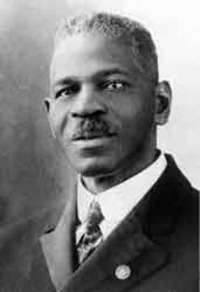
A colleague here at the Canadian Forces Chaplain School and Centre was reviewing our new chaplain history curriculum and asked me why our first African-Canadian chaplain was not included.   Because I didn't know the story, I said, and now I can share it with you.


The Rev. William Andrew White was the Baptist pastor of a black congregation in Truro, Nova Scotia when the Great War began.   American by birth and the son of former slaves, White came to Canada through the network of the African Baptist Association and attended seminary at Acadia University in Wolfville.  


African Canadians were not allowed to enlist in the Army until 1916, when the government authorized No. 2 Construction Battalion, consisting of black soldiers led by white officers.    Rev. White actively recruited for this unit, and half of its strength came from Nova Scotia.  White was appointed as the Battalion chaplain was the only African Canadian to be commissioned as an officer during World War One.


The Dictionary of Canadian Biography gives this account:


Some members of the battalion trained in Windsor, Ont., and the rest in Pictou, N.S., and later Truro. In March 1917 the unit embarked for England. They were attached to the Canadian Forestry Corps (Jura Group) and relegated to the status of “company” because they were about 300 men under strength. In May they were sent to eastern France, where they worked alongside white troops during logging and milling operations but were segregated the rest of the time. Their chaplain had a hard row to hoe: white soldiers would not accept his ministrations, even when they otherwise lacked the services of a clergyman. Nevertheless he was an unmitigated force for good across racial lines. Such were his courage, moral authority, and physical stature that he once interposed himself between his unit and a group of white men to avert a riot.


Given the racial prejudices of the day, it was a significant step for the Chaplain Service, thanks to its director, John Almond, who was progressive for his time.   Almond had tried to send an Anglican Metis chaplain to serve Canadian Indigenous detachments scattered through France, but his request was turned down by CEF Headquarters which disapproved of "roving commissions".  Almond had also wanted to send a Jewish chaplain to France, but HQ likewise objected, claiming that "there were no concentrations of Jewish troops large enough to merit [their own chaplain]" (Duff Crerar, Padres in No Man's Land, 2nd ed, p. 68).


Padre White survived the war and died in 1936.   His CEF record may be found here.  He deserves to be better remembered as a significant figure in the history of the Royal Canadian Chaplain Service.

Monday, October 29, 2018

Tubby Clayton: A Commission From Tim Godden

In my previous post I mentioned the British artist Tim Godden, who specializes in images of the Great War and of Edwardian sports figures.  His style captives me - there’s a simplicity and a sincerity about it I prefer to the legions of commercial artists out there specializing in military scenes.   Tim excels at capturing the humanity and vulnerability of his subjects, as in his collaboration with Peter Doyle, Percy: A Story of 1918.   

I wanted a portrait of Phillip Clayton, one of the most well-known British chaplains of the Great War.  An Anglican, “Tubby”, as he was widely known, was not one of the front-line chaplains like F.R. Scott or Geoffrey Studdert-Kennedy (Woodbine Willie) but his greatest service to the troops was to found and run Talbot House, a sort of hostel not far behind the line in the Ypres Salient, in the town of Poperinge.   Talbot House, or “TocH” as it was known in the phonetic signaller’s alphabet of that war, was mostly a refuge, though it was within reach of enemy artillery.    Clayton wrote that “During the varying fortunes of the Salient shells have crossed and recrossed the roof from three points of the compass at least”.

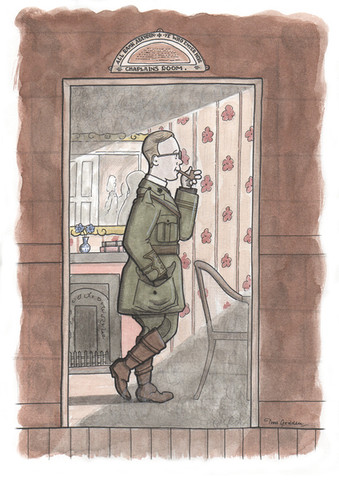
Here is Godden's depiction of Clayton. I will keep the original, and will donate a print of it to the Chaplain School of the Royal Canadian Chaplain Service before my tour here ends.

What made TocH special was its all ranks nature.  Clayton had a sign prominently displayed, “ALL RANK ABANDON YE WHO ENTER HERE”.  Tim has placed the sign at the top of the painting, and has Tubby framed in the door of his office.    Figures of the soldier guests can be seen in the mirror behind him.

The Talbot House motto allowed an informality and companionship that was otherwise seldom possible in the socially rigid and stratified Army of the day.   Here is an excerpt from Clayton’s book, “Tales of Talbot House”.

Under its aegis unusual meetings lost they awkwardness. I remember, for instance, one afternoon on which the tea-party (there generally was one) comprised a General, a staff captain, a second lieutenant, and a Canadian private.   After all, why not?  They had all knelt together that morning in the Presence.   “Not here, lad, not here”, whispered a great G.O.C. at Aldershot to a man who had stood aside to let him go first to the Communion rails; and to lose that spirit would not have helped to win the war, but would make it less worth winning.   There was, moreover, always a percentage of temporary officers who had friends not commissioned whom they longed to meet.   The padre’s meretricious pips seemed in such a case to provide an excellent chaperonage.  Yet further, who knows what may be behind the private’s uniform?   I mind me of another afternoon when a St. John’s undergraduate, for duration a wireless operator with artillery, sat chatting away.   A knock, and the door opened timidly to admit a middle-aged Royal Field Artillery driver, who looked chiefly like one in search of a five-franc loan.  I asked (I hope courteously) what he wanted, whereupon he replied: “I could only find a small Cambridge manual on paleolithic man in he library.  Have you anything less elementary?”  I glanced sideways at the wireless boy and saw that my astonishment was nothing to his.  “Excuse me, sir,” he broke in, addressing the driver, “but surely I used to come to your lectures at ____ College.”   “Possibly,” replied the driver, but mules are my speciality now.

 You can compare Godden’s likeness to this period photograph of Clayton.   


Talbot House is now a museum and a hostel, and can be visited by tourists.   I hope to make a pilgrimage there myself in the foreseeable future.   

I have some more excerpts from Tales of Talbot House, now sadly out of print, that I hope to post here as time permits, as they are excellent stories and vignettes of military chaplaincy from the Great War.

MP+


Thursday, September 13, 2018

Remembering Canadian Great War Chaplains in the Hundred Days


The text below is from an email sent by my friend and colleague, Dr. Duff Crerar, author of Padres in No Man's Land (McGill Queen's 1995, 2nd ed 2014).   Duff regularly sends Canadian chaplains these emails to tell us what our predecessors did on certain notable dates, and thus to remind us of our legacy.  MP+


Canadian Chaplains and breaking the Drocourt-Queant line.


German Wire - Part of the Drocourt-Queant Line Fortifications


By 17 August, the Canadian Corps had clawed deeply into German lines at Amiens. As the push ground down in the maze of old 1916 trenches, General Currie and Third Army Commander Rawlinson pushed for a relocation of the Canadians to where the Germans would not expect an attack. British Commander Douglas Haig concurred and persuaded the Supreme Allied Commander Ferdinand Foch to agree. Currie’s force was transferred to General Horne at Arras. Here the Germans had fortified a strong belt of defences, thirty kilometers deep, as far back as the partially-drained Canal du Nord. Behind it lay Cambrai. If the Canadians could break in here, the German defences southwards would be turned and the whole front opened for exploitation.


The Canadians had to work fast: Currie had two divisions in the line by August 23. They would jump off three days later, backed by the other two divisions and the 51st Highland Division. Twenty-six Brigades of Artillery and one British Tank Brigade joined in the attack. The first skirmishes at Neuville-Vitasse were over in minutes: hearing the Canadians were in the line, the German defenders were already evacuating the objective when the attack began at 3.am. After great initial gains the offensive ground down in heavy rain, bogged tanks and accidental attack by friendly air forces. When the Canadians finally outran the range of their guns, it was time to pause.


On 30 August the First Division carried out a textbook breakthrough and capture of the critical launching points for the new attack and held them against heavy counter-attacks.  Currie planned a renewed attack for 2 September while his guns blasted fields of uncut wire. Altogether, over 101,000 Canadians and 47,000 British troops were under his command.


The breakthrough, once again, was sudden and decisive, and the advancing Canadians again outran their artillery coverage. German flank attacks hit the 15th and 16th Battalions hard, leading to hand to hand combat in the wire until tanks arrived. Heavy resistance occurred in the central area, though by the end of the attack the critical Mont Dury was taken and held. The D-Q line was cut, but Currie would plan a separate and final assault to cross the Canal du Nord. The Germans left in between the Canadians and the Canal banks were already streaming back to dig in on the other side.


Throughout these operations, the Canadian padres worked as they had at Amiens. Father F.L. French, Senior Chaplain, Canadian Corps, was able to have up to twenty of his priests flow between medical posts and stretcher parties. About twenty padres “jumped off” with attacking waves, while the artillery chaplains visited guns, wagon lines and manned burial parties.


George Taylor accompanied his Seventh Brigade battalion on the 28 August attack, which ended in Jig-Saw Wood. Snipers re-wounded men even as he was dressing them. Thirsty men greatly appreciated the coffee he had in two thermos bottles stuffed in his haversack. He rounded up about sixty German prisoners to carry stretchers, but heavy shelling made it so hazardous that he held off making a second trip until after dark. Then, assisted by the Medical Officer, he brought out the rest by moonlight.

German prisoners, possibly waiting to carry the Canadian on the stretcher to the rear.


G.A. MacDonald, taking over as Senior Chaplain, 4 Division from the wounded A.M. Gordon, reported that his padres were busy across the field meeting reinforcements with encouragement, writing letters to next of kin, assisting at RAPs. He had acquired a certain notoriety at Amiens by accompanying the 54th Battalion onto the final objective.  G.H. Sparks visited all the batteries in his care, and then reported to a Dressing Station, from 3:30 am to almost noon. In that time he wrote seventy-one letters while offering prayer for patients and with staff.


The Van Doos had lost their padre, Father Desjardins, to gas on 28 August, so Father Fortier took over, encountering a wounded Georges Vanier, who would lose his leg in the event. The Medical Officer offered alcohol to Vanier, but Fortier advised against it, to keep his head clear. Vanier took the padre’s advice. Fortier gave the future Governor General absolution before he was carried to the rear.


One of the most extraordinary deeds of courage was carried out by E.E. Graham, on behalf of the French Canadian unit, when in broad daylight he made repeated trips under fire to pluck half a dozen Van Doos off the barbed wire. Although recommended for a Victoria Cross, the Army chose to award the Distinguished Service Order instead. On 2 September he spent the day with the battalion as it attacked the D-Q “Switch”. Although in hospital at this time, Father Ambrose Madden, M.A., also was awarded the D.S.O. for his service at Amiens, where he received his third wound of the war.


Frank Buck’s work with the 46th Battalion in the opening days of September included several days at the RAP under heavy shelling. He led stretcher parties and went forward for a second day under fire as the Battalion advanced. For his work at Drury and St. Quentin he was awarded a Military Cross, one of several awarded to padres after the fight.  Military Crosses also went to S.E. McKegney (58th Battalion), Fathers C.A. Fallon (102 Battalion) and Thomas O’Sullivan (Engineers). They had exposed themselves to heavy fire locating wounded in open country, offering first aid, and seeing to their evacuation.

Coffee stall operated by the Canadian Chaplain Service during the Hundred Days fighting.   Note the hasty sign beneath the "Art Mun Depot Harcourt" sign. Photo courtesy of Dr. Duff Crerar.


There were casualties, as well. E.E. Graham’s charmed life was interrupted on 30 September, by leg wounds which forced him to the rear. Chaplains who were exhausted or winged by enemy fire had to be replaced in a hurry. Senior Chaplain Louis Moffit found one, an ordained Lieutenant in the 42nd Battalion who was recuperating from minor wounds after Amiens. He was taken on Chaplain Service Strength in October. W.G. Clarke, a Baptist, was given speedy ordination in England and taken on strength, as was J.G. Gibson, a Methodist minister in the ranks.


Father James Nicholson almost became a casualty when he and the Medical Officer plunged into a dugout full of armed Germans at Monchy Le Preux. The startled Germans surrendered to him instead. Cyrl D’Easum also turned up, after burying 78th Battalion casualties in the open, with another eight Germans who had insisted on surrendering to him. His reckless work with the wounded and dying while under machine gun fire was recognized by the award of a Military Cross.

Wednesday, May 10, 2017

No, Mr. President, There Isn't A Religious Freedom Problem In The Military


US Army chaplain visits a simulated casualty during a training exercise.


My Twitter feed lit up a bit recently when this story aired on CNN, regarding comments by US President Donald Trump that US service personnel in a military hospital were denied religious items.
What was remarkable about the social media reaction is that several US military people I follow commented on how the chaplains they knew would fulfil a response for religious items before the person asking could finish the sentence.    My own experience is similar.  The military chaplains I know are eager to provide not only bibles and rosaries but also korans and prayer mats.  Part of the training that we conduct at the Canadian Armed Forces Chaplain School focuses exactly on this kind of work as part of the chaplain's duty to defend the rights and support the needs of believers of all faiths.


Possibly, as the CNN article noted, President Trump was referring to confusion that arose at a US military hospital when proselytization triggered a temporary ban on religions items.   It is regrettable that the President seems to have misunderstood this situation.  Chaplain training, at least in the CAF, focuses on the need for chaplains to meet people where they are and to respect their beliefs, however diverse they may be.  Proselytization, trying to aggressively convince another person to adopt one's faith (what Christians can evangelization) is strictly forbidden.   A conversation may lead to a request for a chaplain to say more about what the belief, but that is an entirely different matter.


Another US veteran I follow commented on Twitter that he couldn't imagine a worse situation than being helpless in a hospital bed as a chaplain or other religious person used that opportunity to proselytize.  I would agree wholeheartedly.  It reminded me of a scene in the old (2005) US series on FX, Over There, about the Iraq war, in which one of the characters is immobilized in a hospital bed while an unctuous chaplain in dress uniform, gold crosses glinting, a bible held in his hand, enters the room.   No, that's now how it's done.  A smile and a question, "How's today going?", is a better way to start.

Tuesday, April 25, 2017

More Religions To Be Recognized In US Military

This piece in the Religion News Service received some modest attention among the US national security (NatSec) people I follow on Twitter.


The US Department of Defence has "announced a near doubling of its list of recognized religions. It will now formally recognize humanism and other minority faiths among members of the armed forces."


The list now encompasses humanism and Asatru, a religion which focuses on the Norse gods of the Viking era.   This announcement means that "servicemen and women who are adherents of small faith groups are now guaranteed the same rights, privileges and protections granted to their peers who are members of larger faith groups."


Asatru/Viking symbol


This announcement does not necessarily mean that chaplains associated with these faiths will follow, at least not in the near future, but it does open the door to that possibility.   In the Canadian context which I am familiar with, a faith group must have structures which allow for the recognition and accountability of persons who can perform the general functions, such as counselling, expected of a chaplain, and who have a religious organization to which they are accountable.  Not all faith groups produce clergy or clergy equivalents in the way that, say, Christianity, Judaism and Islam do. 


That being said,   I have Canadian chaplain colleagues who have served with Dutch humanist chaplains and found them professional, dedicated and caring, which is perhaps all that many military personnel want of a chaplain.


MP+


Monday, April 10, 2017

Remembering Canada's Army Chaplains at Vimy Ridge


This week, starting on Sunday, marks the centenary of the Battle of Vimy Ridge, when the Canadian  Corps, fighting together, achieved a significant victory on the Western Front during World War One.  Vimy is often regarded as part of Canada's coming of age as a post-colonial country, as this backgrounder in the New York Times explains.

Canadian historian Duff Crerar, an authority on Canadian chaplains in the Great War, has been regaling his friends with stories of how our padre ancestors supported the Vimy battle.  I have collected his emails and images below and am happy to present them.  MP+

Preparing for the Battle - 1

The First Canadian Division moved into its pre-Vimy quarters around the old Chateau of Ecoivres in mid-March. In the upstairs hall rested a large model of Vimy Ridge, which officers and men came through to study. In the garden was a billet filled up with tall racks of bunk beds, packing in almost 1500 men, with a high platform at one end, from which Canon Scott gave nightly lectures after the band played a brief concert. To keep morale up, he encouraged written questions to be handed up to him which he would try to answer in an uplifting way. The first night everyone had a good laugh at Scott’s expense when the note was read aloud without previewing or censorship: “When do you think this God dam war will be over, eh?” On April 4 the news came the America had joined the Allies, which partially answered the question that stumped him a few nights before.


Canon F.R. Scott, the senior chaplain with the First Division, wades through mud with some of his troops.   In his mid fifties, Scott was an old man in the trenches, and was famous for enduring hardship to be with the troops.

In the daytime, as Scott moved back and forth visiting trenches and headquarters, he often donned a private’s uniform, but still was easily identified by his white hair and clerical collar. All around him he noted the stacks of ammunition accumulating, pitying the horses which dragged heavy loads until some died of exhaustion. At night the road to Arriane Dump and the narrow plank road connecting it with the St. Eloi road was crowded with trucks, wagons, limbers, horses and men crowding each other in the blackout and often forcing each other off into the deep mud on either side. Through the tumult and furious cursing in the darkness the Senior Chaplain would make his way, joking that the horses and mules, at least, could not understand the profanity directed at them.
With permission of a local family, Scott fixed up a private shrine with canvas over the windows, which he dubbed “St. George’s Chapel”. Each morning at 0800 he celebrated Holy Communion, with the troops standing in and around the altar. Underneath a shell-battered crossroads named Maison Blanche, a large cavern sheltered one of the battalions in reserve, where Scott would drop in to hold services. Scott was famous for breaking up gambling when he encountered it, but one night men of the 16th, holding hot cards, promised to come if he let them finish their hand. After announcing that he would hold the service until the game was over, almost everyone there joined the service.
Behind the hamlet of Anzin the heavy guns and howitzers occasionally let loose, carefully seeking out their future targets, and startling bystanders not aware of their well-camouflaged hideouts. But enemy fire could still strike the best-concealed by chance. Canadian Railway troops died when a German shell hit their billets. Scott buried eleven of them on the hillside.


Chaplains of the 4th Division, Canadian Expeditionary Force, France 1917

Preparing for the Battle -2

From the Report of Major A.M. Gordon, Sr. Chaplain, 4th Canadian Division dated 17 March, 1917

All Unit commanders except for one have welcomed regular worship parades in 4th Division. During the trench raids in preparation for the main attack all his chaplains have been either in battalion Headquarters or Advanced Dressing Stations. Other chaplains maintained Chaplain Service coffee stalls where hot drinks were dished out to the men going forward or coming out of action. During the raid on 15 March, Chaplain George Farquhar served at the Regimental Aid Post with the Medical Officer, at the request of both the battalion commander and the M.O.
24 March, 1917: Sr. Chaplain Gordon to Acting Adjutant and Quartermaster General, Canadian Corps, requesting sites for Chaplain Service Coffee Stalls directly on the routes to be taken by the troops of 4. Canadian Division during the Vimy Attack, in areas relatively safe from shelling.
4 Division dispositions of Chaplains for Vimy Ridge Battle (Report by Major the Rev. A.M. Gordon, 4 Div. Sr. Chaplain)
  • 3 Protestant chaplains at the RAPs, 1 Protestant at the Advanced Dressing Station on the Arras Road, 2 Roman Catholic chaplains at relay point for ambulances and stretcher bearers, Two Protestant chaplains at the Main Dressing Station # 11 Canadian Field Ambulance, with two Roman Catholic chaplains alternating duty there for round the clock coverage. One Protestant chaplain will cover the #12 Field Ambulance, while one will serve as spare for coffee stall, burial party and battalion coverage. Gordon leaves his most junior chaplain in the office and goes forward to supervise and assist in the 4th Divisional front line area.
Chaplains in action

The Chaplains of the 2nd Division left extensive reports which can be matched with contemporary trench maps and aerial photographs to demonstrate how they followed the attacking troops, setting up aid posts and working with casualties in captured dugouts and trenches. D.E. Robertson’s report begins with jumping off with the second wave of attackers, accompanying medical officers and others setting up advanced posts on the far side of Thelus. From 1400 onwards Robertson and a Medical sergeant operated an advanced aid post in a dugout in Bois Carre, which treated men coming in from many battalions, and many wounded Germans as well. Robertson scrounged rations and a German camp stove and was able to provide hot and cold drinks to the wounded and the stretcher bearers. He stayed on in the dugout through the next few days “During all the time, I tried to speak a word of comfort or offer a prayer with the wounded. I took the names of home folks, and any messages they wished me to send. This meant writing scores of letters. Near Bois Carre I established a  cemetery primarily for the 4th battalion, It has been recognized by the Graves  Registration Commission. I buried twenty six men belong to the 14 and 31st Battalions, and of the Trench Mortar Battery. On the night of the 12th we moved back to the old German front line. “ The return was complicated by he and eight others taking turns bringing back a wounded German they had found in the bottom of a trench, nearly frozen The mud was so deep that it took several hours to get the man under shelter. Looking back, he noted that every soldier he had personally greeted the night before the attack had either been killed or had passed by him, smiling but wounded, going the other way after the battle.


Aerial photo of the Vimy battlefield, showing some of the trench systems.  Bois Carre, where Padre Roberton worked in a Regimental Aid Post and later buried some of the dead of the attack, is the dark square on the right middle.

George Wood, following Canon Scott’s directions, followed the 4th Battalion up Elbe Trench with the quartermaster to set up a coffee stall and food stand for the troops on the day of the attack. By the time of the attack he claimed all 800 men had been distributed a “pint of steaming hot coffee”. At 04.25 he went forward with the Battalion Headquarters and stretcher bearers, unhit by stray German shelling, though a direct hit killed the Adjutant and several other officers just ahead of him. Also killed was the Artillery Liaison officer for the 27th battalion, and while the medical officer remained behind to tend the wounded, Wood and the unit commander reached a dugout in Rocade Trench, where the forward Headquarters was to be located. The dugout was already too crowded with wounded, so the signallers and the commander moved on while Wood, with his scissors, gauze and iodine tried to tend the fifteen wounded men who had crawled into dugout. Two men who had been shot in the lung and groin he hastily bundled off to the rear on stretchers carried by German prisoners.
About two hours later Wood caught up with the medical officer and bearers in an aid post between the German second and third lines known as Bastion Tunnel. Here the air circulation was so poor that candles would not stay lit. the next morning he jointed Robertson at the Bois Carre aid post.
Remaining in the line, Wood and two companies of his battalion supported the 8th and 9th Battalion attacks on Farbus, and Arleux. He moved his aid post into Arleux, marvelling at how little damage had been done to the buildings, early in the battle. Three weeks later when he returned, it had been obliterated by the fighting.
During a lull in the shelling one night, Robertson left the Bois Carre dugout and tried to go over the freezing ground looking for wounded who might die of exposure. “I felt glad to think that all the wounded had mostly gotten in, for I found none anywhere. In one case I thought I had come on one, for half way down the entrance of a partially caved in German dugout, I saw a man sitting, his head bowed, and hands folded, and by his side a prayer book. I got no answer when I called, so I crawled down, for I felt sure he was still praying. He must have died so a little time before. He was a little German. Peace be to him”.


Bois-Carre Commonwealth Cemetery today.   It is the resting place for 232 Canadians killed at Vimy.  Bodies are still being discovered and identified today.

Mad Padre

Mad Padre
Opinions expressed within are in no way the responsibility of anyone's employers or facilitating agencies and should by rights be taken as nothing more than one person's notional musings, attempted witticisms, and prayerful posturings.

Followers

Blog Archive

Labels