Showing posts with label Family News. Show all posts

Wednesday, December 6, 2017

A Eulogy For My Wife


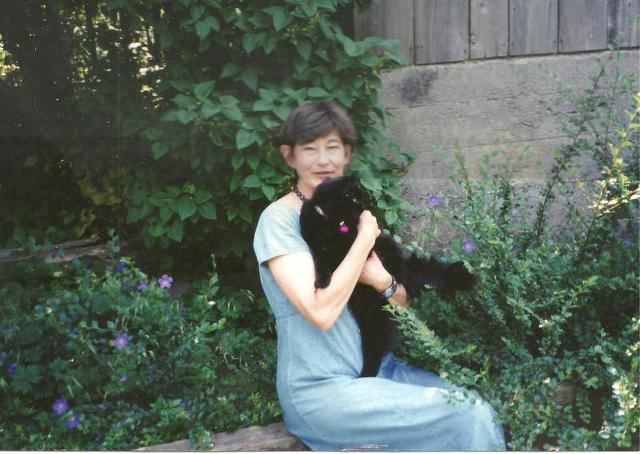
Kay Leslie Brown

6 July, 1952 - 25 November, 2017


Funeral Eulogy

St. Margaret of Scotland Anglican Church, Barrie, ON, 3 December, 2017


Bishop Shaw, dear colleagues, friends, fellow parishioners, on behalf of my family and Kay’s family, I thank you all for joining us today to pray for and to remember an extraordinary person and faithful Christian, Kay Leslie Brown.   Kay received so many acts of kindness and compassion from so many of you during her long illness that any words of gratitude I could offer would be wholly inadequate.


Kay was always tickled that when we were married, three priests and a postulant, so, for you non-Anglicans,  three and a half priests, officiated at our wedding.  I think we have that number beaten today, as there must be a small platoon of clergy and chaplains present.  Kay would enjoy that fact.


As I wrote this eulogy, I was mindful that Kay would probably not have had much interest in what I said about her, because she would never have wanted to be the focus of this event.   Kay designed this funeral, chose the readings and the hymns, so that it would be about her God.


For Kay, the words of the liturgy, the proclamation of the word, and the faithful preaching of the gospel were what mattered.  That was the exacting standard that she held my own sermons up to.  If I saw her frowning face in the congregation, I knew I wasn’t doing well.  Sometimes, in the car on the way home, she’d say “You did OK.” When it came to preaching, she was my fiercest and best critic.


In that respect, Kay always reminded me of the figure of John the Baptist, as painted in the Isenheim Altarpiece in the 1500s by Matthias Gunewald.  John is depicted off to the side, pointing to the figure of Christ on the cross.   The theologian Karl Barth loved this painting.  I know that Kay would be rolling her eyes at my working a theologian into her eulogy, but darling, you always knew that I was a geek.   


Barth said that the church must always be like John in that painting, not calling attention to itself, but rather directing attention to the cross and to Christ’s work there in defeating our enemy of sin and death.   That was Kay, like John the Baptist, always pointing to the cross.  Anytime she spoke up in the life of the church, you could be sure that would be asking, often impatiently, where was God in all our human activity.


However, darling, I am not here as a priest or a preacher.   I am here to talk about you and about what a privilege it was to be your husband.   So bear with me.  I’ll speak about you briefly, and then get out of the way of the church’s true business, as you would want.  


Kay fought a two front war with cancer and diabetes, and in the last year of that struggle she wrote a bible study on how our faith helps us to deal with pain and suffering.   She spoke on that subject with great authority.   People often told me how they were in awe of Kay’s calm, even serene, composure.  As she liked to say, God gave her “the peace which passes all understanding”.  


Despite four significant surgeries in three years, and long hospitalizations, Kay was gracious and kind with others.   As her body slowly failed her, she never gave in to self-pity or despair.   I saw her comfort other patients, nurses, and even embrace the young doctor who burst into tears as she told Kay that she had reached the end of what medicine could do for her and that she would soon die.  A priest friend of mine told me that he went to the hospital to bless Kay, and he came away blessed.  So while I regret that Kay never got to lead that bible study on living with pain and suffering, a friend pointed out to me the other day that, in a very real way, she did teach that lesson, just by the way she lived and died.


Kay would have been the first to tell you that her peacefulness and calm did not come from within, but rather were spiritual gifts.   Kay was not a saint, and she was not always a person of faith.   In her youth, she liked to say that she was, in her words, “a flaming atheist”.   In her passion for research and for the scientific method, Kay convinced herself that she had to jettison her faith, but God had other plans.  In the twenty years I was at her side, I saw Kay struggle with God’s call.  I think God had the upper hand in that struggle, because God simply reminded Kay of who she was and of who she had always been.


Kay was always a person attuned to God’s justice and grace.  Growing up in the southern United States in the 1950s and 60s, Kay saw things that would stay with her all her life.  She often told me how, as a girl, she didn’t understand why there were separate water fountains for coloured people.   At the same time she saw her father, a devoted civil servant, give the same care to black clients as he did to white ones.   Martin Luther King was one of her early and lifelong heroes.  Kay always believed that the moral arc of the universe bent towards the good, even if she stopped believing, for a while, that the moral arc came from and led back to God.  


Despite being a profound introvert at times, she attracted the misfits and the hurting, who sensed her compassion and patience.  Kay had deep reserves of empathy and kindness.   Even while she was still a self-proclaimed “flaming atheist”, she paid the tuition of a friend so she could go to seminary.    She gave freely because she had a big heart, an innate sense of decency, and an ability to see the other’s point of view.


What led Kay back to God is a long story.   I think partly it was circumstances, the people and places that God led us to, and I think it was also the frustration of her hopes to make a career in science and academia.   Kay had dreamed of winning a Nobel prize, and her academic career ended in frustration, partly due to bad luck and partly due to Kay’s struggles with mental illness.  I was attracted to Kay because of her warmth, humour, and creativity, but I soon realized that these moments came at a cost.  She had violent swings into depression and despair, and her darkest period was when she had to walk away from the university environment that she had built her identity on.


I don’t doubt for a second that it was God who led Kay out of that dark valley.  It took years for us to build a new life together.   Her career was ending as mine was taking off and that was a source of tension as well.   We learned the hard way how to build a marriage based on mutual respect, careful listening, giving and taking.  Early on I mostly took, and Kay gave, a lot.  She found satisfaction in building elaborate and beautiful gardens, in which she combined a scientific method with the flair and soul of an artist, and then she had to walk away from them, repeatedly.   Becoming a military spouse, at an age when most people are looking forward to settling down and staying in one place, meant that she had to move, frequently, and that got harder and harder on her.   Soldiers get the medals, but really the medals should go to spouses like Kay, who gave so much to advance my career.


I think the last ten years of her life were probably the best.  Kay found the right psychiatrist and the right medication, and the black clouds of her depression mostly lifted and vanished.   She made friends, and opened her house to others - wandering chaplains, military people far from home, strays and misfits - all were welcome at her table.  Kay thrived in a series of churches - St. Barnabas in Medicine Hat, St. Columba’s in Waterloo, and, of course, here.  I have no doubt that Kay could have made significant contributions to the life of St. Margaret’s and St. Giles in the years to come, had it pleased God to leave her with us.  I also have no doubt that God completed his work in Kay, by bringing her to a good place in these years.  Kay’s deep and integral goodness, her joyfulness and compassion for others, her plain speaking and prophetic voice, all these things came through strongly.  Kay was no longer a flaming atheist, she was simply flaming, a bright beacon of God’s power to bind up and restore.


I will always be profoundly grateful for the privilege of being Kay’s husband.  In my mind’s eye I will always see her as she was, her strong and capable hands weeding a garden or paddling a stream, her mouth quirked in wonder or humour, her eyes wide and seeing the beauty of the world and the people around her.   In her last years, as she grew increasingly sick and frail, Kay would talk about the resurrection body that God would give her.   She hoped that when she got to heaven, that God would give her some challenging scientific assignment, like designing a new plant species, or managing a supernova.   No sitting around playing the harp for Kay! I have no doubt that one day we will look on Kay again, in whatever form God pleases to give her, and that she will burn as bright and fierce and glorious as any star in heaven.


Monday, December 27, 2010

2010 Christmas Letter

Dear Family, Friends, and Readers of MadPadre:

When I sent out our Christmas cards this year (a pathetically small number considering the number of lovely folks who are in our lives), I promised a Christmas letter on the blog. Some folks are emailing me today and saying, "Hey, where's that letter"? Doesn't time fly when you're procrastinating?


Kay says godbye to her garden in Kingston, NS, this August. The unsung sacrifices of the military wife and gardener.

Last Christmas Eve, Kay and I were in Kingston, Nova Scotia, in the heart of the Annapolis Valley. I remember it as being fairly mild, with some snow. This year, thanks to the great dartboard known as the Canadian Forces Chaplains' Branch posting plot, we find ourselves almost clear across the country in Medicine Hat, Alberta. There's snow here as well, though it's dwindled to ankle-height after a few chinooks since the snow came in mid-November. It's colder, too, that particularly dry, prairie cold that shocks your lungs with the first few breaths of outdoor air. It was a bracing -15C on my morning run, which is doable if you keep moving (moving slowly, given the ice everywhere).

At 60,000, Medicine Hat is somewhere between a small city and a big town. Down in the SE corner of Alberta, it feels somewhat isolated: three hours to Calgary, threeish to Swift Current, fiveish to Edmonton, a full day to Vancouver - moaning about our 90 minute drive from Greenwood to Halifax now seems rather lame by comparison. Locals call it "The Hat" and call themselves "Hatters". I myself am a proud member of the Mad Hatters Running Club. The locals are friendly, perhaps because so many are from Atlantic Canada. It's mostly an oil and gas and railway town, and since a lot of people find employment or connections to CFB Suffield, 45 kms to the west, it's a military friendly community. Friendly, that is, except sometimes to the young Briish troops who come here in the summer times for training, and who like to spend money in town. One hears some mixed things about the squaddies, but if the British Army pulled out of Suffield, this town would be hurting.

CFB Suffield is home to BATUS (British Army Training Unit Suffield), its main reason for existing. While a Canadian base, it is part of the the UK Defence Training Estates, since its huge area of prairie has made it ideal for training with large numbers of tanks and troops. Suffield is also home to Defence Research and Development Canada, which does a lot of research with nasty stuff. While it sounds spooky and scary secret (there's a Suffield joke that if the Zombie Apocalypse ever started anywhere, it would likely start here), they do good work, especially in the area of combat medicine and trauma research. As Canadian Forces Bases go, Suffield is quite small, with about a hundred Canadians in uniform and three times that many civilians, so my work is quite manageable. Some of my earlier posts here on Life in Suffield will give you a flavour of that work.


Our Medicine Hat house on Christmas Eve

Kay and I bought a "character home" in an older, settled part of town called SE Hill. "Character home" is a euphemism for money pit, I think, but we are slowly making it home and plan a kitchen reno over the winter and a new roof in the spring. Kay made a start on transforming the garden into something closer to her tastes, but that will be a long term project. Kay has found a congregation she likes in the Hat, St. Barnabas, where people seem to have a lively faith and a willingness to pray. She's started some volunteer work with the local SPCA, and is sowly finding her way on Facebook, if you want to look for her there. Come the spring she hopes to get hired on with one of the local garden centres, even if the trees and shrubs here are different (and to her eyes uglier) than the ones she's used to.


New dino friend at Tyrhell Museum, Drumheller, seen this August
We've done a very little sightseeing since we've arrived in Alberta. This August we visited the excellent Royal Tyrrhel Dinosaur Museum in Drumheller and saw a little bit of the Badlands. Today we're off to have a look at Calgary and then north to visit friends in Edmonton.

I've transferred my membership in Lions to one of the local clubs. I like the people and the chance to give back to the community as time permits. I was invited to join the Board of the United Way of SE Alberta after getting involved with their campaign on the base, and enjoy working with the UW for the same reason. I'm slowly stepping up my running practice. This September I ran a very slow half marathon in Drumheller, my first in two years. Afterwards I remembered my promise to myself to do a full marathon before I turned fifty, and I only have eleven months to keep that promise.

That's a little bit of our lives out here on the prairie. Kay and I hope that you were blessed in spirit, family and friendship this Christmas, and we wish you all good things in the year to come.

Blessings,

MP+

Sunday, August 22, 2010

It Runs in the Family


Mrs. Padre and I had the privilege to spend last Friday witnessing my great nephew's graduation from the Air Cadet Training Program at Penhold, near Red Deer, AB. We had to get up at oh-dark-and-stupid to make the five hour trip in time for the 10am parade, but it was worth it. Kay and I pose with Cpl. Sinclair Scott, who took a three week music training program. Sinclair is now back at home with his mom (and my niece) Laura.

I also got the chance to meet the parade's guest of honour, the Lt. Governor of Alberta, the Hon., Col. (Ret) Donald Ethell, a very distinguished Canadian soldier and a pretty cool guy.

Wednesday, January 21, 2009

More on My Sponsor Child and On Zimbabwe

I was bragging earlier this month here about my sponsor child, Nkiwane Thandolwenkosi, who lives in Zimbabwe. The other day the good folks from World Vision sent me this Christmas card, embellished by Nkiwane's artwork.


I couldn't help but remember, as I looked at the card, a piece I had read very recently in the New York Times on Zimbabwe by op ed columnist Bob Herbert. I'm taking the liberty of repeating that column in full here:

January 17, 2009
Op-Ed Columnist
Zimbabwe Is Dying
By BOB HERBERT
If you want to see hell on earth, go to Zimbabwe where the madman Robert Mugabe has brought the country to such a state of ruin that medical care for most of the inhabitants has all but ceased to exist.

Life expectancy in Zimbabwe is now the lowest in the world: 37 years for men and 34 for women. A cholera epidemic is raging. People have become ill with anthrax after eating the decaying flesh of animals that had died from the disease. Power was lost to the morgue in the capital city of Harare, leaving the corpses to rot.

Most of the world is ignoring the agony of Zimbabwe, a once prosperous and medically advanced nation in southern Africa that is suffering from political and economic turmoil — and the brutality of Mugabe’s long and tyrannical reign.

The decline in health services over the past year has been staggering. An international team of doctors that conducted an “emergency assessment” of the state of medical care last month seemed stunned by the catastrophe they witnessed. The team was sponsored by Physicians for Human Rights. In their report, released this week, the doctors said:

“The collapse of Zimbabwe’s health system in 2008 is unprecedented in scale and scope. Public-sector hospitals have been shuttered since November 2008. The basic infrastructure for the maintenance of public health, particularly water and sanitation services, have abruptly deteriorated in the worsening political and economic climate.”

Doctors and nurses are trying to do what they can under the most harrowing of circumstances: facilities with no water, no functioning toilets and barely any medicine or supplies. The report quoted the director of a mission hospital:

“A major problem is the loss of life and fetal wastage we are seeing with obstetric patients. They come so late, the fetuses are already dead. We see women with eclampsia who have been seizing for 12 hours. There is no intensive care unit here, and now there is no intensive care in Harare.

“If we had intensive care, we know it would be immediately full of critically ill patients. As it is, they just die.”

Mugabe’s corrupt, violent and profoundly destructive reign has left Zim-babwe in shambles. It’s a nation overwhelmed by poverty, the H.I.V./AIDS pandemic and hyperinflation. Once considered the “breadbasket” of Africa, Zimbabwe is now a country that cannot feed its own people. The unemployment rate is higher than 80 percent. Malnutrition is widespread, as is fear.

A nurse told the Physicians for Human Rights team: “We are not supposed to have hunger in Zimbabwe. So even though we do see it, we cannot report it.”

Mugabe signed a power-sharing agreement a few months ago with a political opponent, Morgan Tsvangirai, who out-polled Mugabe in an election last March but did not win a majority of the votes. But continuing turmoil, including violent attacks by Mugabe’s supporters and allegations that Mugabe forces have engaged in torture, have prevented the agreement from taking effect.

The widespread skepticism that greeted Mugabe’s alleged willingness to share power only increased when he ranted, just last month: “I will never, never, never surrender ... Zimbabwe is mine.”

Meanwhile, health care in Zimbabwe has fallen into the abyss. “This emergency is so grave that some entity needs to step in there and take over the health delivery system,” said Susannah Sirkin, the deputy director of Physicians for Human Rights.

In November, the primary public referral hospital in Harare, Parirenyatwa Hospital, shut down. Its medical school closed with it. The nightmare that forced the closings was spelled out in the report:

“The hospital had no running water since August of 2008. Toilets were overflowing, and patients and staff had nowhere to void — soon making the hospital uninhabitable. Parirenyatwa Hospital was closed four months into the cholera epidemic, arguably the worst of all possible times to have shut down public hospital access. Successful cholera care, treatment and control are impossible, however, in a facility without clean water and functioning toilets.”

The hospital’s surgical wards were closed in September. A doctor described the heartbreaking dilemma of having children in his care who he knew would die without surgery. “I have no pain medication,” he said, “some antibiotics, but no nurses ... If I don’t operate, the patient will die. But if I do the surgery, the child will die also.”

What’s documented in the Physicians for Human Rights report is evidence of a shocking medical and human rights disaster that warrants a much wider public spotlight, and an intensified effort to mount an international humanitarian intervention.

Some organizations are already on the case, including Doctors Without Borders and Unicef. But Zimbabwe is dying, and much more is needed.


Hopefully someone in Nkiwane's village saw Barak Obama's innauguration speech and has some more hope today because of it.

Friday, January 2, 2009

Sponsor Child Update

One of the best things we got for Christmas at Chez Padre was an update from World Vision about our sponsor child, Nkiwane Thandolwenkosi. We've been WV sponsors for over two years now, and it's a great organization to work with. I heard World Vision CEO Dave Toysen speak at a graduation at Wycliffe College some years ago, and his call to be productively outraged at global poverty still rings in my ears.

Nkiwane leaves in Zimbabwe, and is part of the Inkosikazsi Development Program. I haven't been able to learn much about this program, but a WV press release from 2002 reported that WV Zimbabwe was feeding over 100,000 people in four such districts at the time. imbabwe is experiencing terrible political and economic unrest. Judging from the WV mailing, some good is being done at the local level.

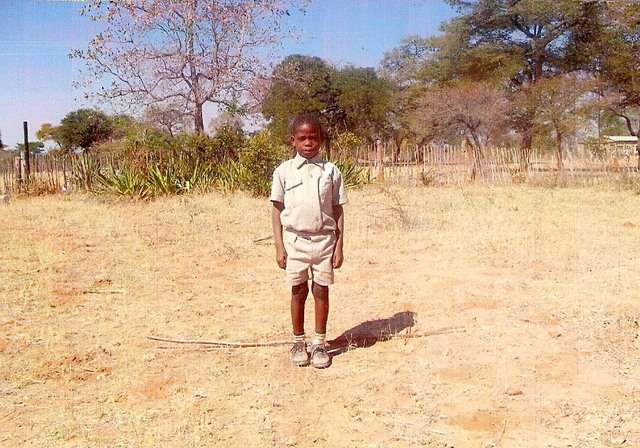
Here is Nkiwane:


His health is good, and he attends Grade One at Siganda Primary. His favourite subject is maths and his school performance is good. At home he helps by running chores, and he enjoys playing with toys. His best friend is named Freedom. His favourite day of the year is Christmas, and he wants to be a teacher one day. Recently his family participated in a cattle vaccination.

If you are considering doing something positive this year, consider sponsoring a child with World Vision.

Mad Padre

Mad Padre
Opinions expressed within are in no way the responsibility of anyone's employers or facilitating agencies and should by rights be taken as nothing more than one person's notional musings, attempted witticisms, and prayerful posturings.

Followers

Blog Archive

Labels