Showing posts with label Lent. Show all posts

Saturday, March 29, 2025

“Hurray for the Riff Raff”: A Homily for the Fourth Sunday of Lent

Preached at All Saints, Collinwood, and Good Shepherd, Stayner, Anglican Diocese of Toronto, 30 March, 2025

Readings for Lent4C:  Joshua 5:9-12; Psalm 32; 2 Corinthians 5:16-21; Luke 15:1-3, 11B-32



Now all the tax collectors and sinners were coming near to listen to Jesus. And the Pharisees and the scribes were grumbling and saying, "This fellow welcomes sinners and eats with them." (Luke 15:1-2)

Imagine that Jesus has come to town for a visit.  He’s sitting at a big table somewhere, eating lunch, and the people sitting with him and listening intently are pretty sketchy.  There’s some bar flies from Moguls, sitting with a few property developers with sleazy reputations, alongside a disgraced former politician, a known drug dealer, and the minor hockey coach who was fired for, well, you know.   

The next table over has some downtown business leaders, a few local pastors and Probus types, someone with the Order of Collingwood and various other upstanding citizens.  They’re also listening to Jesus, but they all have sour faces and disapproving expressions.

In today’s parable Jesus is speaking to at least two audiences.  Jesus seems to be eating with “tax collectors (collaborators with Rome) and sinners”, so he is speaking to them.  Jesus is also aware that there are good religious people watching, “the Pharisees and the scribes”, who don’t approve of his choice of table companions.  So, when Luke says that Jesus “told them this parable”, the “them” is ambiguous but I think we can safely assume that Jesus is speaking both to the riffraff and to the pious folks.   

I said “at least audiences”.  Are there more?  Yes,  there’s a third audience, us, for the gospel always speaks to God’s people in the here and now.  What we hear today may depend on which character in the parable we identify with.   It’s often said that the genius of the Parable of the Prodigal Son is that, depending on our life experience, we might see ourselves in one or more of the three characters, the Father, the Younger Son, and the Elder Son.  

So let me ask you a related question:  if we go back to the start of the gospel reading, which audience do you identify with - the riffraff, or the respectable religious people?  Your answer to that probably depends on whether you see something of yourself in the Younger Son or the Elder Son.

How you answer that question of who you identify with is your own business, but in case you think it’s a trick question, let me help you by saying that there’s nothing wrong with wanting to be a good person.  Scripture encourages us to want to better.  Saint Paul, for example, tells us to “Pursue love and strive for the spiritual gifts” (1 Cor 1.14), the spiritual gifts being “love, joy, peace, patience, kindness, generosity, faithfulness, 23gentleness, and self-control” (Gal 5.22-23).  

What’s important to note however is that Paul isn’t talking about self improvement or self help.  A gift is something given to us by another, and spiritual gifts come from God our Father.  The trap of Christian respectability is that we can delude ourselves into thinking that we can impress God with our own efforts, which is exactly the trap that the Elder Son in the parable falls into.   The Elder Son is a perfect church person - pious, hardworking, and flawless - (what congregation wouldn’t want him as a warden?) - but because of his respectability he can’t allow himself to share his Father’s joy at the return of his brother, the Younger Son.  The love and gifts that his Father lavishes on his spendthrift brother scandalize and offend the Elder brother, who thinks he should be rewarded and his brother punished.   

Does the Elder Brother ever come around to forgiving and welcoming his Younger Brother?  Jesus doesn’t tell us.  We may hope so, but I think the point of the parable teaches us that there is a vast gulf between our ability to love and forgive and God’s desire to love and forgive.   In our bible study this week, we talked about how difficult it can be to love and forgive, especially when we have been greatly wronged.

 There may be people in our lives that are so toxic and so hostile that forgiveness and reconciliation are impossible.    In such situations, if we have been hurt or victimized, we may need to exclude someone from our lives in order to protect ourselves and those we love.  In such cases, we need to remember that love and forgiveness are spiritual gifts, and that God might find ways to heal and reconcile when we can’t, if not in this world, but the next.

So, have you figured out yet which audience in the parable you identify with?  Do you see yourself sitting with the upright and uptight, or do you see yourself sitting with the riffraff?   If the latter, no worries.  Someone once said that evangelism is just one hungry person telling another hungry person where they got free bread.   The Younger Son comes to himself when he realizes that he is starving.  He goes to his Father hoping for a little bread, a hired man’s wages.  Instead he gets a feast, because God’s always up for a good party.

Maybe the lesson for the Elder Brother, and for all of us church folk, is that we were hungry, and are fed abundantly, because God loves the riffraff.

Saturday, March 16, 2024

We Want To See Jesus: A Homily for the Fifth Sunday of Lent


Preached at All Saints, Collingwood, Anglican Diocese of Toronto, 17 March, 2024.

Texts for the Fifth Sunday of Lent (B): Jer 31:31-34; Ps 51:1-13 ; Heb 5:5-10; Jn 12:20-33


Now among those who went up to worship at the festival were some Greeks.   They came to Philip, who was from Bethsaida in Galilee, and said to him, “Sir, we wish to see Jesus.”  (John 12:20)

We don’t know why these “Greeks” wanted to see Jesus.  Today’s story comes just after St. John describes the raising of Lazarus and the spreading fame of Jesus, so perhaps these Greeks had heard the news and were curious (Jn 11:45-48).   Maybe they had spiritual questions they wanted to ask.   John doesn’t tell us if they got an audience with Jesus, but their statement, “Sir, we wish to see Jesus” has a directness and an urgency that should get our attention.

Karoline Lewis, a John scholar, notes that this verse is often written or carved on pulpits because the preacher’s central task is to help God’s people to see Jesus.  

This sort of thing should be put in front of preachers.  I saw a photo of an English church where, carved on to the pulpit for all to see, were the words “Woe to me if I do not preach the gospel”.

Preachers and people alike should want to see Jesus, and yet, we might well envy the Greeks in today’s reading because they could hope for an introduction and to come face to face with him.   How can we see Jesus?   Where is he that we can look at him?

Fortunately for us, in the language of John’s gospel, seeing Jesus is equated with spiritual understanding.  Lots of people in John see Jesus but didn’t know who he was or who don’t believe him, like the Pharisees in John 9 who are contrasted with the man born blind who receives his sight and says “Lord, I believe” (Jn 9:35-41).

There’s a lovely hymn by Robert Cull called “OpenOur Eyes, Lord”.  It’s not in our hymnal, sadly, but it goes like this.

Open our eyes, Lord,
we want to see Jesus,
to reach out and touch him,
and say that we love him.
Open our ears, Lord,
and help us to listen.
Open our eyes, Lord,
we want to see Jesus.


In my Easter letter to the parish, which you may have received by now, I said that we as Christians are people who look to Christ and to Christ’s light.   Jesus says in today’s gospel that “Whoever serves me must follow me”, but if we don’t look to Jesus, if we don’t see him, then we can’t follow him.  It’s like before GPS, when you needed directions and someone else in another car said “just follow me”.   Do you remember how anxious it got at stop lights, when you were afraid you would lose the person in front of you?   We need to keep Jesus in sight if we are going to follow him.

Today I want to take three cues from today’s gospel reading to suggest ways that we might spiritually see Jesus.  Here’s the first.

“And I, when I am lifted up from the earth, will draw all people to myself”.  He said this to indicate the kind of death he was to die.”

As we move through Lent, we know that one of our final stops will be Good Friday and the cross.    All through this season we’ve heard the warnings and predictions, as we did back on the second Sunday of Lent, when Jesus told his friends “ that the Son of Man must undergo great suffering … and be killed” (Mk 8.31).   Peter didn’t want to hear that, and was sternly rebuked.   Some of us have been watching The Chosen, the dramatic series on Jesus, and we’ve talked about how the character of Jesus is so compelling and attractive that we can’t bear to think of him dying so cruelly.   Thus we come to better understand fierce, protective Peter.

Last Saturday was our final Après Ski service for this year, and our theme was the cross.   We spent some time standing or kneeling beside a large wooden cross laid on the floor, surrounded by candles.   It was a chance to approach the cross not with horror, but with love and adoration for the one that poured out his life and blood for us there.  Good Friday can be about love as well as sorrow, and the cross can be the sign of love that leads us closer to Jesus.

There is another way to see the cross which I also think leads us closer to Jesus, which is to see how the cross changes and transforms us.     Last Sunday we heard that difficult text from John’s Gospel, another passage where Jesus speaks about being “lifted up”:  And just as Moses lifted up the serpent in the wilderness, so must the Son of Man be lifted up” (Jn 3.14).  We heard that gospel as well as the passage Jesus was thinking of, from the Hebrew Scriptures were God told Moses to make a bronze serpent on a staff, the sight of which could cure the Israelites bitten by the poisonous snakes sent by God.

It was a strange set of readings, and the story in Numbers is even a little horrific, but let’s think about the snakes for a moment.   In Genesis, it’s the serpent that tempts humanity out of relationship with God so that they can invent themselves as they see fit.   In the Moses story, the snakes embody the consequences of the Israelites’ frequent rebellions to God.  In comparing himself to the serpent on the pole, Jesus is predicting his becoming our sin, his taking the worst of humanity onto himself on the cross so that we might be healed from our sins.

I saw a wonderful expression of this idea recently.  St Mark’s, an Anglican church in Austin, Texas, had a processional cross designed for them by a skilled blacksmith.  The cross is a simple shape in silver, and coiled around it are the loops of a bronze serpent, a complex shape that suggests the knots of Celtic art.   The Rector of St. Mark’s, the Rev. ZacCoons, writes that he wanted this new cross to be a sign of our hope.  The snake cross, he writes, is a way not only of coming to terms with our sin in the Lenten spirit of penitence and self examination so that we can look “directly at the serpents in our lives, the snakes lurking in our hearts and imaginations”. 

At the same time, Rev Coons writes, the snake cross reminds us that in seeing our sins, we also see our healing:  “through Christ, God can take any sin, any mistake, and through the cross, work it into my salvation … [so that] God can mold our mistakes into something holy, even beautiful”.   

Could we dare see in the cross the love of God in Christ that heals us and makes us beautiful,  so that we might be the true people that God dreamed of when he created us?   Our processional cross has no snakes.  It is very traditional, very ornate, made of heavy engraved brass.    I wonder, though, the next time you watch it go by you in our worship, could you regard that cross and see in its beauty something of the beauty that happened on that cross in Golgotha, when Christ had the courage to become our sins for us so that we might be ransomed and renewed, restored to what God always wanted us to be?  That would be another way to see Jesus.


Here's the second cue from today’s gospel that might help us to spiritually see Jesus.

Very truly, I tell you, unless a grain of wheat falls into the earth and dies, it remains just a single grain; but if it dies, it bears much fruit. (Jn 12.24)

At this time of year, some of you will notice me wandering around the grounds of the rectory, head bowed and staring intently at the ground.   Gardeners will know what I’m doing.   I’m looking for those green shoots that show the plants coming back to life – at least, the bulbs that the squirrels didn’t get.   Each day offers the chance of a new discover, the promise of spring and of the renewal of the earth.

If we look at nature in springtime, we can see something of the renewal of life that Jesus predicts and promises.   Jesus is not just talking about his own resurrection, but about the renewal of life in general – in the earth, in the church, in his followers, and in the world, which will see a new creation, a new heaven and a new earth.    So we can see something of Jesus and his promise of abundant life in all the signs of springtime, and we can see in those signs the hope and promise of our renewal and remaking as Christ’s followers.    After all, if a humble bulb can come back to life, what more glorious things can we hope for?


Here's the third cue from today’s gospel that might help us to spiritually see Jesus.

26Whoever serves me must follow me, and where I am, there will my servant be also. Whoever serves me, the Father will honor. (Jn 21.6)

We know that the words “servant” and “service” in the gospels are key.    In John’s gospel, shortly after this episode, Jesus will set aside his titles as Teacher and Lord to become a servant and wash his friends’ feet “to set [them] an example, that you should do as I have done to you” (Jn 13.14).   Elesewhere Jesus says that he did not come “to be served but to serve” (Mk 10.45; Mt 20.28), and likewise he says that whoever serves and helps another has seen and served Jesus (Mt 25.31-46).

Service to others can also be a way in which we spiritually see Jesus.   We reenact this opportunity to serve others during the footwashing part of our Maundy Thursday liturgy, but our church offers many ways to serve friends, parishioners, and strangers.   I invite you to see your volunteer activities and your interactions with others, both within and outside All Saints, as opportunities to spiritually see Jesus in acts of service.

These are three ways that we might focus on seeing Jesus spiritually.   There are others.  As we get to Easter Sunday and onwards, you might spend time contemplating the magnificent windows about the altar depicting Jesus’ Ascension.  It’s a glorious image and it shows another side of Jesus, who trusted his Father and who shares his glory, and yet would love and serve us.   

There are many ways to see Jesus spiritually, and I think they all begin from cultivating a heart that is open to his love and friendship, which we all need.


Open our eyes, Lord,
we want to see Jesus,
to reach out and touch him,
and say that we love him.
Open our ears, Lord,
and help us to listen.
Open our eyes, Lord,
we want to see Jesus.


Friday, March 15, 2024

Classroom, Communion and Creed: A Homily on the Place of the Creeds in the Church Today


Classroom, Communion and Creed:   A Homily for the Signs of Our Common Faith Lenten series at Trinity Church, Barrie, Anglican Diocese of Toronto, March 15th, 2024.  There is a video recording of this service and homily here.


It would have been about this time of year, 1700 years ago, in the later weeks of Lent, that those seeking to become Christians, called catechumens, would have been preparing for baptism.   As part of this preparation, they would have been expected to learn the statement of our faith that today call the Apostles’ Creed (the Nicene Creed was first written in 325 but did not come into wide use until a few centuries later).  Then, just before Holy Week, the catechumens would come before their bishop and, one by one, be expected to recite the Apostles’ Creed as well as the prayer we call the Our Father, and to answer questions put to them.

St Augustine, a learned and socially prominent figure, would have had to submit himself to this process of instruction and preparation before he was baptised by Bishop Ambrose of Milan in 387.   By that time, the persecutions had ended and Christianity was now the official religion of the Roman Empire, but the church still regarded the ability to say and understand the Creed as a necessary qualification for baptism, and only then could the new Christian participate in the Mass and receive the sacrament.

So the Creed functioned then as it does now, as a sign of Christian identity.  However, the place of the creeds in the life of the church has changed considerably.   For the early church, the Creed (specifically the Apostles’ Creed) was used as a core curriculum, so that the novice Christian could understand the identity and the saving actions of the three persons of the Trinity – Father, Son, and Holy Spirit.  The Creed in the early church was for the classroom, not for communion.   It did not have a place in the liturgy of the church.

Where the creeds came from is a long story that can only get a brief answer in a short homily. The Apostle’s Creed was not, as was charmingly claimed, written by the original apostles.   However,  we know from scripture that the earliest Jesus followers had statements of core belief that proclaimed Jesus as Lord (Christus kyrios) and which contain the building blocks of Christian belief.   

Remember Jesus Christ, raised from the dead, of the seed of David, according to my gospel.  (2 Tim 2,8)

The Apostle’s Creed probably came together over time as a synthesis of these scriptures and teachings around them.   

By the fourth century the Apostles’ Creed had become a way to instruct new Christians and to distinguish them from pagans.    The Nicene Creed, as Gregory Dix noted, was written to answer theological debates among Christians – was Jesus human or divine (answer, both)?  Thus the Nicene Creed, with its more robust Christology, works well in the Eucharist, whereas the Apostle’s Creed is sufficient for services of the word and for the daily offices.  By the sixth century the Nicene Creed had found its place in the mass following the gospel, where it still lives today, though before the Reformation it seems that the people recited the Apostle’s Creed while the priests said the Nicene Creed.

Today, I think it’s fair to say that we know and say the Creeds (Apostles and Nicene) almost exclusively in liturgy.   They don’t really have a secure home elsewhere in the life of our church.  We have communion, but we don’t really have classroom.   Why did this happen?  The practice of infant baptism meant that instruction was shifted to the process of confirmation, which was once a precondition for first communion.  Confirmation in turn lost much of its importance as the Anglican church gradually adopted the practice of the open table, so that we do not ask people to believe before they receive.  One could argue that it’s more grace filled to invite seekers to first encounter Christ in bread and wine and then seek instruction in the faith, but this puts the onus on the church to explain our faith after the fact, rather like giving someone driving lessons after they’ve been on the road.  And, since we see fewer and fewer new believers these days, we have largely lost the skills of catechesis, the instruction of new Christians.

Even so, in liturgy the creeds still function as a sign of belief and of Christian identity.   We say them together, and while the rubrics don’t tell us to, we stand by custom, paying the creeds the same honour that we pay to the gospel and to the processional cross.   By tradition we turn and face the altar, eastward in most churches, east being the direction of sunrise and the direction from which Christ is expected to return.  Some of us make the sign of the cross as we confess our belief in the resurrection.    So the act of participating in, even performing, the creeds is collective, so still a sign of our identity, though perhaps not of unity.   Not all of us, myself included, could recite either creed perfectly, nor could many of us explain the articles of the creeds, even following the old catechism printed in the Book of Common Prayer.

Barbara Brown Taylor once said that we say the creeds together because there are days when we might not believe all we say, and so rely on others to believe for us, and vice versa.    While this statement would likely startle early Christians like Augustine and Ambrose, it does at least have the merit of being honest.   Western Anglicans are, after all, a 21st century church which sometimes seems more comfortable living the questions than it does having all the answers.   Believing and reciting ancient creeds can seem charmingly archaic in our postmodern age.  

However, our task is not to be relevant but to be faithful.   The creeds tell us that a good and gracious God created all things.   The creeds tell us that Jesus is Lord of heaven and earth, that he has conquered sin and death, and that he gives us the hope of the resurrection.  The creeds assure us that the Holy Spirit is amongst us.  The creeds unite us with those who have believed and proclaimed the gospel over the long centuries.   These are the beliefs that I would offer to someone seeking to learn our faith.  

Let me finish with a final thought as to what the creeds are not.   Some churches and Christians call themselves creedal in a way that suggests that others are not true, faithful Christians. I dislike this use of creedal.  And in that spirit, let’s notice some of the things that the creeds do not say.  The creeds say nothing about how to do liturgy, they are silent as to the number and nature of the sacraments, and the creeds do not tell us how to govern or structure our churches.  The creeds tell us that the world was created but not how or when;  they allow us to believe in dinosaurs.  The creeds say nothing about gender, about marriage, or about preference.  And the creeds do not tell us that Christians should rule society.   

So the creeds are not weapons to be used in church culture wars. The creeds simply tell us that Jesus Christ is Lord.   And for us, at this time, as it was for Augustine and Ambrose and all those before them, that is surely all we need,


Lent Madness: Julian of Norwich Takes On Zita (or is it Rita?)

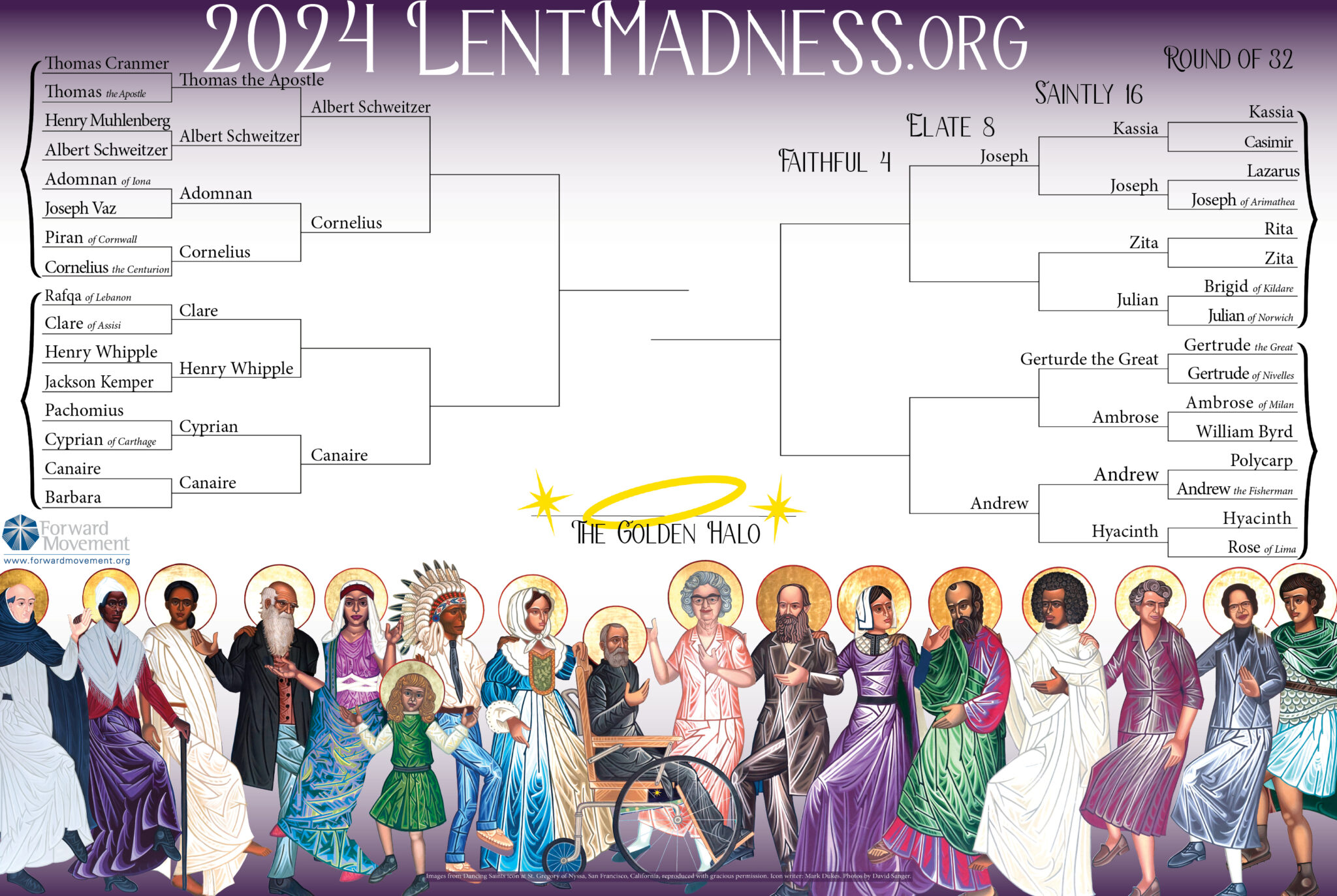
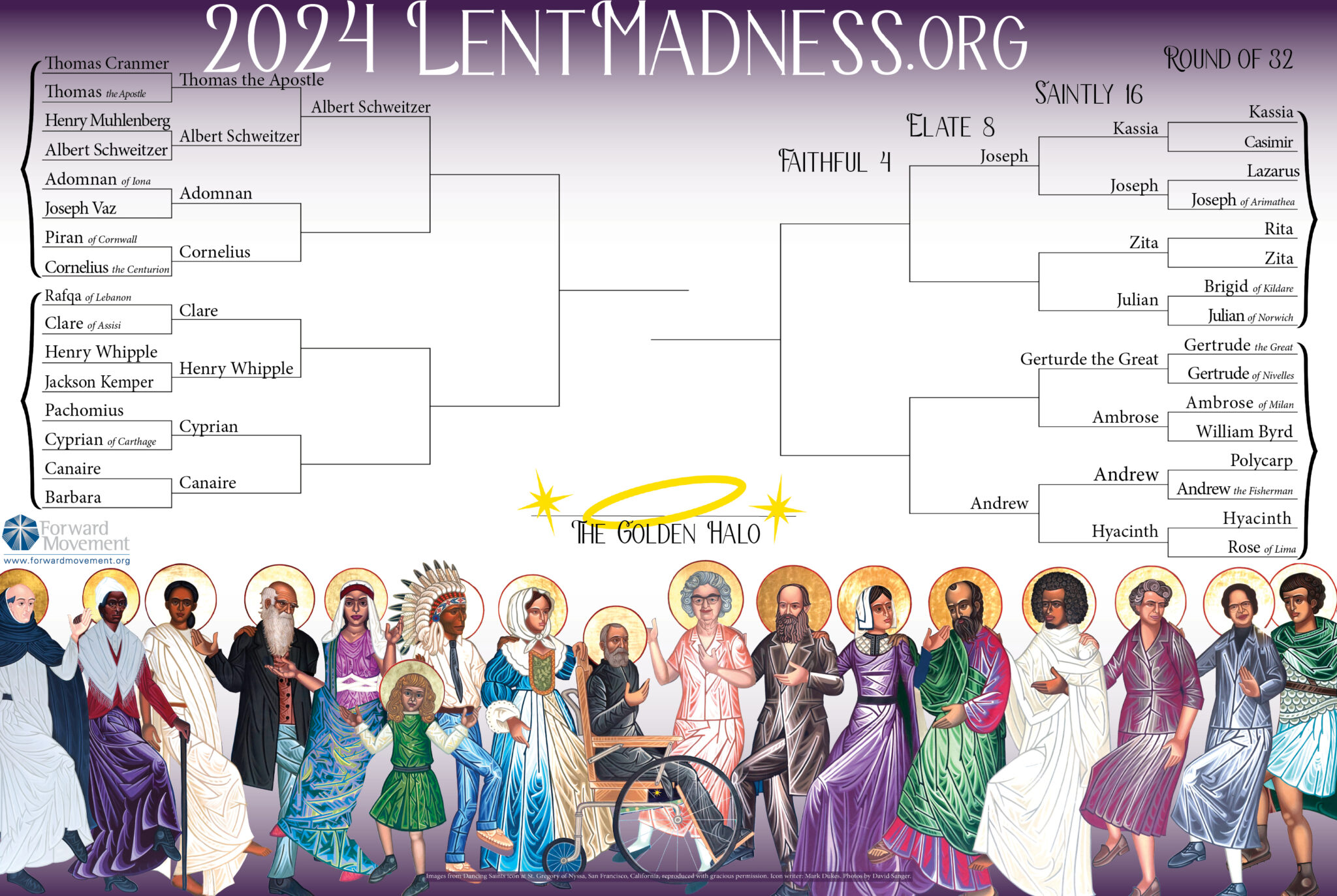
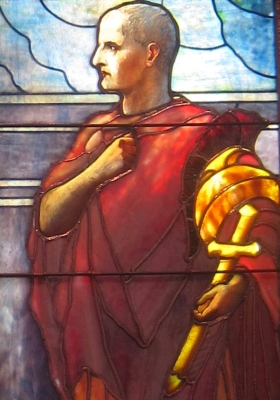
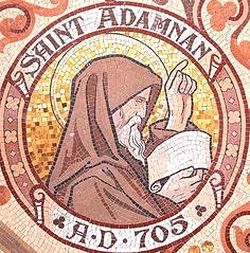
 Catching up with Lent Madness at the end of the week, we find that Cornelius the Centurion tamed one of our Shamrock Saints, Andoman, who goes back to the Emerald Isle.   Likewise, the last of the Grappling Gerties, Gertrude the Great, was pulled off stage by the ecclesial crozier of Ambrose of Milan.


Today it's one of the girls from that wacky sitcom, "Rita and Zita", vs that wise and sensible English mystic, Julian of Norwich, and I feel confident in calling this one for Julian.

Vote here.

Wednesday, March 13, 2024

Lent Madness: Cornelius the Centurion vs Andoman the Monk

 Greetings saint supporters.

Yesterday saw a victory for the Emerald Isle contingent in this year's Lent Madness contest, as Canaire skipped over the waves and left Cyprian of Carthage floundering.    Canaire earns her spot in The Elate Eight and will go on to face either Henry Whipple the Battling Bishop, or Clare (Not a Material Girl) of Assisi.


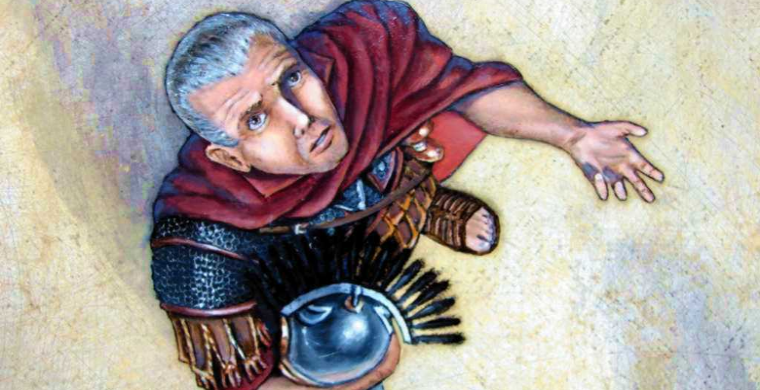
In today's matchup, the pious Roman soldier Cornelius of Acts 10 fame goes up against another of our Celtic Tigers, Andoman of Ireland.  I'm an old and pious soldier so I'm partial to Cornie, but I've been wrong before, and Andoman's voice of peace in the Dark Ages carries over to our time.

Who will win?   Vote here.

Tuesday, March 12, 2024

Lent Madness: Irish Water-walker vs Actual African Martyr

 Welcome back to Lent Madness 2024.  If you look at the two leaderboards, one in the parish hall, the other just outside the church on the bulletin board by the sacristy, you'll see that the numbers of winners are starting to thin out and the numbers of losers are growing.  That's the way Lent Madness works.  Fortunately, we're all winners in heaven!

Yesterday I was busy with grandchildren so no time for a post here, but Joseph of Arimathea defeated Kassia of Byzantium.   This was a surprising win, as I thought Kassia would be a favourite around International Women's Day, but Joseph shows the drawing power of the biblical saints in this year's contest.  Joseph will go on to face either Zita (or is it Rita?) or Julian of Norwich, depending on who wins that contest.


Today's matchup features Canaire of Ireland vs Cyprian of Carthage.  Canaire offers a charming story with a feisty feminist retort to a stodgy old abbot (who may have been her sibling), and a win for Canaire would avenge the defeat of her fellow Irish contender, Brigid.   It being so close to St Patrick's Day, does Canaire have a shot at the next round?


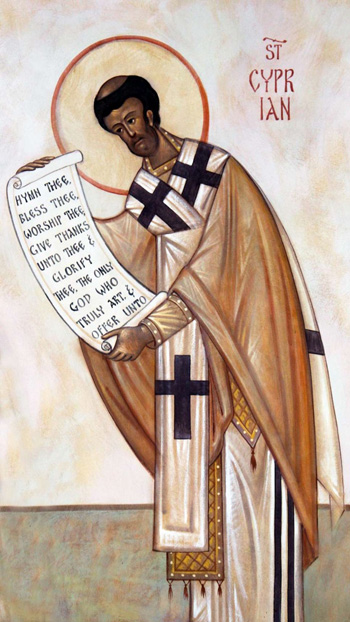
In the other corner, we have Cyprian of Carthage, whose life, faith, writings, and ultimate faithfulness to our Lord are all documented.


It must have seemed strange to the Roman authorities to have been confronted with such early Christians.  Official Roman religion was seen as the glue that held Roman society together, but not something that really mattered spiritually or was ultimately true.   The early Christians, however, actually believed that their God was true, real, and lord of the universe, and were willing to die for that faith.  Blessed Cyprian was one of that number.

Vote here.

Friday, March 8, 2024

Lent Madness: Two Who Spread the Word, and One Who Spread Himself

 As we saw with Thomas the Apostle's defeat by Albert Schweitzer yesterday, the Dangerous Disciples are no longer a Duo.   Today sees the other of Jesus' chosen friends, Andrew the Fisherman, going up against the medieval preacher, Polish saint, and water walker, Hyacinth.


Reading today's post at the Lent Madness website,  I noted that water walking is a theme in this year's LM:  Piran of Cornwall surfed on a millstone, Canaire walked on the ocean to go browbeat a stodgy abbot, and Hyacinth used his cloak as a ferry service.  Me, I fall out of my kayak.   Go figure.   

As a preacher, there's something humbling that while Hyacinth was famous for his sermons, not a word of them survives, and yet he is remembered for spreading the faith all through the Baltic region and parts of eastern Europe.


Like St Hyacinth, St Andrew also spread the faith across the known world, and likewise spread his bones.  The image above purports to show those of his bones currently resident in Scotland - about 7% of the bones of his body.  The rest are spread far and wide.  Talk about feeling scattered!

I'm going to call St Andrew as today's winner, because Scotland.    Vote here.

Thursday, March 7, 2024

Lent Madness: The Polymath vs The Apostle

 Greetings Hagiophiles!

Today we see the Saintly Sixteen completed, as Clare of Assisi had a tidy victory of Rafqa of Lebanon.   Nobody's going to call her Poor Clare now, unless it's her accountant doing her taxes.  The thirty two holy hopefuls have been cut in half (well, not literally, though that was one method of martyrdom - see Hebrews 11.37), and now things get really serious.


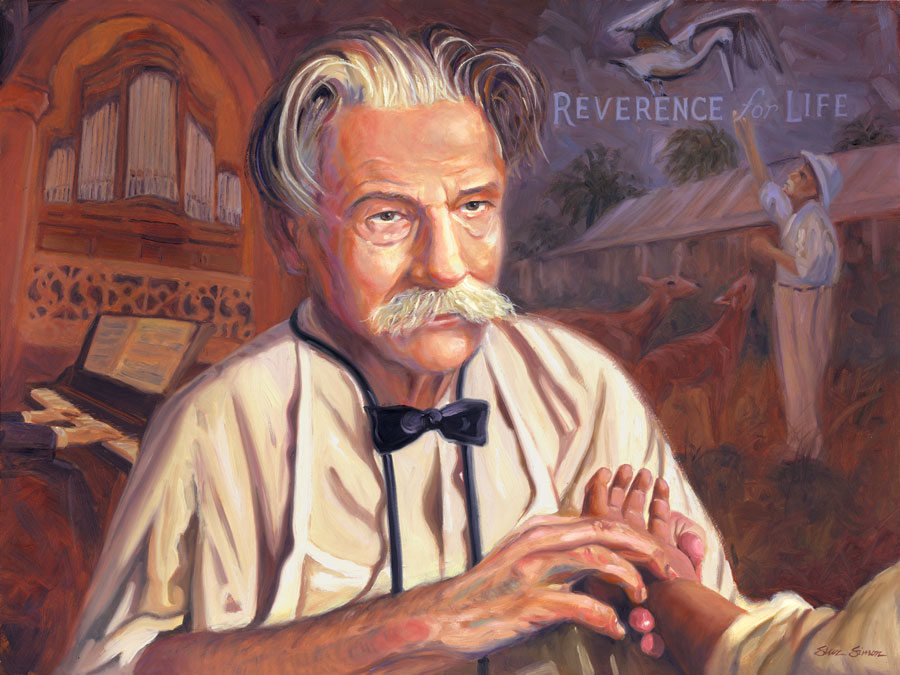
Today it's our friends Albert Schweitzer (big moustache, did everything, certified polymath) versus  Thomas the Apostle (hand picked disciple, doubter but then believer, reluctant apostle).


Biblical characters so far in Lent Madness 2024 have done well in getting into the next round, but here Thomas runs into a bona fide historical figure whose deeds are documented, whereas Thomas' story, if you read today's post.  The third century text The Acts of Thomas, for example, has many charming stories (legends, really) including how, while he was in India, Thomas found and baptized the Magi who had gone to Bethlehem to honour the infant Jesus.

What do we make of these charming stories?  The councils of the church excluded certain books, like The Acts of Thomas, from the canon of scripture, doubting their orthodoxy in some cases, or their accuracy in others.    The Reformation was notoriously hard on the saints' lives and stories, like the ones about Jesus as a child, that had grown up during the Middle Ages.  The Reformers disapproved of legends that they felt distracted the faithful from the saving truth of scripture, which alone could save us (sola scriptura).

However, today as our bible study noted when we met yesteday, millions of people follow the show The Chosen, a multi-season life of Christ that makes liberal use of invented events and characters to flesh out the story and the world of Jesus and his followers.     Perhaps it is because we are a story telling people that we need stories and legends to make biblical characters real.   The same is true of history, as the Ridley Scott movie Napoleon shows.

Anyway, I digress.  Vote here.

Wednesday, March 6, 2024

Lent Madness: Sisters Are Doing It By Themselves

 Greetings saint supporters!

Catching up after a very rejuvenating retreat this weekend, and discovered that Julian of Norwich easily put out the fiery Brigid of Kildare.   While I'm always sorry to see an Irish saint go down to defeat, I must admit that Julian of Norwich's resume is much more substantial than that of someone who probably began her career as a Celtic fire goddess.   Julian is a hero of the Christian mystical devotional tradition and she will go on to face (and, I predict, defeat) Zita.  Or is it Rita?  Who can tell them apart, really?

Apologies to Annie Lennox for the title of today's post.  One of the things I'm grateful to Lent Madness for is it's introductions to so many women who have embodied and passed on our faith through study, charity, and devotion to our Lord.  Today's matchup features two such saintly sisters, and they were sisters, in the religious and vocational sense.


Rafqa Pietra Choboq Ar-Rayès, to give her full name, saw her share of the religious violence that still afflicts her part of the world, and yet lived a life of quiet and calm devotion, making her own clear choices as to in which convents she would live out her vocation.  Her Wikipedia entry contains a particular graphic account of the loss of her eye, which did noting to relieve a suffering which she gladly embraced.  Today, when medicine keeps our suffering at bay as much as possible, and where MAID is an option, the desire of many saints to draw closer to the passion of Christ in their suffering is remarkable, and maybe even admirable.  Would we choose such a route, I wonder?


Clare of Assisi also reminds us that the religious vocation could be a liberating path in a man's world (and in a man's church).  Her decision to follow the way of St. Francis also reminds us of how Francis' call to embrace a Christ-like poverty and service must have captivated the imaginations of many.     Her example still inspires today, for her Order, the Poor Clares, maintain convents in BC and in Quebec.


Hard to call this one.   Vote here.

Monday, March 4, 2024

Lent Madness: Two Gertrudes Intrude

In last Friday's Matchup, Cornelius the Centurion gained another victory for the biblical saints by narrowly defeating Piran of Cornwall, thus showing that pious centurions can beat out hard-drinking Cornishmen.

In todays matchup, two Saint Gertrudes compete for the last spot in the Saintly Sixteen.   I confess that I'm a fan of the name Gretrude, which, sadly, is one of those arcane names like Beulah and Iris that don't seem to be popular for girl's names these days.  Also, I have fond memories of Gertie Hamelin, a friend of my mom's, who used to tell wonderful stories of life in wartime Scotland.  But I digress.


Saint Gertrude the Great has a decent resume, as a scholar, theologian, and mystic.  She is often depicted holding the Sacred Heart of Jesus, and she is credited with beginning the Catholic devotional tradition of meditating on the heart of Christ.


Gretrude of Nivelles, on the other hand, does not appear to have a resume to impress, but she had great regard for the souls in Purgatory (a belief of medieval Christianity in the west) and, since those souls were often depicted as mice, she became the patron saint of cats, which I think pretty much guarantees that she'll win.

I'm voting for Gertie the Great, but you cat fans vote as you please.  Vote here.

Friday, March 1, 2024

Lent Madness: Surfer versus Soldier

Good day saint supporters.

In yesterday's match of the battling bishops, Bishop Henry (the Whip) Whipple, like Jesus in the temple, cracked the whip and drove poor Bishop Jackson out of the ring.   Personally I'm not sure what the difference was between these two guys, but our American Anglican friends, the majority of Lent Madness players, have strong opinions and most threw their votes to Whipple.

In today's matchup, the corn jokes have already been done on the Lent Madness website, so I'll spare you, my puns would just be empty husks of humour.  Today we get to choose between Dark Ages Celtic fancy and a brief but important biblical appearance.

Piran of Cornwall is Irish by birth, so he's in good company in these year's competitors which include Canaire, Brigid, and Andoman.   Besides being the patron saint of tinsmiths and hard drinkers, Piran could be the patron of surfers.


Cornelius the Centurion gets my vote because he's a pious soldier, though the soldiers I knew would have probably wanted Piran as their Padre (see hard drinking).    Cornelius makes a crucial appearance in Acts 10 where he and his household are baptized by Peter at the Spirit's urging, thus convincing the church in Jerusalem to open membership to gentiles.  As a gentile myself, I say, thank you, Cornelius


I'm voting for Cornelius myself, but I suspect Piran will win the day because of his various antics.

Vote here.


Thursday, February 29, 2024

Lent Madness: Battling Bishops

 In yesterday's matchup, Zita handily disposed of her fellow Italian saint, Rita.    I confess that I didn't have much enthusiasm for that particular faceoff, but I'm still hoping for the sitcom.

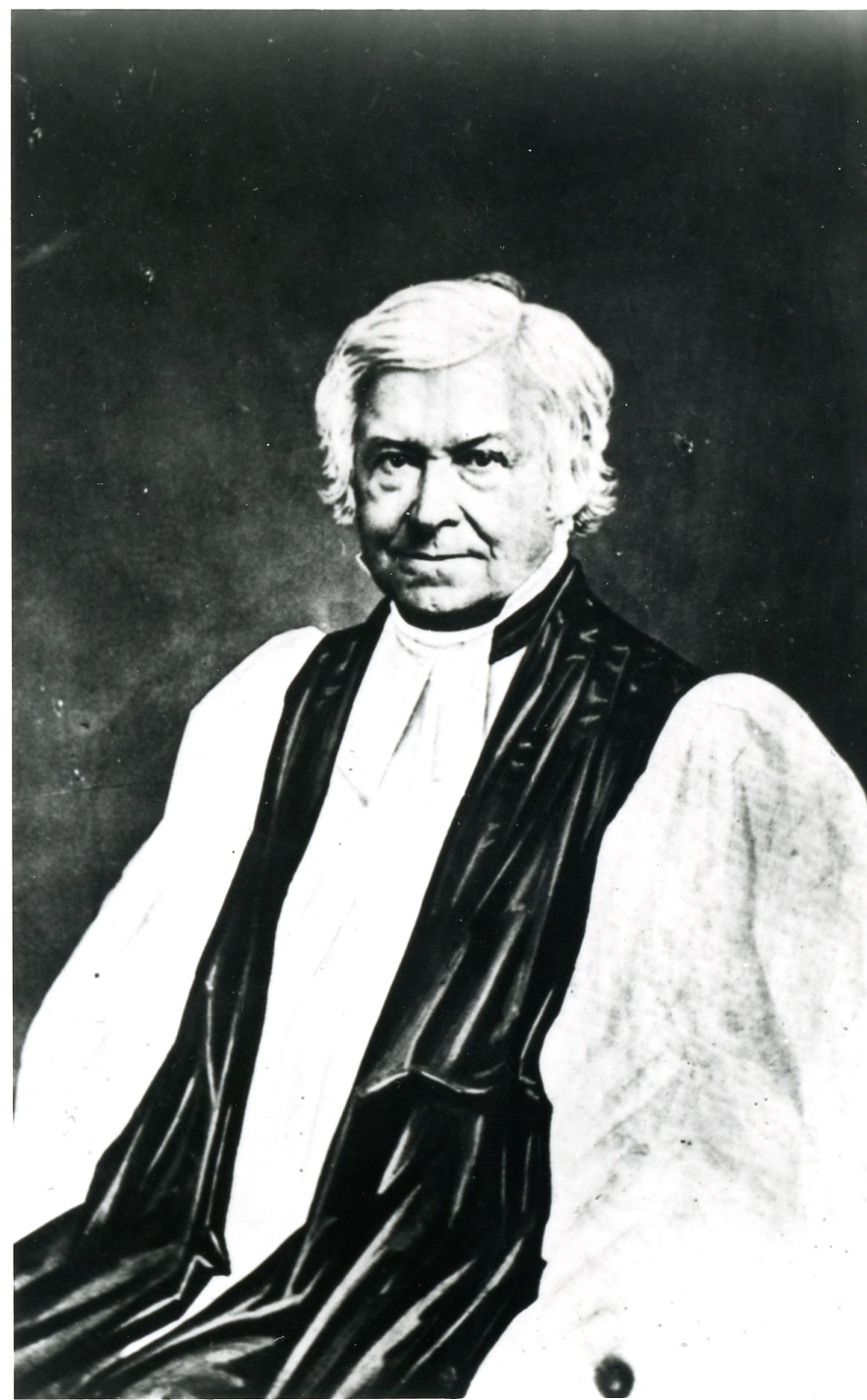
Today the mitres are mixing it up and the croziers are clubbing as two Victorian bishops of the US Episcopal  church put up their pious dukes.  I think this is the first matchup of the year featuring two bona fide Anglicans in the ring.

In this corner, Bishop Henry (The Whip) Whipple.


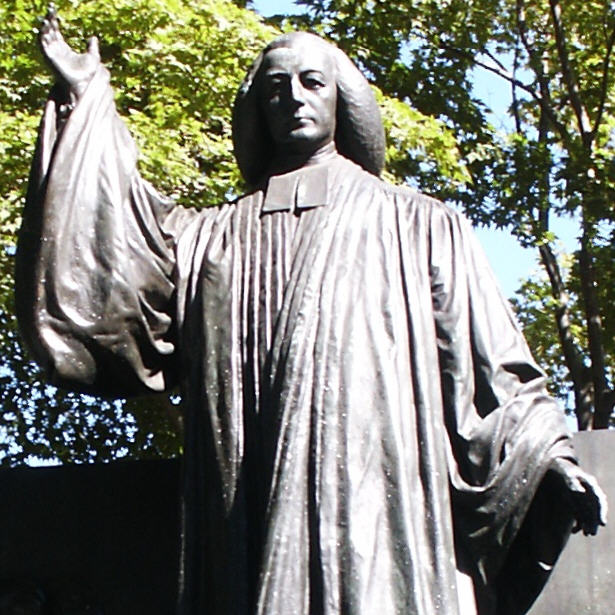
Like his Canadian contemporaries such as Bishops Moutain and Strachan, he was not only a church builder, he was a diocese builder.   He spent most of his adult life (42 yrs) as the first bishop of Minnesota, and was a fearless advocate for the indigenous people that most American settlers and politicians saw as a nuisance at best, and as inhuman at worst.   For that, he deserves the church's gratitude and memory.  Fun fact, there is a massive government structure, the Henry Whipple Federal Building, in Minnesota.


When I was a divinity student at Wycliffe College, we used to hear about Isaac Stringer, the Archbishop of Rupert's Land, also known as "the Bishop who ate his boots" because once, trapped in a cave during a blizzard, he boiled and ate his deerskin boots.    Jackson Kemper was a bishop of that ilk.  Not sure what he ate during his long travels through the largely unsettled Northwest US, but he seems tireless.     

Fun fact, both contestants had a role in ordaining Enmegahbowh, the first American indigenous Episcopal priest and a contestant in Lent Madness 2023 who made it to the Saintly Sixteen.  Kemper ordained him a deacon, and Whipple ordained Enmegahbowh a priest.

For that, don't they both deserve a vote?

Vote here.

Wednesday, February 28, 2024

Lent Madness: Sounds Like A Sitcom Matchup

 Greetings Halo Hopers:  

I was a little surprised that William Byrd played some sour notes and was voted off the stage in favour of Ambrose of Milan.   That takes my record to 3 wins and 6 losses.    

Very pressed for time today so nothing to add in the way of witticisms, except that "Rita and Zita" sounds like the title of a TV sitcom.  Hard to choose between them, as Rita's life seems unbearably sad, but I suspect that Zita will win because a) her name is cooler and b) we all lose stuff, including me, the guy who asks my wife to call my cell phone so I know where it is.

Vote here.

Tuesday, February 27, 2024

Lent Madness: The Reluctant Bishop vs the Discrete Musician

 Welcome to our second full week of Lent Madness 2024.     In our last matchup on Friday, I was surprised that the North African theologian Cyprian of Carthage beat Pachomius, one of the founders of monasticism.  That takes my record of predictions to 3 wins and 4 losses.

I didn't post on yesterday's matchup between Andoman and Joseph Vaz, and didn't have thoughts on who would win.    Anyway, congratulations to Andoman, our second Irish saint in this year's Lent Madness.    


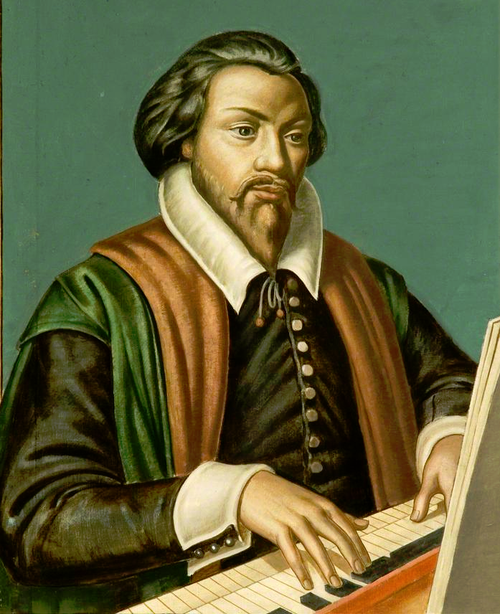
In today's matchup, Ambrose of Milan squares off against William Byrd.   


It's always a good rule to be suspicious of clergy who desperately want to wear a purple shirt.  Ambrose, by contrast, wasn't even baptized before he was chosen by the faithful of Milan to be their bishop.  He would go on to be a fearless opponent of tyrants and heretics, and like his opponent today, managed to write a hymn or two, some of which survive today and which you might hear in church during Advent.


If Ambrose was reluctant, William Byrd was discrete.  He managed to keep his head down (and on) during the tumult of the Tudor period, even though he was a Roman Catholic.   Queen Elizabeth I was a fan.    Like that of his contemporary, Thomas Tallis, Byrd's music has a haunting beauty and took advantage of the taste in complex polyphony (multiple voices and parts) of the time.   Here's a taste.

I'm a fan of Tudor church music, so I'm going with Byrd to win.    We'll see if other birds of a feather flock to him.

Vote here.

Friday, February 23, 2024

Lent Madness: Out of Africa

 Judging by what the host site, Blogger tells me, these Lent Madness updates are read by a depressingly small handful of people, but I shall forge on.

In yesterday's matchup, Lazarus was buried under the pile of votes heaped on Joseph of Arimathea,  so Jesus' secret disciple goes on to face the redoubtable Kassia, while Lazarus goes back to sleep.

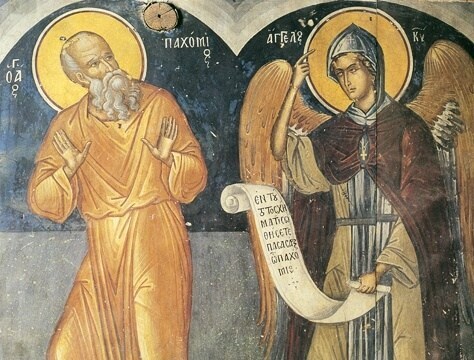
I'm calling this the Out of Africa matchup, because that's all I've got that's clever, and Egypt is technically in Africa.  In one corner is Saint Pachomius, looking rather dismayed at the reading assignment given to him by the angel.


When I was an undergrad, a history professor liked to go on about how the monastic movement was a cop out.  Believers, he said, should be out in the world preaching and evangelizing (he was a Mormon), not holed up from the world praying.  Fortunately, faith is not a binary choice, and needs all sorts of ways of belief.  Bishop Andrew, in today's letter to the Diocese, talks about how he and his fellow diocesan leaders always make a Lenten pilgrimage to a monastery.   Monasteries and convents are sanctuaries for the weary, places of retreat and restoration, and send prayers aloft daily for the world.   We should be glad to have them, and grateful to St. Pachomius for being a founder of monasticism.


In the other Cyprian of Carthage was one of those North African theologians and church leaders most famously represented by Augustine of Hippo, whose early life and conversion Cyprian closely resembles.  He had a fine legal mind,  and was a fearless leader of the church, who like many of our Lent Madness Halo Heroes embraced a martyr's death.

Cyprian famously said that "He who does not have the church as a mother cannot have God as a father", which those who profess to find God on Sundays on the golf course may disagree with, but it's a good sentiment to think about on the eve of our parish vestry meeting.

I think I'm about 3 and 3 for my predictions, and this time I'm going with Pachomius on the grounds that he's an old soldier, like me, and I'm fond of monasteries.

Vote here.

Thursday, February 22, 2024

Lent Madness: Graves and Graces


It wasn't even close.  Poor Polycarp was a catch and release contestant, while Andrew the Fisherman filled his nets with votes.  Andrew will go on to face Hyacinth.  We will see which one will blossom.

Today's matchup points us towards Easter because both saints represent empty tombs.

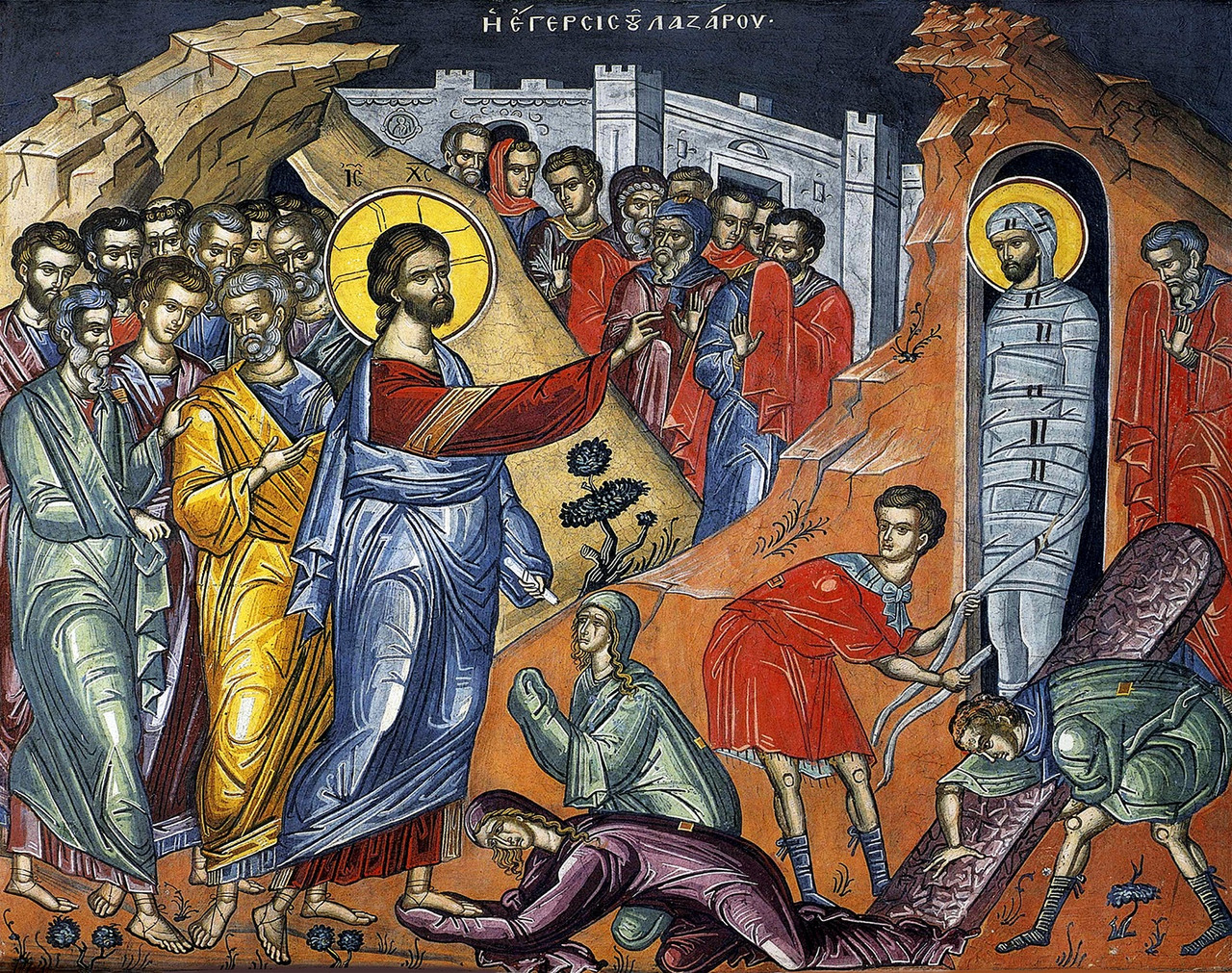
In one corner, looking a bit like The Mummy, is Lazarus of Bethany,


I've always felt a little sorry for Lazarus, because he had ample time to enjoy the pleasure of heaven, assuming that we go there and don't just sleep until we are called awake on Judgement Day (both are attractive prospects; the first sounds a lot like the wonderful ending of CS Lewis' The Last Battle, the second sounds like a good rest).

What makes Lazarus human as well as miraculous is that he and his sisters were friends of Jesus, who knew their house and welcomed their hospitality.  May our Lord always be welcomed under our own roofs.

In the other corner, we have Joseph of Arimathea.


All the gospels agree that Joseph was one of the friends of Jesus who care for his body after his death on the cross, selflessly giving up his own tomb for our Lord.  As someone who had his own tomb, Joseph must have been a man of substance,  He must have been notable in his community, because he was allowed an audience with Pilate the governor and requested that Pilate release Jesus' body.  Notable or otherwise, that must have taken courage on Joseph's part.   John's gospel also tells us that he was a Pharisee but secretly recognized the truth of who Jesus was.    That makes him very human.  Not all of us have the courage to give up our security for our beliefs, and so we try to do the best we can under the radar.

So an interesting choice.  Lazarus was the recipient of grace, while Joseph was an active benefactor of Jesus.    Your choice.

Vote here.

Wednesday, February 21, 2024

Lent Madness: The Carp and the Fisherman

As I predicted (correctly, for a change), in our Lutheran Lashup, Henry Muhelenberg was soundly defeated by Albert "Out of Africa" Schweitzer, proving that a handsome moustache can give a saint an edge.     Albert will go up against Thomas the Apostle and that will be an epic challenge.


 Was Polycarp burned wearing his bishop's vestments?  Mitre been.

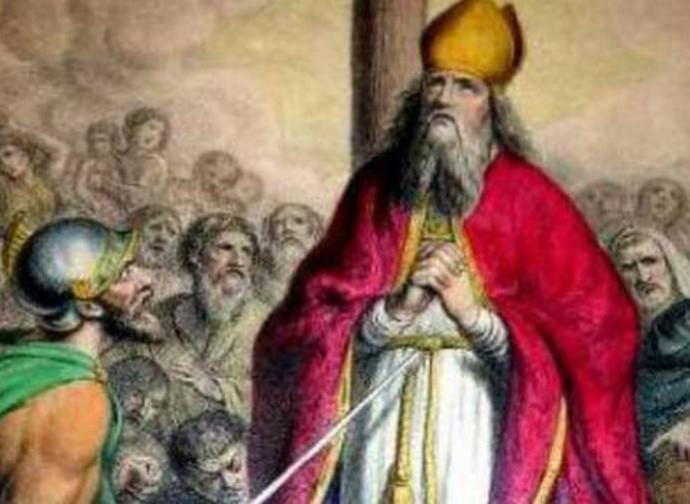
For today's Saintly Scrapple, in one corner we have Polycarp of Smyrna, a bishop, theologian, and martyr of the early church.  He joins Thomas Cranmer in this year's Lent Madness roster as a bishop who was sentenced to be burned at the stake, though his executioners found that task harder than expected.

Polycarp was a defender of what we would today recognize as credal Christianity and orthodoxy, though in his lifetime at was a massive dragout debate.   He is famous for embracing his martyrdom serenely at an advanced age, saying  to his Roman persecutors, "Hear me declare with boldness, I am a Christian".  That's a good sermon for this coming Sunday's gospel reading, in which Jesus tells us not to ashamed of him or of his words (Mark 8.38).

Polycarp.s opponent is the fisherman, disciple, and apostle, Andrew the Fisherman, who is one of the characters of the popular series "The Chosen".


If learned and wise people like Polycarp kept the faith, it was simple and brave people like Andrew that established the church.  Both Polycarp and Andrew deserve honour and veneration, and both were willing to die for their master in hope of the resurrection that he promised his followers.    Hard choice. 

Andrew apparently went everywhere in his career as an apostle, so players of Lent Madness with Scottish, Romanian, Ukrainian and Russian descent will likely tip the balance in is favour.

My prediction is that Andrew will come out of today with his net full of votes.

Vote here.

Tuesday, February 20, 2024

Lent Madness: Grappling Germans

Our last matchup saw the Irish saint Canaire skipping across the waves while "Boom Boom" Barbara came close but ultimately flamed out.   I'm always a sucker for an Irish accent, so I backed Canaire and now my prediction record is 2-2.

Today's matchup features two Teutonic titans, two grappling Germans, zwei disputing Deutschers. 


Henry Muhlenberg looks to me a lot like the Anglican missionaries and clergy who came over to Canada and America in the 1700s to found the church here.   It's interesting to note that other Christian denominations were doing the same here, and the German diaspora would have had it's share of Lutherans coming to minister to them.    (Fun fact:  it wasn't just Lutherans, our friends in Collingwood at New Life Church can trace their roots back to Low German settlers in Pennsylvania who were Anabaptist, and who became known as Brethern in Christ.  Christianity then as now was quite diverse). 

I almost feel sorry for Henry, he has a sweet kind face, but he doesn't have the awesome moustache or reputation of Albert Schweitzer.


Pastor, theologian, musician, doctor, missionary, author - is there anything that Schweitzer didn't do better than almost anyone else?   Fun fact, Schweitzer makes a cameo appearance in Young Indiana Jones, a TV series aired in the early 1990s.  You can see a brief clip here.

I'm willing to bet that Schweitzer will handily win this battle of the Dueling Deutschers,  but he'll go on to face Thomas the Apostle, and that will be an epic battle.

Vote here.

Mad Padre

Mad Padre
Opinions expressed within are in no way the responsibility of anyone's employers or facilitating agencies and should by rights be taken as nothing more than one person's notional musings, attempted witticisms, and prayerful posturings.

Followers

Blog Archive

Labels