Showing posts with label PTSD Issues. Show all posts

Wednesday, May 30, 2018

Book Review: Adam Montgomery, The Invisible Injured: Psychological Trauma in the Canadian Military From the First World War to Afghanistan

Here is a link to my review of the subject book, which appeared on The Strategy Bridge (TSB) this week.   For those of you who aren’t familiar with it, TSB is an excellent online journal for anyone interested in military history, contemporary military issues from doctrine to ethics, and foreign policy.  

https://thestrategybridge.org/the-bridge/2018/5/28/reviewing-the-invisible-injured

Disclaimer: while I am an associate editor for TSB, I had nothing to do with the selection of this piece.


MP


Friday, August 5, 2016

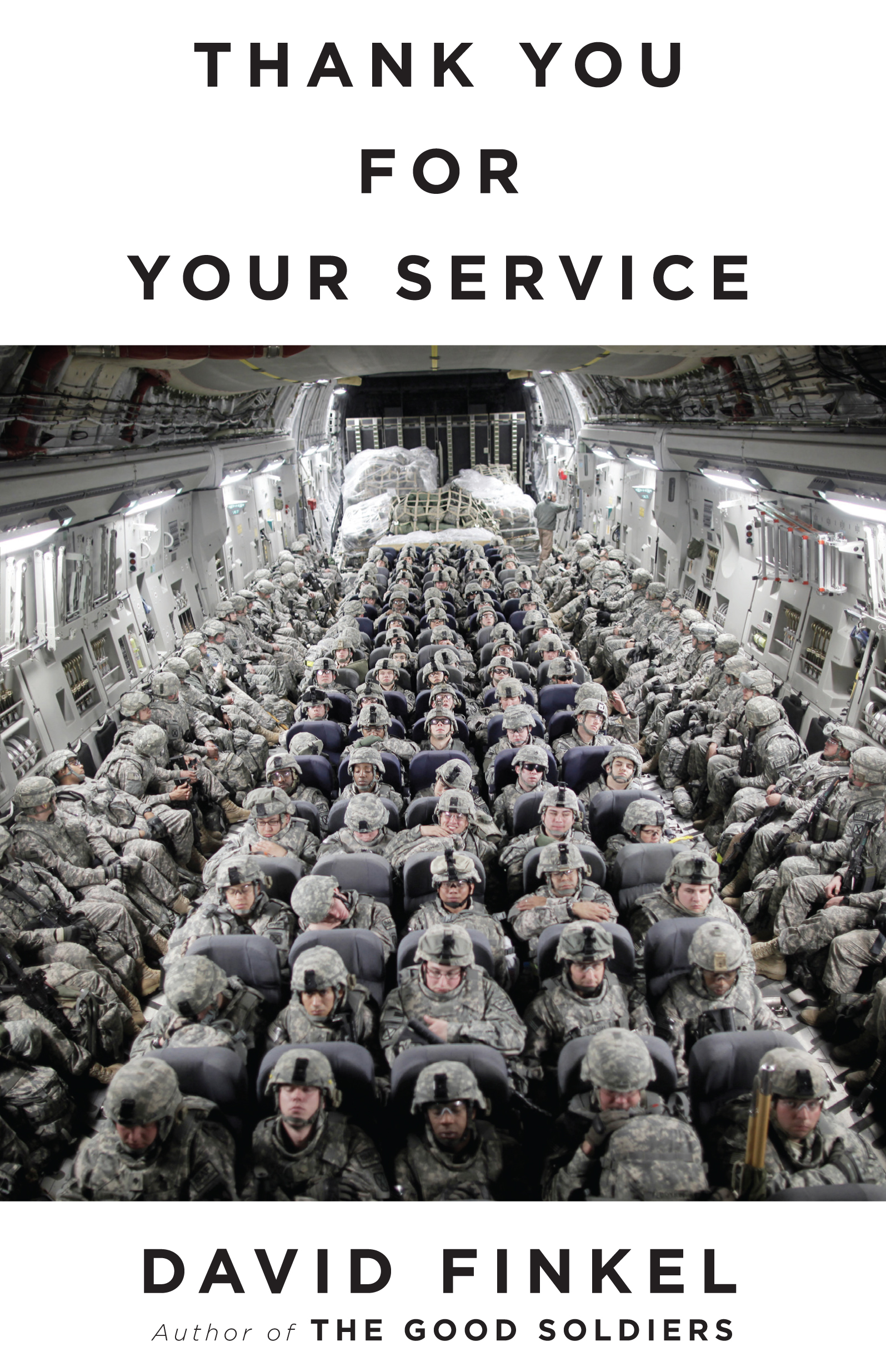
Book Review: David Finkel, Thank You For Your Service


David Finkel, Thank You For Your Service.  Toronto: Bond Street Books, 2013. 

I am slowly working my way through a stack of books about the wars in Iraq and Afghanistan that have been published in the last few years.   My hope is that these books will be useful in the ongoing work of my unit, the Canadian Armed Forces Chaplain School and Centre, and that they will better prepare my colleagues to support those, soldiers and their families, who have been touched by war.

Most of these books are about the US experience in the so-called War on Terror, or as journalist Dexter Filkins called it presciently, almost a decade ago, The Forever War.  However, today's title, while by a US author about US soldiers, seems highly relevant.  As Romeo Dallaire and Carol Off. write in their forwards,  “it could just as easily have been written about Canadians in Afghanistan”. 

“(T)he after-war continues, as eternally as war itself” is how David Finkel ends his book, Thank You For Your Service.  For years now, Finkel has dedicated his work as a journalist to documenting the reality behind the words, “thank you for your service”, too often uttered by those who know nothing to those who can say nothing about the horrible things they have seen and done.  In his honest and unsparing account of ordinary people trying to repair their lives, Finkel reminds us that the terror continues in what he calls the after-war.  Young men return broken and ashamed, afraid to tell their partners “stuff” for fear that they will be seen as monsters.  Young women try to find the patience to raise frightened children and protect them from fathers who have changed.  “As soon as he got home”, one wife says, “he really wasn’t the same no more at all”.

In an earlier book, The Good Soldiers, Finkel embedded with a US Army unit tasked with patrolling one of the most violent parts of Baghdad, “a sorry bomb-filled neighbourhood ... (where) the war felt eventually like the wrong everything”.  These soldiers would armour up, go through their good-luck rituals, and load into convoys of lightly armoured Humvees,   never knowing when they would be blown up.   I reviewed The Good Soldiers here in 2009.  Towards the end of his earlier book, Finkel focused on difficulties of soldiers coming home to the US on leave during their tours. 

He quoted a mental health care specialist who described home as a  "a place of disaster" for most soldiers, whose trips home to the US on leave midway through their tour were not what they expected.   "There's an anger in guys when they go back. They want to go home and be normal, and they're not quite normal," he said, and added, "Coming back from leave is the worst part of the deployment".  Now, years after the war, home is more than ever a place of disaster.

In Thank You For Your Service, Finkel follows some of these same men after their return to the US.  Some came home broken by too many deployments, having seen too much and feeling too much guilt for comrades shot or burned to death inside their vehicles.   The same bonds which held them together would eventually work against them, for as Finkel writes, “To be a soldier in combat was to full love constantly”, only to have the loved one killed or shattered or burned before one’s eyes.


For some of these returning soldiers, these lost comrades haunt them waking and sleeping, like one soldier whose friend appears regularly and says “You let me burn”.  For others, the effects of loss, guilt, and post-traumatic stress are compounded by the physical effects of violence on the body and especially on the brain.  Cognitive loss and dementia are just as real to these soldiers as they are to some professional athletes.   In this harrowing passage, Finkel describes the long-term effects of such an injury on a soldier who, years later, cannot remember how to buy flowers for his wife.

 "Before he got blown up, he could have figured it out.  How hard is it to buy roses?  There’s a flower shop on Fort Riley.  They sell them at Walmart.  But such are the effects of being in a Humvee that rolls over three buried 130-millimeter artillery shells, which explode at the perfect moment.  Up he went, and down he came, and once his brain was done rattling around from a blast wave that passed through him faster than the speed of sound, here came the rest of it.  Memory, fucked.  The ability to pay attention, fucked.  Balance.  Hearing.  Impulse control.  Perception.  Dreams.  All of it, fucked.  “The signature would of the war” is what the military calls traumatic brain injury …  (198)

 Thank You For Your Service takes the reader through a labyrinth of damaged bodies and psyches, and of broken relationships and domestic abuse, that plays out in bleak neighbourhoods around a military base, or in the offices and clinics of a bureaucracy hastily-assembled by a military scrambling to understand and cope with these many unexpected casualties.    While Finkel is sympathetic to the many military and civilian personnel struggling to assist these injured veterans and their families, his conclusion, again and again, is that it is not enough.  Ordered by the chain of command to analyze each suicide, unit and brigade leaders struggle to find out if the member has taken mandated suicide prevention training, as much to cover themselves as to develop lessons learned.  Well-meaning generals cooperate with medical researchers to assess risk factors for suicide, but find that explanations are elusive.  Soldiers are medicated but cannot find adequate long-term treatment programs.   Wives feel alone and cut off from help.  Families struggle to pay the bills as unemployable and wounded veterans run through their benefits.   All of these ongoing struggles are what Finkel calls the “after-war”, as if getting blown up in Baghdad is just the start.

 This is one of the most difficult and demanding books I have ever read about contemporary warfare.   Finkel’s honesty, and the incredible degree of access he has gained to ordinary and damaged people gives this book a brutal and stark truth that a hundred war novels and films could never hope to capture.   It is a book that demands far more of society than empty slogans and cheap celebration of its “warriors”.  While Finkel is not prescriptive in his solutions, he seems to suggest that these veterans demand, and are owed, far more time, attention and care than they currently receive.  However, a society that would pay its debt to these men and women would first have to acknowledge what it asked them to do, and that admission might prove too difficult.

 We should all read this book if only to gain a better understanding of how the ongoing physical, mental and moral injuries of the “after-war” can isolate and oppress those who have returned to an uncomprehending country that no longer feels like home.   A person of faith will note that there is next to nothing said here about how faith or spirituality can be resources for such veterans, a notable absence that should be noted by those chaplains working in the area of spiritual resilience. 

One sees glimpses of hope and endurance here and there, in the care and love that these broken soldiers show one another, or in the determination of a few to walk with them and help them.   As the book ends we see one family seem to start a new life together, somehow still together after countless quarrels and fights, but by then we have learned of  many others who never survived the after-war, having chosen to end their own pain and struggle through suicide.   As a chaplain you will find no easy answers for ministering to veterans like the ones described here, but you will better appreciate the reality of the pain and the immensity of the need.

MP+

Friday, January 22, 2016

What Sarah Palin Got Wrong About PTSD

I confess that I am not a great fan of Sarah Palin. Part of me thinks she embodies everything that is wrong with political discourse today, though I am grateful for her return to the media spotlight in the perverse way that one has when witnessing clowns engaged in a custard pie fight on a burning train careening towards a collapsed bridge. in other words, it's difficult to parse the horrific from the entertaining.

One thing I didn't know about Palin was that she is a military mom. That came to the spotlight this week when her son, a US Army reservist and Iraq war veteran, was arrested on 18 January after being charged with domestic assault and weapons possession while intoxicated. There's a bit of a fact sheet on this here.

The only reason I am mentioning any of this here is that Ms. Palin went public this week and appeared to shield her son from responsibility by blaming neglct President Obama and the US government for neglecting US veterans with PTSD.

“It’s a shame that our military personnel even have to wonder, if they have to question, if they’re respected anymore,” the former Alaska governor said. “The question, though — that comes from our own president, where they have to look at him and wonder, do you know what we go through?” 

These comments prompted a ton of comments from the US Army people I follow on Twitter, who noted with varying degrees of outrage that PTSD was never a blanket excuse for personal responsibility. Others felt that by invoking the stereotype of the "damaged vet", Palin had reinforced public suspicion that veterans are inherently violent and unstable.

As an alternative to that stereotype, I refer you to this thoughtful article, which includes some voices of veterans who have successfully confronted their own PTSD.

Bottom line: Ms. Palin got it wrong about PTSD. While she may feel protective of her son, he bears responsibility for addressing his condition, and his family has enjoyed the financial means to seek treatment above and beyond what may be provided. Using this issue politically, and blaming the government while ignoring the battered girlfriend, has no part of honesty, honour, or decency. MP+

Monday, October 19, 2015

Book Review, Redeployment by Phil Klay


Redeployment by Phil Klay (Penguin 2014)

 Redeployment may be the strongest and most literary work of fiction to have emerged from America’s recent wars, deserving comparison with Kevin Powers' The Yellow Birds .  It is a collection of short stories, presenting different voices of soldiers, all back from war and all trying to process their various experiences.  Together the voices have the quality of a person directly after an accident, still trying to ascertain the extent of their injuries.
The author, Phil Klay, served from 2007-2008 as a Public Affairs Officer in the US Marine Corps in Iraq.  While he describes his own experience as “a very mild deployment”, it is clear that he was a skilled observer of military experience.  His characters seem highly believable as they go through the many stages of returning home, including emotional numbness, anger, heightened alertness, and disillusion.
Klay is clearly writing for a civilian audience, to whom the minds and experiences of new veterans are largely inaccessible.   In some stories, he shows readers how an experience at home can trigger memories and re-traumatize them.  In the first story, a Marine, a dog lover who had to shoot feral dogs in Iraq, finds that his girlfriend has kept his ancient and sick dog alive for his return. He refuses the services of a veterinary, and decides to put his dog down himself.  “That’s how it should be done, each shot coming quick after the last so you can’t even try to recover, which is when it hurts”.  In other stories, characters struggle to make themselves understood to civilians, sometimes using their “war stories” as weapons to wound and alienate their listeners.
Redeployment is a distinctively American book and the experiences of US Marines in places like Fallujah do not closely match (thankfully) those of CAF personnel in Afghanistan.   However, as a starting point in learning to understand the many ways in which contemporary war both wounds and stays with its survivors, it is a useful book.   Two stories will be of particular interest as they both feature chaplains.  In one, “Prayer in the Furnace”, a Catholic chaplain finds few words of comfort for a Marine who wonders how “somebody can live and fight for months in that shit and not go insane”.   As a Catholic himself, Klay imagines the priest’s pastoral and theological struggle with great sympathy and integrity.
While a work of fiction, Redeployment offers some understanding of the traumatic effects of war and the post-traumatic effects of survival and return from war.   For chaplain readers of this blog, since we who are called to walk with soldiers, and seek to understand their often concealed interior worlds, it is a useful book to have on our shelves.  Using war fiction as a means to explore issues of moral injury, spiritual resilience, and ethics may also be a useful way for chaplains to connect with other CAF members through one-on-one conversations, study groups, or talks.  Other recent fiction which chaplains should know about include Kevin Powers’ Iraq war novel The Yellow Birds and two classics of the Vietnam War, Tim O’Brien’s The Things They Carried and Karl Marlantes’ Matterhorn.
MP+

Thursday, July 2, 2015

The Christian Century on PTSD as Moral Injury


The June 2015 issue of Christianity Today features a cover story by Annalaura Montgomery Chuang entitled “War Torn: PTSD Is Not Just A Trauma Of The Mind But Trauma Of The Soul”.   The article follows a psychiatrist, Warren Kinghor, whose work in Veterans Administration hospitals led him to the conclusion that theology and spirituality offer deep insights into our understanding Post-Trauamtic Stress Disorder as a moral injury.  Kinghorn’s work led him to doctoral studies in theology and a faculty position at Duke Divinity School where he works with veterans of America’s recent wars.  Here’s an excerpt from the article.

 "Kinghorn’s training had taught him to focus on fear.  But his patients didn’t talk primarily about fear.  They talked about right and wrong.  He realized that the focus on fear had blinded him to veterans’ deepest struggles.  Those with severe, long-lasting PTSD, “the burner under the pot” was often “a combination of fear and guilt and shame”.  Those potent emotions came not only from what they had witnessed, but also from their own actions in the morally confusing situations of modern combat. 

Michael Yandell, a veteran, wrote for The Christian Century earlier this year.

“For me, moral injury describes my disillusionment, the erosion of my sense of place in the world.  The spiritual and emotional foundations of the world disappeared and made it impossible for me to sleep the sleep of the just.  Even though I was part of a war that was much bigger than me,  I still feel personally responsible for its consequences.  I have a feeling of intense betrayal, and the betrayer and the betrayed are  the same person: my very self."

Complete article is here.

Thursday, July 24, 2014

Is PTSD A Defence For Moral Lapses? The Case of Senator Walsh


In yesterday’s post on military medals and integrity, I mentioned that embellishing one’s credentials is a fairly common failing.   A case in point is U.S. Senator John Walsh (Democrat, Montana), who has in past tweaked his resume to make it sound more impressive.  According to today’s New York Times, Senator Walsh’s congressional bio once said that he was a graduate of the University of Albany, State University of New York, when “he actually earned his B.S. degree from what was then known as Regents College, an adult learning institute that issued degrees under the umbrella of the University of the State of New York”.  That may not seem like a big deal, and Senator Walsh amended his bio (without comment) when a political newspaper looked into his credentials.  

A bigger deal, reported today, is that when Senator Walsh was an officer in the US Army, and was a student at the US Army War College in Carlisle, PA in 2007, he appears to have plagiarized the final paper for his Master’s degree.  The NYT piece offers numerous examples of how Walsh included the material of other authors in his essay without quotation marks, often changing a word or two.  While some of these sources were footnoted, the absence of quotation marks is crucial.  Any undergraduate knows (or should know) that quotation marks tell one’s reader that the words and thoughts are not one’s own, and any attempt to suggest otherwise is a serious instance of academic dishonesty. A War College faculty member is quoted in the NYT article as saying that the importance of academic honesty is something that is made quite clear to the students - “We drill that in incessantly”. 

A postgraduate degree in contemporary western militaries is a significant rung on the career ladder to senior rank, or, in military slang, a “check in the box” necessary for promotion.   While any university instructor will tell you that academic fraud is a serious problem on college campuses, one would hope that military officers would have a sounder understanding of personal and professional integrity than a callow undergraduate.

Senator Walsh has told the Associated Press that his war experience in Iraq led to Post Traumatic Stress Disorder which affected his judgement.   “I don’t want to blame my mistake on PTSD, but I do want to say it may have been a factor.  My head was not in a place very conducive to a classroom and an academic environment”.   In the same interview, he said that he “didn’t believe” that he had plagiarized his paper.

It’s tempting to think that in the hyper-partisan climate of US politics, Senator Walsh’s opponents will try to exploit this story.   A Montana Democrat is already using the words “smear campaign”.   However, to be fair, the Senator’s military credentials, including his War College degree, doubtless made him an attractive candidate in the first place.  At some point the voters will decide, but the story does raise a troublesome question about whether PTSD can be used as a defence for lapses of moral judgement, even if, as in the Senator’s case, it is a curiously high-functioning form of PTSD.  

It would be interesting to hear the Senator comment on the following hypothetical scenario.   A young veteran, attending college, is sitting in his or her professor’s office.  They are discussing the student’s  paper which, like the Senator’s, uses other people’s ideas without properly acknowledging them.  The veteran pleads PTSD.  What should the professor say?

Tuesday, February 5, 2013

"I’d Already Rehearsed How I Would Kill Myself": New Treatment Hope For Those With PTSD

I've been tracking stories about eye movement desensitisation and reprocessing (EMDR) for about a year now, though the therapy has been around for several decades. I'm not a medical man, so I can't comment on whether the medical and scientific community has yet ruled on its ultimate effectiveness. A paper published on the Tufts Medical Centre website notes that EMDR research is still ongoing, though the US Dept. of Veterans Affairs and the Dept. of Defense "identify EMDR as a valid therapy for PTSD". Canada's Ministry of Veterans Affairs offers a more cautious assessment, saying it is "unclear whether [EMDR] is as effective as CBT )Cognitive Behavioural Therapy".

A piece published today on the UK Ministry of Defence website, and originally published in the UK's Soldier magazine, offers a very positive account of one British veteran's experience of EMDR as a treatment for PTSD incurred on his many deployments. Steve Johnson, a sergeant in the Royal Military police, is quoted as saying "I thought I had dealt with everything I saw but the sessions brought it out and put it back in order. Different things help people in different ways but for me EMDR is the only reason I am here today. I can’t explain the science behind it, but it worked."

I would encourage anyone seeking treatment for PTSD to get a medical opinion on EMDR as a possible treatment.

Monday, May 7, 2012

"I Landed Crazy": An Iraq Memoir Of Note

Military blogger and journalist Tom Ricks has been flagging a book that I want to move quickly to the top of my reading list. The Long Walk is a memoir of an EOD (Explosive Ordnance Demolition) operative in Iraq an apparently has a lot to say about PTSD and the aftermath of war.

This excerpt, posted elsewhere by Ricks, stuck with me:

The problem is that if I just painted the broad strokes I'd just look like a bastard. And that's what everyone with PTSD looks like. They're just whiny, or surly, or can't get their stuff together, or a bastard. And it's easy to dismiss someone and not help them when they're just a bastard. But if you take a minute to sit down and start going through things with them, then you realize that in reality they HAVE bastard. It's a disease. You really can get it. The only thing worse than bastard is the rash everyone around you breaks out in. It's called stigma, and it's an SOB.

If you have to be a bastard, at least try to be witty about it.

Peeling off those layers of stigma is no easy job, though. That's why most guys don't even talk about it to the shrinks. A lab coat and words like 'confidentiality' are to trust what a good OER is to merit. Just because you've got one doesn't mean you actually have the other. Our best therapists are not people with PhD's. They're the ones who've done the same "study abroad" program we have. I can talk about those things with other people who need to talk. I can tell those guys how I feel today without pulling any punches or getting all choked up the way I would punching it into a keyboard, because when I say it to them I know I'm telling them how they're likely going to feel in a few years.

Definitely a must-read for chaplains and others who work with returning soldiers, methinks.

MP

Monday, April 2, 2012

The Hidden Costs Of Drone Warfare


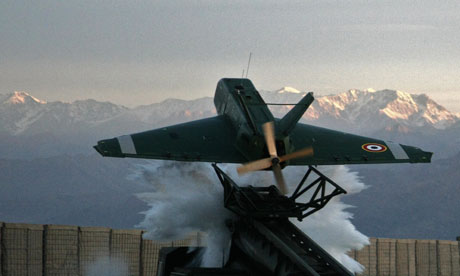
A French Air Force drone is released in Afghanistan in 2009: unmanned drones and cyberwarfare are set to be growth industries. Photograph: Joel Saget/AFP/Getty Images
Drone warfare is something Mad Padre has been tracking for a while, particularly the ethical temptations and implications of this kind of war. The proliferating use of drones allows western powers to exploit their technological impacts and minimize their exposure to human risk and casualties, which reduces the political risk of war.

Yesterday in the Guardian, John Naughton has a blurry encounter with Heidegger on technology, and draws the rather general conclusion that "technology is, in essence, a way of organising the world so that one doesn't have to experience it". Drones certainly make it easy for voters not to experience war. More specifically, he quotes Ross Anderson, who, I think, pinpoints the ethical concern here, namely that "politicians are obligated to explain, at regular intervals, why a military action requires the blood of a nation's young people. Wars waged by machines might not encounter much scepticism in the public sphere."

IN a related story, NPR's Rachel Martin notes that while the US Air Force is training more drone pilots than bomber and fighter pilots combined (a rather staggering fact in itself), 29% are considered burned out and 17% are considered clinically distressed.

"The particular nature of drone warfare is also a contributor to the higher stress levels. While the number is very small, officials who conducted the study said they did encounter a handful of pilots who suffered symptoms of PTSD — post-traumatic stress disorder — directly linked to their experience running combat operations. Unlike traditional pilots flying manned aircraft in a war zone, the pilots operating remote drones often stare at the same piece of ground in Afghanistan or Iraq for days, sometimes months. They watch someone's pattern of life, see people with their families, and then they can be ordered to shoot."

Turns out that drone pilots, sometimes derided in the military as joystick cowboys who can commute home from war at the end of every shift, are not immune to the "existensial crisis" of war.

This second story seems a small icon for contemporary warfare, in that a small number of professional soldiers carry the burden of war and its costs, while the public is mostly oblivious and governments can employ deadly force with near impunity.

Tuesday, March 20, 2012

Thoughts on Staff Sgt. Bales, PTSD, and the Way Ahead


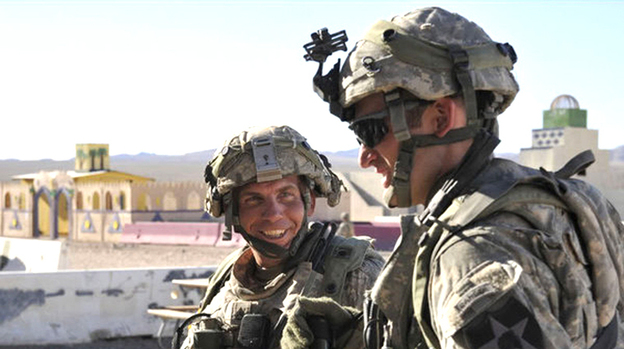
Staff Sgt. Robert Bales (left), the U.S. soldier who allegedly shot and killed 16 civilians in Afghanistan, at the National Training Center in Fort Irwin, Calif., on Aug. 23.
Defense Video and Imagery Distribution System/AFP/Getty Images


Like many others in the military community, I've been following the unfolding of the alleged shooting by Staff Sgt. Robert Bales of 16 Afghan civilians. I say "alleged" because while the evidence so far looks pretty damning, the case is still under investigation.

I have no expertise as a political or military pundit, but since this blog is interested in the spiritual and mental health of soldiers, and since Bales' lawyer has already indicated that Bales' mental health and deployment history will be prominent in his defence, I think it's worth noting this story.

One of the go-to people in the press this week has been retired US Army general Peter Chiarelli, who is now working in the area of brain disorder research. In this interview with NPR's Weekend Edition, Chiarelli makes two important points. First, there are simply not adequate diagnostics to screen for "behavioural health issues". Second, he notes that the decision to send Bales to Afghanistan, despite his medical history and previous tours, "is not uncommon for a force that has been fighting in two separate theaters for over 10 years." What Chiarelli implies but does not elaborate on is that Bales may be the presenting symptom of a small, all-volunteer force, pushed to the limit and beyond for a decade and now beginning to come apart.

Chiarelli also puts in an appearance on this piece from yesterday's PBS News Hour. Dr. Jeffrey Johns, the ex-Air Force psychiatrist on the panel with Chiarelli, has some pretty scathing things to say about the US military's screening processes and demands. As Johns says, "the military is not taking care of its own". Several of the callers to last Friday's edition of NPR's Diane Rehm show make the same point.

It's early days yet, but to my mind, here are some things to watch as this story develops.

1) How far will Bales' defence, which seems to be a PTSD variant on "temporary insanity", go given that the US military has tried 43 other soldiers for crimes against civilians in Iraq and Afghanistan?

2) Will this case shed any new light on links between post traumatic stress and violent behaviour, or lead to improvements in screening procedures? Will the problem be linked to an army that is too small, doing a job that is too large, and lead us to revisit conscription for future wars?

3) To go beyond my arcs a bit, will this case accelerate NATO and US withdrawals from Afghanistan? I find it worrisome that military affairs bloggers like Tom Ricks seem to calling for the West to "pop smoke" and get out.

Monday, February 20, 2012

Using Light to Unlock the PTSD Trap

I've been hearing bits and pieces about EMDR (Eye Movement Desensitisation and Reprocessing), a relatively new approach to treating people with severe PTSD. This story from the Telegraph, about how EMDR has helped a UK army nurse, is interesting. The account of how Hilary Horton got her PTSD is also a reminder that pscyhological wounds can be inflicted on support trades as well as on front line personnel. Worth reading. MP+


No-nonsense nurse: Hilary Horton at Al Amarah base in Iraq, where she dealt with the bodies of six military poilcemen Photo: GABRIEL SZABO/GUZELIAN


By Clare Goldwin
7:20AM GMT 20 Feb 2012
Hilary Horton has the no-nonsense attitude you’d expect from someone who was an intensive care nurse for 20 years, has worked in women’s prisons and is a former Air Force reservist. So it is a surprise to learn that five years of her life were virtually destroyed by constantly reliving one of the Iraq war’s grimmest episodes.

The former Air Force nurse was responsible for the bodies of six Royal Military Policemen who were murdered as they manned a police station in southern Iraq in June 2003, a killing spree that became notorious. Hilary was badly affected by her experience, and in 2009 she was diagnosed with severe post-traumatic stress disorder (PTSD), suffering regular flashbacks, fits of weeping and loss of confidence.

Read the whole piece here.

Thursday, February 9, 2012

We Are Not the Dead: Soldiers' Faces Before, During and After Afghanistan

The UK's The Telegraph has published a series of pictures and interviews of members of the 1st Battalion The Royal Regiment of Scotland, before, during, and after their deployment to Afghanistan. In these powerful photos you can see the physical and psychological toll that the war has taken on these young men. Especially moving is this comment from one young private, who survived an IED explosion, of how he coped after going home: "I walked for miles and miles not caring where I stepped.”

Monday, February 6, 2012

:Remarkable Psychological Resilience": Surprising New Data on Prevalence of PTSD

From today's NYT, a short piece by Anthony D. Mancini, an assistant professor of psychology at Pace University, on a survey suggesting that the prevalence of Post Traumatic Stress Disorder among serving military may be lower than it is commonly thought to be.

Mancini's research focuses on the strength of what he calls "resilience", or "the human capacity to cope" for most people. His conclusion is that "we should remember that PTSD is a treatable condition and that a realistic and informed understanding of our inherent coping abilities can only assist treatment and, perhaps one day, even prevention of this debilitating disorder".

This message, that PTSD is treatable, is precisely what soldiers need to hear, and this date is encouraging.

Monday, September 12, 2011

A Call for Justice for Women Veterans

Props to the New York Times for this op-ed piece calling on the US Department of Defense and the Department of Veterans Affairs to take a pro-active and supportive stance towards those women veterans who have suffered sexual trauma while in uniform. Short and worth reading.

Tuesday, July 19, 2011

Marijuana a Possible PTSD Cure

Noted in today's NYT. MP+

New York Times, July 18, 2011
Marijuana May Be Studied for Combat Disorder
By DAN FROSCH

DENVER — For years now, some veterans groups and marijuana advocates have argued that the therapeutic benefits of the drug can help soothe the psychological wounds of battle. But with only anecdotal evidence as support, their claims have yet to gain widespread acceptance in medical circles.

Now, however, researchers are seeking federal approval for what is believed to be the first study to examine the effects of marijuana on veterans with chronic post-traumatic stress disorder.

The proposal, from the Multidisciplinary Association for Psychedelic Studies in Santa Cruz, Calif., and a researcher at the University of Arizona College of Medicine, would look at the potential benefits of cannabis by examining 50 combat veterans who suffer from the condition and have not responded to other treatment.

“With so many veterans from the wars in Iraq and Afghanistan, there is a widely accepted need for a new treatment of PTSD,” said Rick Doblin, founder and executive director of the psychedelic studies group. “These are people whom we put in harm’s way, and we have a moral obligation to help them.”

Read the whole article here.

Monday, July 18, 2011

Help for a veteran in "a perfect storm of things going wrong"

An encouraging story from Michigan about how the local courts and police worked with a veteran with PTSD to salvage his life. MP+

July 17, 2011
Coming Together to Fight for a Troubled Veteran
By ERICA GOODE

OKEMOS, Mich. — When the standoff began on a humid August night, it seemed destined to become one more case of a returned soldier pulled down by a war he could not leave behind.

Staff Sgt. Brad Eifert circled through the woods behind his house here, holding a .45-caliber pistol. The police were out there somewhere and, one way or the other, he was ready to die.

He raised the gun to his head and then lowered it. Then he fired nine rounds.

“They’re going to take me down, they’re going to finish me off, so,” he remembers thinking, “finish me off.”

Leaving his weapon, he ran into the driveway, shouting, “Shoot me! Shoot me! Shoot me!” The police officers subdued him with a Taser and arrested him. A few hours later, he sat in a cell at the Ingham County Jail, charged with five counts of assault with intent to murder the officers, each carrying a potential life sentence.

In daring the police to kill him, Mr. Eifert, who had served in Iraq and was working as an Army recruiter, joined an increasing number of deployed veterans who, after returning home, plunge into a downward spiral, propelled by post-traumatic stress disorder or other emotional problems.

Their descent is chronicled in suicide attempts or destructive actions that bring them into conflict with the law — drunken driving, bar fights, domestic violence and, in extreme instances, armed confrontations with the police of the kind that are known as “suicide by cop.”

Such stories often end in death or prison, the veteran in either case lost to the abyss.

But something different happened in Mr. Eifert’s case. Headed for disaster, he was spared through a novel court program and an unusual coming together of a group of individuals — including a compassionate judge, a flexible prosecutor, a tenacious lawyer and an amenable police officer — who made exceptions and negotiated compromises to help him.

Read the whole story here.

Monday, May 16, 2011

"The Only Therapy Is Prayer": A Whole Country With PTSD


Journalist Anna Badkhen has written an unnerving piece (Trauma Center; How do you bring peace to a country where everyone has PTSD and the only therapy is prayer?) about Afghanistan posted 13 May 2011 on Foreign Policy.com. She describes something we can scarcely imagine - a country so ravaged by war and violence that the mental effects of war are widespread and where mental health resources as we in the West understand them are virtually non-existent. The lens through which she tells the story is Abdul Hamid, a hospital attendant whose loss of vision after exposure to ghastly sights is a sign of conversion disorder, the brain protecting itself from further horrors by shutting down the eyes. For Badkhen, Hamid comes to stand for the 1 in 3 Afghans who suffer from some kind of war-induced mental injury, and his reponse, making a pilgrimage to a Muslim shrine, is the only recourse available to those who dwell in a country where "the only therapy is prayer".

Her account of Badkhen's visit to the shrine is as memorable as it is horrific:

"Last Wednesday, Abdul Hamid's sisters led the gardener into the shrine's putrid crepuscule and anchored him, teetering, on the floor near the northwest corner of the tomb. Next to him, a young man clasped the railing and shook. A few paces away, another man, recently paralyzed on his left side after a stroke, moaned a lament he alone could comprehend.

A woman ran fierce laps around the tomb, as she has done for 20 years, marking each footfall with a sharp, piercing shriek, as though her voice could scare away the destitution, horror, and war all around her. Then she collapsed on the floor in defeat.

Disoriented and frightened, Abdul Hamid wept.

The ammoniac reek of urine wafting from the floor of a place supposed to be holy, the cacophony of sounds -- the rattle of the metal railing, the woman's screams, the incoherent keening, the slapping of palms against adobe walls -- made no sense to him. His sudden blindness made no sense. "I am afraid," he whimpered, again and again, "I am so afraid."

He curled up against the corner of the tomb railing and tied, with his sisters' help, a plain white string to a metal post with long fingers he could not feel. His sightless eyes teared. He lay on the floor awhile. Unseen by him, swallows tumbled down elegantly out of their nests in the ceiling and dove through the shrine's open green door to somersault above the golden plains."


Badhken's elegant and poetic prose is deployed to make the point that in a country where there are only 200 beds for mental health patients, this shrine to a dead holy man is an inaqequate substitute. Her style -- "putrid crepuscule", "amoniac reek of urine", the whimpering and tearful sufferer -- underscore the title's implied scorn for "prayer" as "the only therapy" available to these poor people. The counterpoint of the unseen swallows enjoying their freedom "above the golden plains" underscores the bondage of those poor wretches as the birds tumble freely above them in a presumably uncaring heaven.

As you can imagine, I take issue with Badkhen here. I was just in a mental health ward here in Canada yesterday and I wish with all my heart that such comfortable facilities, with such well trained staff, were available to the people of Afghanistan. But go into any western hospital or nursing home and you'll smell the "amoniac reek of urine" and see and hear the whimpering and screaming of the deranged and the mentally ill. It's not pretty, but it goes with the territory of mental illness.

That a pilgrim shrine should stand for the pitiful inadequacy of Afghanistan's mental health resources is unfair. Badkhen's choice of focus has undertones of patronising scornfulness, saying, in effect, "this is the best these poor benighted people can do and it doesn't make the slightest difference", and I wonder if this is permissable because it's an account of a Muslim country. Would Badkhen have used such a tone and such images to describe those who visit a Christian shrine, such as Lourdes? Would Foreign Policy have published it? Perhaps. Post Dawkins and Hitchens, scorn for religion and spirituality is permissable for our educated and dispassionate observers of the human condition. That such scorn should be entrenched in an otherwise moving acount of the widespread mental damage caused by war is disappointing.

Monday, April 11, 2011

"He Tried Everything": A Marine Loses HIs Long Fight With Suicide

A very sad story which I noticed in the US Army newspaper, Stars and Stripes. Here's an excerpt from the Houston Chronicle. Sometimes a soldier, or for that matter, anyone, struggling with suicide can do everything right and it's not enough. It is a reminder that caregivers, families and friends need to do all they can for the majority who can be brought back from the edge. MP+


War casualty on the home front
A poster boy for suicide prevention, Houstonian becomes another statistic
By LINDSAY WISE
HOUSTON CHRONICLE
April 9, 2011, 7:15AM


Marine veteran Clay Hunt had a tattoo on his arm that quoted Lord of the Rings author J.R.R. Tolkien: "Not all those who wander are lost."

"I think he was a lot more philosophical about life than a lot of us are, but trying to search for some inner peace and the meaning of life, what was the most important thing," said his father, Stacy Hunt.

His son's quest ended last week when he took his own life at his Sugar Land apartment.

The 28-year-old had narrowly escaped death in Iraq four years ago, when a sniper's bullet missed his head by inches. But he wrestled with post-traumatic stress disorder and survivor's guilt over the deaths of four friends in his platoon who weren't so lucky.

"Two were lost in Iraq, and the other two were killed in Afghanistan," said his mother, Susan Selke. "When that last one in Afghanistan went down, it just undid him."

In many ways, Hunt's death is all too familiar: the haunted veteran consumed by a war he can't stop fighting.

Suicides among Texans younger than 35 who served in the military jumped from 47 in 2006 to 66 in 2009 — an increase of 40 percent, according to state records.

The problem seems increasingly intractable. Efforts by the Pentagon and Department of Veterans Affairs to stop the alarming rise in military suicides nationwide through training and screening have had limited success.

'He tried everything'
Hunt's suicide was baffling to friends and family, but not because he hid his struggle or failed to get help. It baffled them because he faced it, head-on, leading from the front like any good Marine.

Read the whole story here.

Tuesday, January 25, 2011

British Army Addresses Mental Health On The Front Lines

Saw this story in the UK MOD news today. Nice to see a military taking a proactive approach to mental health on the front line, rather than waiting to pick up the pieces at home. MP+

Managing mental health issues in Helmand
A Military Operations news article
24 Jan 11

In a stark diversion from his traditional role, a Company Sergeant Major in Helmand is helping his unit to talk through any problems they may have and overcome any mental health issues.


Company Sergeant Major Stuart Potter in discussion with one of his troops regarding his experiences on a recent patrol
[Picture: Crown Copyright/MOD 2011]

Company Sergeant Major (CSM) Stuart Potter is currently on the front line in Helmand province with 1st Battalion The Royal Irish Regiment, in the southern Nad 'Ali area.

He operates the TRiM (Trauma Risk Management) system which teaches soldiers to spot signs of mental distress in their colleagues.

The aim is to encourage troops to talk about their problems and seek help at the earliest stage from the team of community psychiatric nurses and consultant psychiatrists who are on hand in Afghanistan to provide any care and treatment needed.

It's a far cry from CSM Potter's day job at the battalion's headquarters in Shropshire where he is more used to being feared by his troops for his hard line on discipline. He explained:

"In the UK I enforce discipline; I shout at soldiers about their uniform, being late for work or having a 'few too many'.

"In Afghanistan, sometimes I shout, but mostly I listen. I listen to soldiers telling me how they put themselves into danger for their mates, how they extracted a casualty while under fire. How they were scared when they thought their number was up."

CSM Potter says that listening is vital on the front line:

"On patrol it can go from having a laugh with kids and building up trust with local nationals to lying in an irrigation ditch trying to locate the enemy in a blink of an eye.

"No matter who you are, the realisation that you are in someone's sights, that someone wants to kill you, is traumatic; that's where TRiM comes in.

"After every patrol the patrol base commander holds a debrief; they discuss the patrol and identify any lessons learnt, everyone has their say.

"This is the first and, in my view, the most important part of the TRiM process. There is no blame or shame. We all say what we feel.:

Read the whole story here.

Friday, August 6, 2010

Wounded Soldier Keeps Fighting for Comrades and Their Families

I'm glad that the American Forces Press Service continues to remind us of how wounded soldiers can find a road to healing and recovery. The story of Major Ed Pulido, who lost a leg in Iraq, while inspiring in its own right, underscores some of the key elements to recovery: a support group of peers with whom to share similar experiences, physical activity and challenges to restore self-esteem, and a positive attitude. There's also a mention of how military chaplains played an important role in Pulido's recovery which is inspiring to those of us in that vocation.


Retired Army Maj. Ed Pulido poses with his wife, Karen, and daughters, Kaitlin and Kinsley. Courtesy photo

‘Real Warrior’ Loses Leg, Gains New Perspective
By Elaine Wilson
American Forces Press Service

WASHINGTON, Aug. 4, 2010 – With a combat escort at front and rear, Army Maj. Ed Pulido drove a sport utility vehicle into an area of Iraq known as “IED Alley” on his way to Kirkuk from a base northwest of Baghdad.

Pulido chatted with the colonel next to him, mostly about going home again, all the while unaware of the roadside bomb lodged in the asphalt directly ahead.

The soldiers in front saw it, but it was too late to warn Pulido. The bomb detonated, and smoke, glass, noise and dust filled the air. The air bag had deployed, and Pulido shoved it to one side. That’s when he saw the damage the fragments had inflicted on his leg.

It’s been six years since that day, and more than any other moment, that one still sticks in his mind.

“I’ve had dreams about it all the time,” Pulido said. “The night sweats and terrors -- it was that moment right there when I put the air bag aside and saw the blood.”

Read the whole story here.

Mad Padre

Mad Padre
Opinions expressed within are in no way the responsibility of anyone's employers or facilitating agencies and should by rights be taken as nothing more than one person's notional musings, attempted witticisms, and prayerful posturings.

Followers

Blog Archive

Labels