Showing posts with label Military Culture. Show all posts

Friday, August 5, 2016

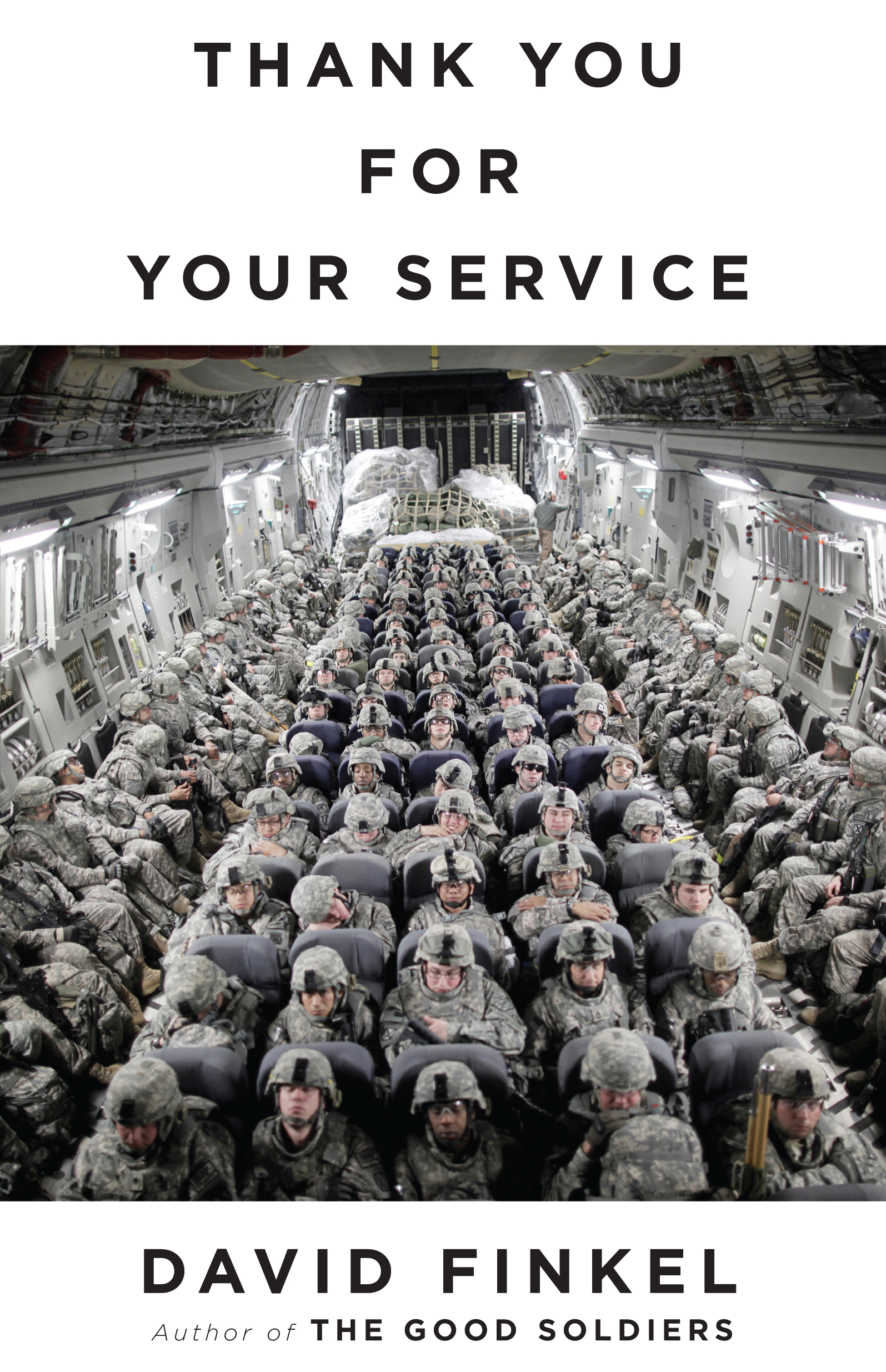
Book Review: David Finkel, Thank You For Your Service


David Finkel, Thank You For Your Service.  Toronto: Bond Street Books, 2013. 

I am slowly working my way through a stack of books about the wars in Iraq and Afghanistan that have been published in the last few years.   My hope is that these books will be useful in the ongoing work of my unit, the Canadian Armed Forces Chaplain School and Centre, and that they will better prepare my colleagues to support those, soldiers and their families, who have been touched by war.

Most of these books are about the US experience in the so-called War on Terror, or as journalist Dexter Filkins called it presciently, almost a decade ago, The Forever War.  However, today's title, while by a US author about US soldiers, seems highly relevant.  As Romeo Dallaire and Carol Off. write in their forwards,  “it could just as easily have been written about Canadians in Afghanistan”. 

“(T)he after-war continues, as eternally as war itself” is how David Finkel ends his book, Thank You For Your Service.  For years now, Finkel has dedicated his work as a journalist to documenting the reality behind the words, “thank you for your service”, too often uttered by those who know nothing to those who can say nothing about the horrible things they have seen and done.  In his honest and unsparing account of ordinary people trying to repair their lives, Finkel reminds us that the terror continues in what he calls the after-war.  Young men return broken and ashamed, afraid to tell their partners “stuff” for fear that they will be seen as monsters.  Young women try to find the patience to raise frightened children and protect them from fathers who have changed.  “As soon as he got home”, one wife says, “he really wasn’t the same no more at all”.

In an earlier book, The Good Soldiers, Finkel embedded with a US Army unit tasked with patrolling one of the most violent parts of Baghdad, “a sorry bomb-filled neighbourhood ... (where) the war felt eventually like the wrong everything”.  These soldiers would armour up, go through their good-luck rituals, and load into convoys of lightly armoured Humvees,   never knowing when they would be blown up.   I reviewed The Good Soldiers here in 2009.  Towards the end of his earlier book, Finkel focused on difficulties of soldiers coming home to the US on leave during their tours. 

He quoted a mental health care specialist who described home as a  "a place of disaster" for most soldiers, whose trips home to the US on leave midway through their tour were not what they expected.   "There's an anger in guys when they go back. They want to go home and be normal, and they're not quite normal," he said, and added, "Coming back from leave is the worst part of the deployment".  Now, years after the war, home is more than ever a place of disaster.

In Thank You For Your Service, Finkel follows some of these same men after their return to the US.  Some came home broken by too many deployments, having seen too much and feeling too much guilt for comrades shot or burned to death inside their vehicles.   The same bonds which held them together would eventually work against them, for as Finkel writes, “To be a soldier in combat was to full love constantly”, only to have the loved one killed or shattered or burned before one’s eyes.


For some of these returning soldiers, these lost comrades haunt them waking and sleeping, like one soldier whose friend appears regularly and says “You let me burn”.  For others, the effects of loss, guilt, and post-traumatic stress are compounded by the physical effects of violence on the body and especially on the brain.  Cognitive loss and dementia are just as real to these soldiers as they are to some professional athletes.   In this harrowing passage, Finkel describes the long-term effects of such an injury on a soldier who, years later, cannot remember how to buy flowers for his wife.

 "Before he got blown up, he could have figured it out.  How hard is it to buy roses?  There’s a flower shop on Fort Riley.  They sell them at Walmart.  But such are the effects of being in a Humvee that rolls over three buried 130-millimeter artillery shells, which explode at the perfect moment.  Up he went, and down he came, and once his brain was done rattling around from a blast wave that passed through him faster than the speed of sound, here came the rest of it.  Memory, fucked.  The ability to pay attention, fucked.  Balance.  Hearing.  Impulse control.  Perception.  Dreams.  All of it, fucked.  “The signature would of the war” is what the military calls traumatic brain injury …  (198)

 Thank You For Your Service takes the reader through a labyrinth of damaged bodies and psyches, and of broken relationships and domestic abuse, that plays out in bleak neighbourhoods around a military base, or in the offices and clinics of a bureaucracy hastily-assembled by a military scrambling to understand and cope with these many unexpected casualties.    While Finkel is sympathetic to the many military and civilian personnel struggling to assist these injured veterans and their families, his conclusion, again and again, is that it is not enough.  Ordered by the chain of command to analyze each suicide, unit and brigade leaders struggle to find out if the member has taken mandated suicide prevention training, as much to cover themselves as to develop lessons learned.  Well-meaning generals cooperate with medical researchers to assess risk factors for suicide, but find that explanations are elusive.  Soldiers are medicated but cannot find adequate long-term treatment programs.   Wives feel alone and cut off from help.  Families struggle to pay the bills as unemployable and wounded veterans run through their benefits.   All of these ongoing struggles are what Finkel calls the “after-war”, as if getting blown up in Baghdad is just the start.

 This is one of the most difficult and demanding books I have ever read about contemporary warfare.   Finkel’s honesty, and the incredible degree of access he has gained to ordinary and damaged people gives this book a brutal and stark truth that a hundred war novels and films could never hope to capture.   It is a book that demands far more of society than empty slogans and cheap celebration of its “warriors”.  While Finkel is not prescriptive in his solutions, he seems to suggest that these veterans demand, and are owed, far more time, attention and care than they currently receive.  However, a society that would pay its debt to these men and women would first have to acknowledge what it asked them to do, and that admission might prove too difficult.

 We should all read this book if only to gain a better understanding of how the ongoing physical, mental and moral injuries of the “after-war” can isolate and oppress those who have returned to an uncomprehending country that no longer feels like home.   A person of faith will note that there is next to nothing said here about how faith or spirituality can be resources for such veterans, a notable absence that should be noted by those chaplains working in the area of spiritual resilience. 

One sees glimpses of hope and endurance here and there, in the care and love that these broken soldiers show one another, or in the determination of a few to walk with them and help them.   As the book ends we see one family seem to start a new life together, somehow still together after countless quarrels and fights, but by then we have learned of  many others who never survived the after-war, having chosen to end their own pain and struggle through suicide.   As a chaplain you will find no easy answers for ministering to veterans like the ones described here, but you will better appreciate the reality of the pain and the immensity of the need.

MP+

Monday, January 25, 2016

Three Journalists Reflect On Covering Today's Wars


This interview between War on the Rocks' editor Ryan Evans and three working journalists - Nancy Yousseff, David Wood and Paul Shinkman is well worth listening to.

The three discuss the difficulties journalists face in covering wars today, their profound admiraton and even love of military personnel and the need to be objective, and the increasing lack of news organizations in covering defense issues. Those in uniform tasked with working with the media and civilians interested in healthy deomcracy will all get something from this conversation.

It's all good stuff, but about half way through the discussion, when they discuss moral and physical injury and the human cost of war, it gets riveting.  You realize that these are three people who care deeply about their work and its importance. 

Some of David Wood's other work on severely wounded veterans, a subject he obviously cares for deeply, can be found here.

Tuesday, January 5, 2016

What To Read In 2016

Happy New Year!

If, like me, you found a stack of books under the Christmas tree, you probably have enough on your plate for a while.

However, if you're also like me, you're motto is "When In Doubt, Buy A Book".  Reading is a tub I plan to thump a lot in 2016, after sounding off about it last month.

To that end, I've been tracking some blogs and their reading lists, based on the best of what they saw published last year.

One of those blogs is From The Green Notebook, run by a thoughtful US Army officer, Joe Byerly.    His list of recommended reading can be found here.


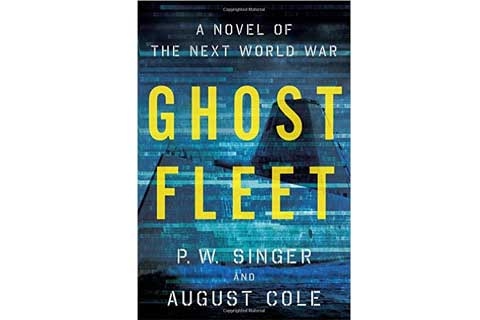
The only book I read last year from Joe's list is Ghost Fleet: A Novel of the Next War by P.W. Singer and August Cole.   When I started reading it,  I wasn't that optimistic about the literary merits of a novel written by two defence analysts, so I wasn't that disappointed by the somewhat creaky plot and cardboard characters.   However, imagining how technological trends will play out in a major-power conflict, it is interesting.  Joe's review of it is perhaps kinder than what I would say, but I don't disagree with him.

Speaking of fiction, it's refreshing to see so much fiction (and even a book of poetry) on Joe's list.  he offers some insightful thoughts here on why military people should read fiction.  Perhaps fiction is something that soldiers, sailors and air personnel don't need to be sold on, judging from this article.  When I first went to the Royal Canadian Regiment, there was a yellowing sheet of paper pinned to the wall, with a list of books on leadership.  One was Robert Heinlen's Starship Troopers.   Steven Pressfield, an ex US Marine, talks on his website of how tattered copies of his novel on the Spartans at Thermopylae, Gates of Fire, still circulates through Marine and Army platoons in Afghanistan.  I re-read Gates of Fire during my Christmas leave and I can see why.  If all you know about Thermopylae is from the terrible film 300, you need to read this book.


If I had to recommend one novel from my (too slim) reading last year, it would have to be Anthony Doerr's magical book All The Light We Cannot See, about two children before and during World War Two.  There's a good discussion of it, hosted by NPR's ageless Diane Rehm, here.  Doerr's novel may some a little Oprahesque (I'm not entirely sure what I mean by that) compared to Gates of Fire, but it has the truth and delicacy of a fable, and some of the finest writing I've read in a while.

Another military-themed reading list I'm tracking is produced by the Young Turks at War on the Rocks.  Lots to pick from there.

I'm frankly embarrassed at how few books (OK, 3) I read from this list by NPR or this top ten list by the NYT (though I did give a copy of Helen Macdonald's H Is For Hawk to a bereaved friend on the strength of its reviews at the time).

That's probably enough to get started on.

What did you read in 2015 that you think we should read?

Wednesday, December 9, 2015

On The Profession Of Arms And The Importance Of Reading


A somewhat pompous title, I grant you.  Perhaps the formal tone is because I've been reading Jane Austen lately, which is always time well spent.

Speaking of reading, I was at a training review meeting several weeks ago and we were talking about how soldiers learn what's important.   For some things simple direction (e.g., wear your helmet) is direction enough, and for others the actual performance of a task, learning by doing, suffices.   But how do soldiers learn values and accept, even embrace, the military ethos?

This topic allowed me to mount my personal hobbyhorse and bemoan the absence in the Canadian Armed Forces of the commander's reading list.  There is an official CAF-published reading list from 2009, a substantial volume in its own right giving members a comprehensive list of resources on a wide variety of subjects for their own professional education.  Such a guide is well and good, but I would like something both more current, and more influential in the sense that the list comes from the boss.

If you google "Chief of Defence Staff Reading List" you will find a page published by the Defence Academy of the United Kingdom.   Australia's Army Chief published a reading list in 2012
and the US military's service chiefs each have a list published by the National Defence University.  The US Marine Corps, and this may surprise some, is apparently an intellectual hothouse and boasts six of its own reading lists.  Canada also has a Chief of Defence Staff, but I searched in vain for a reading list published by a senior Canadian officer in the last ten years, up to and including the CDS.

Besides the official military reading lists, there are a wealth of reliable guides to good books for soldiers.  Tom Ricks, one of the best defence journalists in the business today, published this list of lists in 2012 which will keep anyone going for years.   There are other such lists out there.

Returning to my original point, a senior commander's reading list, assuming that the boss has actually done the reading and has not simply delegated the task to a staff officer, is a way of signalling what he or she thinks is important.  The military ethos is built on emulation.  Junior officers will read whatever their senior officers, up to and including service chiefs, are reading. Everyone wants to be like the boss, because everyone hopes their career will also lead them upwards.  Thus, junior ranks will read whatever their sergeant majors, and especially their command sergeant majors, are reading.  In a military like my own, where that intellectual example and curiousity doesn't seem to be happening, that's a concern.

I missed an opportunity recently, when Canada's Chief of Defence Staff, General Vance, came to CFB Borden where I worked.  General Vance is a good soldier and a busy man, and he gave the assembled audience a lot of time and as much candour as he could.   I now regret that I didn't stand up and ask, "Sir, what three books have you read this year that you would recommend we all read?"

General Vance, sir, if you happen to be reading this, please leave the answer in the comments and I'll post it.

What about you, readers?  What books should we in uniform be reading?

MP+

Wednesday, July 23, 2014

Medal Charges May Seem A Small Thing, But They Say Much About Military Culture

This is a soldier’s resume, if you know how to read it. 

Two days ago the Globe and Mail reported that an officer in the Royal Canadian Air Force, Lt. Col. Debbie Miller, has been charged following an investigation to determine if she wore medals on her uniform that she was not authorized to wear.   It’s not clear from the article what the medals are.   In an earlier version of this post, I incorrectly inferred from the article that the medals might have been the Order of Military Merit, awarded for “exceptional” performance of one’s duty, and the Canadian Forces Decoration Medal, or CD, awarded to all ranks who have completed twelve years of service of good conduct. Thanks in part to blog reader Edwin King, I learned that Lt. Col. Miller was in fact awarded the OMM and has certainly earned the CD and clasp, since she was first commissioned in 1981.   In 2012, a court martial found Lt. Col. Miller guilty of twice presenting a document saying she had passed a Physical Fitness test which she had in fact failed, but the investigation mentioned in the G&M article appears to be about medals.

Napoleon once said of medals that “A soldier will fight long and hard for a scrap of ribbon”, which may explain why, in military culture, wearing medals (also known as decorations) that one has not earned is significant offence.   Google “Stolen Valor” and you will find websites dedicated to exposing or “outing" individuals, many of them civilians, wearing medals and/or military uniforms that they have no right to wear.

To those outside military culture, it may seem odd that a person would want to risk the humiliation of being caught in such a masquerade.   However, as Dr. Johnson once observed, “Every man thinks meanly of himself for not having been a soldier, or not having been at sea”.  In a culture, particularly US culture, where the military may be the only public institution that still commands respect,  one could see why some might want the counterfeit respect of being taken for a member of the military.  But even within military culture, the wearing of medals is rather like walking about with one’s curriculum vitae pinned to one’s chest.   In general there are three types of medals, given for good service (like the Order of Military Merit), given for particular tours or deployments (such as to Afghanistan), or medals indicating length of service (such as the CD).   There are also uniform items that connote particular qualifications and elite status, such as the Ranger tab indicating special forces training with the US military, an especially coveted and respected item in the Canadian Army.   Some militaries are more lavish with medals than others.   Our American friends, for example, tend to wear more decorations than do their Canadian and British colleagues.

To go on parade with one’s decorations, earned through sweat, danger, and hard service, is an act of pride.   In military slang, a large collection of medals is known as a “rack”, and a “big rack” is looked on with favour.  I can attest that going on parade with few, or in my case, despite nine years of service, no medals, requires some humility, and I can therefore understand why a soldier, even a senior officer who should have known better, might give into the temptation of wanting to appear more seasoned than he or she really is.   I suppose it could be seen as the military equivalent of burnishing or falsifying one’s resume.    The temptation to exaggerate ons accomplishments has often proved irresistible for the high as well as the low, as is seen in this week’s New Yorker profile of US Vice President Joe Biden, who has been known to exaggerate his credentials during his career.  As Evan Osnos says of Biden in that article, “Looking over the record of his exaggerations and plagiarism, I came to see them as the excesses of a man who wants every story to sing, even at the risk of embarrassment”.

The four principle virtues of the Canadian Armed Forces are Courage, Integrity, Loyalty and Duty.   A soldier, particularly an officer, should understand that these virtues do not permit one to embellish one’s rack or resume, no matter how much they might want their story to ‘sing”.  Perhaps the best antidote to this counterfeit glory is the humility often seen in those who wear their medals lightly, as in the soldier who says that his or her award for valour was really earned by their unit, or in the saying, often heard by Canadian soldiers with the CD, that it was given for 12 (or more) years of “undetected crime”.


Monday, September 12, 2011

A Call for Justice for Women Veterans

Props to the New York Times for this op-ed piece calling on the US Department of Defense and the Department of Veterans Affairs to take a pro-active and supportive stance towards those women veterans who have suffered sexual trauma while in uniform. Short and worth reading.

Tuesday, June 1, 2010

WIth the Americans on Memorial Day in Iraq

When our US friends in theatre remember a fallen comrade, they use a custom somewhat different than our own. The US memorial service ends with a ceremonial calling of the roll, in which the dead soldier's name is called three times. This practice is hauntingly described at a service yesterday for Major Ronald Culver, an officer with the Louisiana National Guard, killed in Iraq on 2May.


Fittingly, Maj. Culver's service occured on Memorial Day, a US holiday dedicated to remembering that country's military dead. One thing that threw me in this account was the reference in the service that Maj. Culver had "gone to Fiddler's Green". I googled the term "Fiddler's Green" and discovered that it is used by US armoured units to refer to a legendary afterlife, a kind of Elysian Fields, for the souls of dead cavalrymen. Maj. Culver served in a cavalry unit. I would be curious to know if anyone has ever heard the term used in a Canadian or British armoured unit.

Mad Padre

Mad Padre
Opinions expressed within are in no way the responsibility of anyone's employers or facilitating agencies and should by rights be taken as nothing more than one person's notional musings, attempted witticisms, and prayerful posturings.

Followers

Blog Archive

Labels