Showing posts with label Chaplain Stories. Show all posts

Tuesday, May 11, 2021

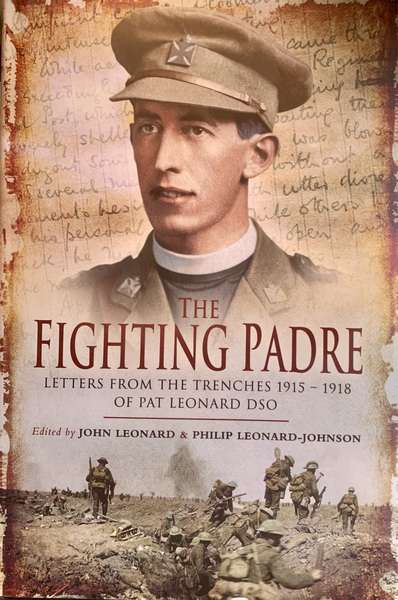
Books on the Go: The Fighting Padre, the Great War Letters of Pat Leonard

 I made the mistake of browsing the excellent Pen and Sword website recently and in due course three books arrived in the post (trans-Atlantic mail has improved remarkably since the start of Covid) including this collection of letters from a British infantry chaplain of the Great War, Pat Leonard.


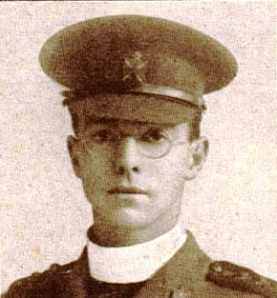
Leonard was a young Anglican clergyman whose youth and vigorous physique (he was an accomplished boxer, hence his nickname “The Fighting Padre”) allowed him to thrive in the trenches when older clergymen quickly broke down under the physical demands of frontline service.    He was attached to a British Army infantry brigade, and later in the war transferred to the Royal Flying Corps, supporting a number of different squadrons and aerodromes and earning a respectable amount of flying time in the observer’s seat.

Chaplain memoirs and letters are a fairly niche subject.   For the clerical reader, it’s always interesting to see how frontline padres tried to support the men under their care, often travelling long distances between units to bury the dead, offer the sacraments, counsel and encourage.  For the general reader, they offer a fascinating look at daily life in a war zone, in and behind the front lines, and glimpses of the culture of the men they served.  Chaplains were almost all civilians before the war and thus lacked much military knowledge, but they were observant, intelligent and articulate, and so they offer a great “fish out of water” look at the war around them.

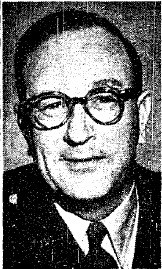
I wanted to read this especially because Leonard was friends with a chaplain hero of mine, Philip (Tubby) Clayton, who ran “TocH” or Talbot House, a soldier’s rest centre in Poperinghe, a town within the Ypres Salient.  Tubby’s picture is on the left of this blog’s header - his own memoir, “Tales of Talbot House”, is a brilliant book in is own right.  

I’ve just started and haven’t met Tubby or any aircraft, but have found Leonard an engaging and friendly guide to life in the trenches.  I've just finished a difficult account of him having to break the news to a soldier that a court martial had sentenced him to death for murder, and spending the night with him before his execution - a remarkably common account in Great War chaplain memoirs, I find.  Leonard praises the man for his courage in turning to God and facing the firing party, but the story interrupts the generally cheery tone of his letters and for a moment we see the cost that this young men of faith had to bear.  I doubt I could have born such a cost for any length of time.  Huge respect for these Great War padres.

Cheers and blessings,

MP+


Monday, November 12, 2018

Faithful Till The End: Canadian Military Chaplains in the Last Days of the Great War


No Canadian scholar knows the history of Canadian military chaplaincy in the Great War better than my friend, Dr. Duff Crerar.   In these notes which Duff kindly shared with myself and CAF chaplain colleagues, Duff describes the ministry of Canadian padres in the last months of the war and on to demobilization.   It is a harrowing story of chaplains pouring themselves into their work and in some cases working themselves to death.  My thanks to Duff for telling their stories.  MP+
The Pursuit to Mons and the Padres

The Canadians captured Cambrai on 9 October, having again surprised the Germans by a night attack. Already attempting to make a general withdrawal, the enemy gave way before they could blow all the critical bridges. The Second Division’s 20th and 21st Battalions saw off a surprise counter-attack by German tanks, but it was clear that the Germans were making another retreat.

The Canadians had broken through at the critical point of the Siegfried line.  Valenciennes was the next fallback for an army rapidly running out of men. Over twenty German divisions were disintegrating because they could not be reinforced. Crown Prince Rupprecht doubted that his troops would hold to December.

The chase was one. Canadians would bombard a German position, patrols would investigate, and report the Germans gone or in the process of leaving. Or, there would be a hurricane of machine gun fire, shrapnel and high explosive. Currie ordered his troops to proceed with caution, especially as the trail of sabotage and scorched earth combined with heavy rain to make casualty evacuation almost impossible. The Allies were outrunning their supply lines. Canadian soldiers, enjoying the experience of being greeted as liberators, were pausing for impromptu civilian hospitality. Belgians were handing out much of their precious hoarded food, which meant the Canadians had to rush some of their own rations forward to feed the over one hundred thousand liberated civilians.

The Germans had not all given up. Postwar critics who charged Currie with needless casualties in the last week of the war were oblivious or unwilling to acknowledge that German machine guns and artillery continued to oppose the advance, and that in many sectors local counter-attacks required continued operations. The Germans gave every intention to fight for Valenciennes, flooding the defences along the Canal de l’Escaut, with five –understrength – divisions guarding the gateway, Mount Houy. Rebuffed when he offered his artillery assets to assist the British, Currie grimly knew (after the British failed to take Mount Houy for the third time) that his troops would have to take the hill, and ruffled more than a few British senior officers by refusing to throw his troops in without full preparations. He and Andrew McNaughton, his gunnery expert, honoured their vow to purchase victory with shells, not men.

On 1 November, the all-Canadian attack blasted the Germans out of Mount Houy: the shattered survivors surrendered to a mop-up attack by the 10th Canadian Brigade. The 12th Brigade entered Valenciennes, and on 3 November the city was declared free of German defenders.

Canadian troops in Valenciennes after its capture on 3 November, 1918.

By then, General Ludendorff, de facto commander in chief of the German Army, had been dismissed. Attacks by Australians and Canadians on 4 November struggled to mop up the snipers and machine gunners left behind to cover the all-out retreat. The casualty rate plummeted, but Canadians felt them even more deeply as it was clear that war was almost over. It is a terrible thing to die at the end of a war. Most important, both to Currie and his Army Commander, General Horne, was the reality that German soldiers were not all giving up, but often continuing to cause casualties in pockets of determined resistance. The Germans gave every indication they would fight for Mons. Currie’s plan to encircle it and break in simultaneously fell afoul of such isolated pockets of the enemy. On 10 November, a company of the RCRs and another of the 42nd Battalion moved in to clear out Mons. After causing a few last minutes casualties, the Germans melted into the mist. At eleven, the Armistice took effect. Already a riotous celebration was brewing up in the city centre. It was St. Martin of Tours day, the patron saint of chaplains.

Canadian chaplains had kept pace with the troops, though 3rd Division Senior Chaplain Louis Moffit reported that holding services and large gatherings fell by the wayside in the constant shifting and shelling. Reports preserved from this period in Chaplain Service records are few. Another half-dozen chaplains were wounded by shells. Father T. McCarthy had been with the 7th Brigade constantly, and was reported among the first troops entering Mons.  Conditions had been brutal, and more than one padre could not express what they had seen in genteel tones. A.E. Andrew, an Anglican chaplain to the Royal Canadian Regiment, recently awarded the Military Cross for his work with casualties (including stepping in when most of the officers had been killed or wounded) in October, let off steam during the celebrations that followed, making some frank comments about the high command which got into the Canada Gazette. The Assistant Director of the Service, A.H. McGreer, noted “he used language which is commonly employed by officers of all ranks, and I am sure he never dreamed of all his statements being reported… If it comes to a court martial they can’t convict him, I’m sure of that… Andrew got the MC the other day…” Word of Andrew’s remarks at Cambrai, when told that he did not belong up front – “if the men can go, I can” – had percolated through the Division. After they had cooled down, the authorities let him off with a warning, and a transfer.  


W. B. Carleton, a priest from Metcalfe, Ontario, received a surprise when the French Army conferred the Croix de Guerre for his intrepid work with the 3rd Division Artillery. Carleton would return as a Senior Chaplain to the Canadian Army in 1940.

Other chaplains were showing signs of strain as the pressure of operations turned into the march to occupation across the Rhine and restlessness to get home. Sickness, nervousness and other disorders were reported by several padres: chronic bronchitis, a sign of exhaustion, and hard to treat in the pre-anti-biotic era. His Brigade reduced to a skeleton by casualties, B.J. Murdoch was returned to Britain on sick leave, exhausted and insomniac. He was given early discharge and returned to New Brunswick, though the psychological scars of being under fire relentlessly in the last 100 days would haunt him for the rest of his life. Almond learned that one of his former chaplains, Salvation Army officer Charles Robinson, who had reverted to combatant ranks in 1916 and been awarded a Military Cross at Vimy Ridge, had been killed in September and was buried near Arras. Just previously word had reached headquarters that a Methodist Chaplain, Eric Johnston, who had been in action continuously with the Canadian Machine Gun Battalion since Amiens, trying to spend a week with each company across the Corps, had been evacuated sick to #20 General Hospital, where he died of pneumonia.

Other padres found the change in moral climate and the breakup of units for repatriation seemed calculated to undo their work. Roman Catholic chaplains went to the Belgian hierarchy as well as the British Army authorities to fight a soaring V.D. rate. F.G. Sherring, a decorated Anglican Chaplain, exploded in rage when his 2nd Division Artillery units were scattered, ruining his plans to distribute comforts ranging from cigarettes to underwear -- as well as his Christmas and New Years’ religious services. Fortunately for him, his near-seditious remarks about the high command were expressed in reports to his chaplaincy superiors, who quietly filed them away without action or comment.

Throughout the rest of the winter and early spring of 1919, the Canadian chaplains prepared for the peace. Many occupied themselves in teaching in the Khaki University, and some took advantage of the program to add to their own education. Nearly two dozen made the journey to Buckingham Palace to receive decorations from King George V.  Often they ran into chaplains of other denominations which they had served alongside, and which they might never see, much less work with again. John Holman reminisced about urgently throwing up sandbags alongside a priest to protect an advanced dressing station before taking heavy fire, both in their shirtsleeves in the Amiens heat. Many took part in the conferring of battalion colours, now being brought over from England or being consecrated for the first time, in drumhead services in Germany and Flanders. Others found themselves, in moments of inactivity, thrown back to moments which they had pushed into the back of their minds during the victory autumn. They saw faces. They recalled brief, intense, often whispered confidences. They remembered the men they had helped, many, to die. Percy Coulthurst, Ewen MacDonald, Thomas McCarthy, Canon Scott just out of hospital in England and W.H. Sparks flashing back to ministering, stretcher to stretcher, reciting, “The Lord is my Shepherd”.

For many chaplains with the Corps, the end of combat meant the pressure to get letters written, some perhaps which they probably had wished to avoid. Murdoch found himself awash in letters of sympathy to kinfolk in Canada. His Montreal battalions, Highlanders, and working men left widows and orphans, bereaved parents who needed some reassurance and comfort. Their men had died well, suffered little, and had the ministrations of the priest or minister they needed and deserved in the hour of their death. On their return, more than one followed the example of George Kilpatrick, by 11 November the Senior Chaplain of a Division, who personally visited the homes of every soldier from the 42nd Battalion who had died overseas. As harrowing is that could be, there were some consolation for padres, as more than one family was grateful for every scrap of news about their loved one they could provide. They were touched, and often inspired by another kind of bravery and resolute courage they witnessed among those who had only waited, and waited.


One of the most perceptive padres to write his superiors in this period was A. B. MacDonald, a priest who would return to his Calgary church and devote his life to veterans after the war. He had spent days among the refugees who streamed back during the last weeks of the German retreat, hearing pitiful tales of deprivation and atrocity. He had been only a few miles from Mons when his gunners ceased firing on the 11th. As he looked around him, at the devastated land and lives, and contemplated his own men coming back seeking order out of chaos at home, he knew he needed help.

MacDonald reached out to J.J. O’Gorman, the doughty priest who lit the fuse which exploded in Ottawa and led to reform of the Catholic chaplaincy, now returned to direct the Catholic Army Huts overseas. He asked for copies of popular and influential tracts by Catholic authorities on social questions, family life and the pronouncements of Leo XIII on the church’s role in society. He intended to translate, rewrite and paraphrase their contents to adapt them to Canadian conditions and Canadian veterans. “The practical application of social science in Canada will be completely different from England”, he noted. Lt. Col. W.T. Workman, in London, ensured that he would have Rome leave.

By the summer of 1916 MacDonald was back at Sarcee Camp in Calgary. He noted to A.L. Sylvestre, his Senior Chaplain in Canada, that the veterans would open up and trust the uniformed padre, or one they had known overseas. He recommended that the Permanent Force be granted permanent chaplaincies. Sylvestre was sympathetic, but Ottawa was already preparing the demise of the Chaplain Service. MacDonald was probably the last chaplain standing on the day it was officially demobilized -- 1 January, 1921. The Great War was really over: now came the Peace to endure, and overcome.


Sunday, November 4, 2018

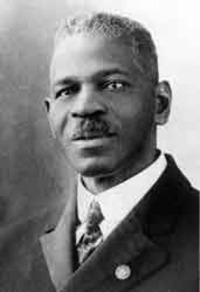
Remembering Canada's First Black Military Chaplain

A colleague here at the Canadian Forces Chaplain School and Centre was reviewing our new chaplain history curriculum and asked me why our first African-Canadian chaplain was not included.   Because I didn't know the story, I said, and now I can share it with you.


The Rev. William Andrew White was the Baptist pastor of a black congregation in Truro, Nova Scotia when the Great War began.   American by birth and the son of former slaves, White came to Canada through the network of the African Baptist Association and attended seminary at Acadia University in Wolfville.  


African Canadians were not allowed to enlist in the Army until 1916, when the government authorized No. 2 Construction Battalion, consisting of black soldiers led by white officers.    Rev. White actively recruited for this unit, and half of its strength came from Nova Scotia.  White was appointed as the Battalion chaplain was the only African Canadian to be commissioned as an officer during World War One.


The Dictionary of Canadian Biography gives this account:


Some members of the battalion trained in Windsor, Ont., and the rest in Pictou, N.S., and later Truro. In March 1917 the unit embarked for England. They were attached to the Canadian Forestry Corps (Jura Group) and relegated to the status of “company” because they were about 300 men under strength. In May they were sent to eastern France, where they worked alongside white troops during logging and milling operations but were segregated the rest of the time. Their chaplain had a hard row to hoe: white soldiers would not accept his ministrations, even when they otherwise lacked the services of a clergyman. Nevertheless he was an unmitigated force for good across racial lines. Such were his courage, moral authority, and physical stature that he once interposed himself between his unit and a group of white men to avert a riot.


Given the racial prejudices of the day, it was a significant step for the Chaplain Service, thanks to its director, John Almond, who was progressive for his time.   Almond had tried to send an Anglican Metis chaplain to serve Canadian Indigenous detachments scattered through France, but his request was turned down by CEF Headquarters which disapproved of "roving commissions".  Almond had also wanted to send a Jewish chaplain to France, but HQ likewise objected, claiming that "there were no concentrations of Jewish troops large enough to merit [their own chaplain]" (Duff Crerar, Padres in No Man's Land, 2nd ed, p. 68).


Padre White survived the war and died in 1936.   His CEF record may be found here.  He deserves to be better remembered as a significant figure in the history of the Royal Canadian Chaplain Service.

Monday, October 29, 2018

Tubby Clayton: A Commission From Tim Godden

In my previous post I mentioned the British artist Tim Godden, who specializes in images of the Great War and of Edwardian sports figures.  His style captives me - there’s a simplicity and a sincerity about it I prefer to the legions of commercial artists out there specializing in military scenes.   Tim excels at capturing the humanity and vulnerability of his subjects, as in his collaboration with Peter Doyle, Percy: A Story of 1918.   

I wanted a portrait of Phillip Clayton, one of the most well-known British chaplains of the Great War.  An Anglican, “Tubby”, as he was widely known, was not one of the front-line chaplains like F.R. Scott or Geoffrey Studdert-Kennedy (Woodbine Willie) but his greatest service to the troops was to found and run Talbot House, a sort of hostel not far behind the line in the Ypres Salient, in the town of Poperinge.   Talbot House, or “TocH” as it was known in the phonetic signaller’s alphabet of that war, was mostly a refuge, though it was within reach of enemy artillery.    Clayton wrote that “During the varying fortunes of the Salient shells have crossed and recrossed the roof from three points of the compass at least”.

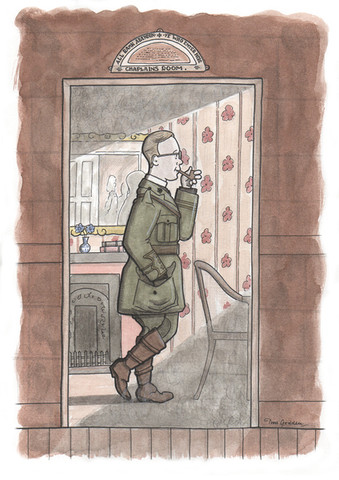
Here is Godden's depiction of Clayton. I will keep the original, and will donate a print of it to the Chaplain School of the Royal Canadian Chaplain Service before my tour here ends.

What made TocH special was its all ranks nature.  Clayton had a sign prominently displayed, “ALL RANK ABANDON YE WHO ENTER HERE”.  Tim has placed the sign at the top of the painting, and has Tubby framed in the door of his office.    Figures of the soldier guests can be seen in the mirror behind him.

The Talbot House motto allowed an informality and companionship that was otherwise seldom possible in the socially rigid and stratified Army of the day.   Here is an excerpt from Clayton’s book, “Tales of Talbot House”.

Under its aegis unusual meetings lost they awkwardness. I remember, for instance, one afternoon on which the tea-party (there generally was one) comprised a General, a staff captain, a second lieutenant, and a Canadian private.   After all, why not?  They had all knelt together that morning in the Presence.   “Not here, lad, not here”, whispered a great G.O.C. at Aldershot to a man who had stood aside to let him go first to the Communion rails; and to lose that spirit would not have helped to win the war, but would make it less worth winning.   There was, moreover, always a percentage of temporary officers who had friends not commissioned whom they longed to meet.   The padre’s meretricious pips seemed in such a case to provide an excellent chaperonage.  Yet further, who knows what may be behind the private’s uniform?   I mind me of another afternoon when a St. John’s undergraduate, for duration a wireless operator with artillery, sat chatting away.   A knock, and the door opened timidly to admit a middle-aged Royal Field Artillery driver, who looked chiefly like one in search of a five-franc loan.  I asked (I hope courteously) what he wanted, whereupon he replied: “I could only find a small Cambridge manual on paleolithic man in he library.  Have you anything less elementary?”  I glanced sideways at the wireless boy and saw that my astonishment was nothing to his.  “Excuse me, sir,” he broke in, addressing the driver, “but surely I used to come to your lectures at ____ College.”   “Possibly,” replied the driver, but mules are my speciality now.

 You can compare Godden’s likeness to this period photograph of Clayton.   


Talbot House is now a museum and a hostel, and can be visited by tourists.   I hope to make a pilgrimage there myself in the foreseeable future.   

I have some more excerpts from Tales of Talbot House, now sadly out of print, that I hope to post here as time permits, as they are excellent stories and vignettes of military chaplaincy from the Great War.

MP+


Thursday, September 13, 2018

Remembering Canadian Great War Chaplains in the Hundred Days


The text below is from an email sent by my friend and colleague, Dr. Duff Crerar, author of Padres in No Man's Land (McGill Queen's 1995, 2nd ed 2014).   Duff regularly sends Canadian chaplains these emails to tell us what our predecessors did on certain notable dates, and thus to remind us of our legacy.  MP+


Canadian Chaplains and breaking the Drocourt-Queant line.


German Wire - Part of the Drocourt-Queant Line Fortifications


By 17 August, the Canadian Corps had clawed deeply into German lines at Amiens. As the push ground down in the maze of old 1916 trenches, General Currie and Third Army Commander Rawlinson pushed for a relocation of the Canadians to where the Germans would not expect an attack. British Commander Douglas Haig concurred and persuaded the Supreme Allied Commander Ferdinand Foch to agree. Currie’s force was transferred to General Horne at Arras. Here the Germans had fortified a strong belt of defences, thirty kilometers deep, as far back as the partially-drained Canal du Nord. Behind it lay Cambrai. If the Canadians could break in here, the German defences southwards would be turned and the whole front opened for exploitation.


The Canadians had to work fast: Currie had two divisions in the line by August 23. They would jump off three days later, backed by the other two divisions and the 51st Highland Division. Twenty-six Brigades of Artillery and one British Tank Brigade joined in the attack. The first skirmishes at Neuville-Vitasse were over in minutes: hearing the Canadians were in the line, the German defenders were already evacuating the objective when the attack began at 3.am. After great initial gains the offensive ground down in heavy rain, bogged tanks and accidental attack by friendly air forces. When the Canadians finally outran the range of their guns, it was time to pause.


On 30 August the First Division carried out a textbook breakthrough and capture of the critical launching points for the new attack and held them against heavy counter-attacks.  Currie planned a renewed attack for 2 September while his guns blasted fields of uncut wire. Altogether, over 101,000 Canadians and 47,000 British troops were under his command.


The breakthrough, once again, was sudden and decisive, and the advancing Canadians again outran their artillery coverage. German flank attacks hit the 15th and 16th Battalions hard, leading to hand to hand combat in the wire until tanks arrived. Heavy resistance occurred in the central area, though by the end of the attack the critical Mont Dury was taken and held. The D-Q line was cut, but Currie would plan a separate and final assault to cross the Canal du Nord. The Germans left in between the Canadians and the Canal banks were already streaming back to dig in on the other side.


Throughout these operations, the Canadian padres worked as they had at Amiens. Father F.L. French, Senior Chaplain, Canadian Corps, was able to have up to twenty of his priests flow between medical posts and stretcher parties. About twenty padres “jumped off” with attacking waves, while the artillery chaplains visited guns, wagon lines and manned burial parties.


George Taylor accompanied his Seventh Brigade battalion on the 28 August attack, which ended in Jig-Saw Wood. Snipers re-wounded men even as he was dressing them. Thirsty men greatly appreciated the coffee he had in two thermos bottles stuffed in his haversack. He rounded up about sixty German prisoners to carry stretchers, but heavy shelling made it so hazardous that he held off making a second trip until after dark. Then, assisted by the Medical Officer, he brought out the rest by moonlight.

German prisoners, possibly waiting to carry the Canadian on the stretcher to the rear.


G.A. MacDonald, taking over as Senior Chaplain, 4 Division from the wounded A.M. Gordon, reported that his padres were busy across the field meeting reinforcements with encouragement, writing letters to next of kin, assisting at RAPs. He had acquired a certain notoriety at Amiens by accompanying the 54th Battalion onto the final objective.  G.H. Sparks visited all the batteries in his care, and then reported to a Dressing Station, from 3:30 am to almost noon. In that time he wrote seventy-one letters while offering prayer for patients and with staff.


The Van Doos had lost their padre, Father Desjardins, to gas on 28 August, so Father Fortier took over, encountering a wounded Georges Vanier, who would lose his leg in the event. The Medical Officer offered alcohol to Vanier, but Fortier advised against it, to keep his head clear. Vanier took the padre’s advice. Fortier gave the future Governor General absolution before he was carried to the rear.


One of the most extraordinary deeds of courage was carried out by E.E. Graham, on behalf of the French Canadian unit, when in broad daylight he made repeated trips under fire to pluck half a dozen Van Doos off the barbed wire. Although recommended for a Victoria Cross, the Army chose to award the Distinguished Service Order instead. On 2 September he spent the day with the battalion as it attacked the D-Q “Switch”. Although in hospital at this time, Father Ambrose Madden, M.A., also was awarded the D.S.O. for his service at Amiens, where he received his third wound of the war.


Frank Buck’s work with the 46th Battalion in the opening days of September included several days at the RAP under heavy shelling. He led stretcher parties and went forward for a second day under fire as the Battalion advanced. For his work at Drury and St. Quentin he was awarded a Military Cross, one of several awarded to padres after the fight.  Military Crosses also went to S.E. McKegney (58th Battalion), Fathers C.A. Fallon (102 Battalion) and Thomas O’Sullivan (Engineers). They had exposed themselves to heavy fire locating wounded in open country, offering first aid, and seeing to their evacuation.

Coffee stall operated by the Canadian Chaplain Service during the Hundred Days fighting.   Note the hasty sign beneath the "Art Mun Depot Harcourt" sign. Photo courtesy of Dr. Duff Crerar.


There were casualties, as well. E.E. Graham’s charmed life was interrupted on 30 September, by leg wounds which forced him to the rear. Chaplains who were exhausted or winged by enemy fire had to be replaced in a hurry. Senior Chaplain Louis Moffit found one, an ordained Lieutenant in the 42nd Battalion who was recuperating from minor wounds after Amiens. He was taken on Chaplain Service Strength in October. W.G. Clarke, a Baptist, was given speedy ordination in England and taken on strength, as was J.G. Gibson, a Methodist minister in the ranks.


Father James Nicholson almost became a casualty when he and the Medical Officer plunged into a dugout full of armed Germans at Monchy Le Preux. The startled Germans surrendered to him instead. Cyrl D’Easum also turned up, after burying 78th Battalion casualties in the open, with another eight Germans who had insisted on surrendering to him. His reckless work with the wounded and dying while under machine gun fire was recognized by the award of a Military Cross.

Friday, July 27, 2018

Remembering a Canadian Great War Chaplain: Donald MacPhail


I owe this chaplain story to my friend Dr. Duff Crerar.   I had never heard of Padre MacPhail or of the Llandovery Castle until he told me the story.  The text and photo are his.  MP


Not every chaplain who lost their lives in Canada’s First World War died as a result of enemy action in the field. Some died from illness, such as Chaplain H. Ingles, who contracted meningitis in the wards at Shorncliffe Camp in 1914. Many Canadians were appalled at the 27 June, 1918 torpedoing of the Canadian-manned (and clearly marked) Hospital Ship Llandovery Castle, in which many nurses and other medical staff lost their lives. It was the worst Canadian naval disaster of the Great War, claiming the lives of 234 medical personnel, soldiers and sailors, including fourteen nursing sisters.
Among those lost was Presbyterian Chaplain and Honorary Captain Donald G. MacPhail, a graduate of Queen’s University Theological School and minister at Knox Church, Cayuga, when he volunteered for overseas service. As the ship was going down, MacPhail, who had seen action as chaplain to the 6th and 12th Brigades at the Somme and Vimy, was last seen assisting the nurses into a lifeboat which was later sucked under the stern as the ship sank. Just one nurse survived from that boat. Eventually a notice was received in London that MacPhail’s body had been recovered on the French coast, and he had been buried in Lamphaul, France. His widow sponsored a memorial window in the Cayuga church after the war. On the inscription she had placed: “He that believeth in Me hast everlasting life”. He is commemorated at Queen’s University in the John Deutsch centre Memorial Room

Wednesday, June 6, 2018

Remembering Some D-Day Chaplains

It’s June 6th and a friend of mine on Facebook informed me about one of the first army padres ashore on D-Day.  Chaplain Julian Ellenberg was an Anglican priest assigned to the 8th Infantry Regiment of the US Army’s Fourth Division.  8IR claimed the honour of being the first infantry regiment to land from the sea on D-Day, as opposed to the airborne elements already inland.

Ellenberg was awarded the Silver Star for his work with the wounded on Utah Beach while under heavy fire.  Read more about him here.

Also today I learned about another US chaplain, a Roman Catholic priest and a Franciscan, who was killed on D-Day while attempting to secure a truce with German forces to arrange for the care of wounded personnel.  He served with the 508th Parachute Infantry Regiment of the 82nd Airborne Division.  

His story is told here.

 Some years ago, I reported on receiving the eucharist from the communion kit of a Canadian padre, Walter Brown, who was also killed on D-Day.  Padre George Alexander Harris, who served with the Canadian Parachute Regiment, was also killed on D-Day.

Monday, April 10, 2017

Remembering Canada's Army Chaplains at Vimy Ridge


This week, starting on Sunday, marks the centenary of the Battle of Vimy Ridge, when the Canadian  Corps, fighting together, achieved a significant victory on the Western Front during World War One.  Vimy is often regarded as part of Canada's coming of age as a post-colonial country, as this backgrounder in the New York Times explains.

Canadian historian Duff Crerar, an authority on Canadian chaplains in the Great War, has been regaling his friends with stories of how our padre ancestors supported the Vimy battle.  I have collected his emails and images below and am happy to present them.  MP+

Preparing for the Battle - 1

The First Canadian Division moved into its pre-Vimy quarters around the old Chateau of Ecoivres in mid-March. In the upstairs hall rested a large model of Vimy Ridge, which officers and men came through to study. In the garden was a billet filled up with tall racks of bunk beds, packing in almost 1500 men, with a high platform at one end, from which Canon Scott gave nightly lectures after the band played a brief concert. To keep morale up, he encouraged written questions to be handed up to him which he would try to answer in an uplifting way. The first night everyone had a good laugh at Scott’s expense when the note was read aloud without previewing or censorship: “When do you think this God dam war will be over, eh?” On April 4 the news came the America had joined the Allies, which partially answered the question that stumped him a few nights before.


Canon F.R. Scott, the senior chaplain with the First Division, wades through mud with some of his troops.   In his mid fifties, Scott was an old man in the trenches, and was famous for enduring hardship to be with the troops.

In the daytime, as Scott moved back and forth visiting trenches and headquarters, he often donned a private’s uniform, but still was easily identified by his white hair and clerical collar. All around him he noted the stacks of ammunition accumulating, pitying the horses which dragged heavy loads until some died of exhaustion. At night the road to Arriane Dump and the narrow plank road connecting it with the St. Eloi road was crowded with trucks, wagons, limbers, horses and men crowding each other in the blackout and often forcing each other off into the deep mud on either side. Through the tumult and furious cursing in the darkness the Senior Chaplain would make his way, joking that the horses and mules, at least, could not understand the profanity directed at them.
With permission of a local family, Scott fixed up a private shrine with canvas over the windows, which he dubbed “St. George’s Chapel”. Each morning at 0800 he celebrated Holy Communion, with the troops standing in and around the altar. Underneath a shell-battered crossroads named Maison Blanche, a large cavern sheltered one of the battalions in reserve, where Scott would drop in to hold services. Scott was famous for breaking up gambling when he encountered it, but one night men of the 16th, holding hot cards, promised to come if he let them finish their hand. After announcing that he would hold the service until the game was over, almost everyone there joined the service.
Behind the hamlet of Anzin the heavy guns and howitzers occasionally let loose, carefully seeking out their future targets, and startling bystanders not aware of their well-camouflaged hideouts. But enemy fire could still strike the best-concealed by chance. Canadian Railway troops died when a German shell hit their billets. Scott buried eleven of them on the hillside.


Chaplains of the 4th Division, Canadian Expeditionary Force, France 1917

Preparing for the Battle -2

From the Report of Major A.M. Gordon, Sr. Chaplain, 4th Canadian Division dated 17 March, 1917

All Unit commanders except for one have welcomed regular worship parades in 4th Division. During the trench raids in preparation for the main attack all his chaplains have been either in battalion Headquarters or Advanced Dressing Stations. Other chaplains maintained Chaplain Service coffee stalls where hot drinks were dished out to the men going forward or coming out of action. During the raid on 15 March, Chaplain George Farquhar served at the Regimental Aid Post with the Medical Officer, at the request of both the battalion commander and the M.O.
24 March, 1917: Sr. Chaplain Gordon to Acting Adjutant and Quartermaster General, Canadian Corps, requesting sites for Chaplain Service Coffee Stalls directly on the routes to be taken by the troops of 4. Canadian Division during the Vimy Attack, in areas relatively safe from shelling.
4 Division dispositions of Chaplains for Vimy Ridge Battle (Report by Major the Rev. A.M. Gordon, 4 Div. Sr. Chaplain)
  • 3 Protestant chaplains at the RAPs, 1 Protestant at the Advanced Dressing Station on the Arras Road, 2 Roman Catholic chaplains at relay point for ambulances and stretcher bearers, Two Protestant chaplains at the Main Dressing Station # 11 Canadian Field Ambulance, with two Roman Catholic chaplains alternating duty there for round the clock coverage. One Protestant chaplain will cover the #12 Field Ambulance, while one will serve as spare for coffee stall, burial party and battalion coverage. Gordon leaves his most junior chaplain in the office and goes forward to supervise and assist in the 4th Divisional front line area.
Chaplains in action

The Chaplains of the 2nd Division left extensive reports which can be matched with contemporary trench maps and aerial photographs to demonstrate how they followed the attacking troops, setting up aid posts and working with casualties in captured dugouts and trenches. D.E. Robertson’s report begins with jumping off with the second wave of attackers, accompanying medical officers and others setting up advanced posts on the far side of Thelus. From 1400 onwards Robertson and a Medical sergeant operated an advanced aid post in a dugout in Bois Carre, which treated men coming in from many battalions, and many wounded Germans as well. Robertson scrounged rations and a German camp stove and was able to provide hot and cold drinks to the wounded and the stretcher bearers. He stayed on in the dugout through the next few days “During all the time, I tried to speak a word of comfort or offer a prayer with the wounded. I took the names of home folks, and any messages they wished me to send. This meant writing scores of letters. Near Bois Carre I established a  cemetery primarily for the 4th battalion, It has been recognized by the Graves  Registration Commission. I buried twenty six men belong to the 14 and 31st Battalions, and of the Trench Mortar Battery. On the night of the 12th we moved back to the old German front line. “ The return was complicated by he and eight others taking turns bringing back a wounded German they had found in the bottom of a trench, nearly frozen The mud was so deep that it took several hours to get the man under shelter. Looking back, he noted that every soldier he had personally greeted the night before the attack had either been killed or had passed by him, smiling but wounded, going the other way after the battle.


Aerial photo of the Vimy battlefield, showing some of the trench systems.  Bois Carre, where Padre Roberton worked in a Regimental Aid Post and later buried some of the dead of the attack, is the dark square on the right middle.

George Wood, following Canon Scott’s directions, followed the 4th Battalion up Elbe Trench with the quartermaster to set up a coffee stall and food stand for the troops on the day of the attack. By the time of the attack he claimed all 800 men had been distributed a “pint of steaming hot coffee”. At 04.25 he went forward with the Battalion Headquarters and stretcher bearers, unhit by stray German shelling, though a direct hit killed the Adjutant and several other officers just ahead of him. Also killed was the Artillery Liaison officer for the 27th battalion, and while the medical officer remained behind to tend the wounded, Wood and the unit commander reached a dugout in Rocade Trench, where the forward Headquarters was to be located. The dugout was already too crowded with wounded, so the signallers and the commander moved on while Wood, with his scissors, gauze and iodine tried to tend the fifteen wounded men who had crawled into dugout. Two men who had been shot in the lung and groin he hastily bundled off to the rear on stretchers carried by German prisoners.
About two hours later Wood caught up with the medical officer and bearers in an aid post between the German second and third lines known as Bastion Tunnel. Here the air circulation was so poor that candles would not stay lit. the next morning he jointed Robertson at the Bois Carre aid post.
Remaining in the line, Wood and two companies of his battalion supported the 8th and 9th Battalion attacks on Farbus, and Arleux. He moved his aid post into Arleux, marvelling at how little damage had been done to the buildings, early in the battle. Three weeks later when he returned, it had been obliterated by the fighting.
During a lull in the shelling one night, Robertson left the Bois Carre dugout and tried to go over the freezing ground looking for wounded who might die of exposure. “I felt glad to think that all the wounded had mostly gotten in, for I found none anywhere. In one case I thought I had come on one, for half way down the entrance of a partially caved in German dugout, I saw a man sitting, his head bowed, and hands folded, and by his side a prayer book. I got no answer when I called, so I crawled down, for I felt sure he was still praying. He must have died so a little time before. He was a little German. Peace be to him”.


Bois-Carre Commonwealth Cemetery today.   It is the resting place for 232 Canadians killed at Vimy.  Bodies are still being discovered and identified today.

Wednesday, August 3, 2016

Royal Canadian Navy Chaplain Recognized for Meritorious Service

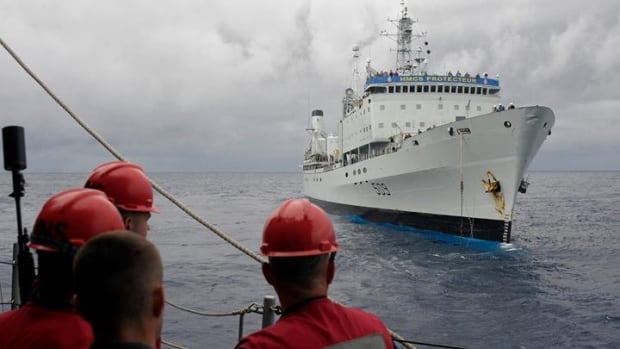
On February 27, 2014, a major fire broke out in the engine compartment of the Royal Canadian Navy supply ship, HMCS Protecteur.   For the next eleven hours, the crew worked without power, in smoke and darkness, amid rough seas, to save the ship.   The situation was especially critical given that, as a supply ship, Protecteur was carrying fuel and ammunition.   Had the crew lost control of the fire, the result would have been catastrophic.  Once the fire was extinguished, Protecteur was dead in the water, 600 kilometres from the nearest port, Pearl Harbor. 


HMCS Protecteur seen from the USS Chosin during towing operations after the fire.  This photo gives you a sense of Protecteur's size and the challenge of towing her.


I was very pleased to see the United Church of Canada website tell the story of Protecteur's chaplain, Padre Mike Gibbons (a United Church chaplain serving with the Canadian Armed Forces).   All of us in the Royal Canadian Chaplain Service are especially proud of Mike's service during the fire and in the days that followed.  As Mike told me the story, in the days following the fire, with much personal kit lost and the ship's laundry unusable, the crew worked in ragged, smoke-stained uniforms through many difficult attempts to establish a tow line and get the ship safely to port.


His ability to make connections with the US Navy chaplains at Pearl led to the Protecteur's crew getting much-appreciated bedding and other comforts on their return, a reminder of how the networks between chaplains of allied nations can significantly benefit the mission.


In his sardonic and self-effacing manner, Mike dismissed the commendations and decoration (Meritorious Service Medal), joking that there may be a connection between the fire and his need to get rid of his mess bar bills. 


His padre colleagues are very proud of Mike's service and example, which are in the very best traditions of the Chaplain Service.  It is also very gratifying to see a Canadian denomination recognizing the work of one of their own clergy in the military.


Thursday, December 24, 2015

First Christmas In The Trenches: Remembering Anglican Chaplaincy in the Great War

This post copies an article that I wrote for the newsletter of the Anglican Military Ordinariate, the body of Anglican chaplains serving in the Canadian Armed Forces.  It is part of an ongoing centennial retrospective of Anglican military chaplaincy in the First World War.   Last Christmas, I posted here about the Canadian Expeditionary Force’s first Christmas of the war, when they were waiting to go over from England to France.  By Christmas 1915, the Corps had suffered brutal baptisms of fire at places such as Second Ypres, Festubert and Givenchy, and were well on their way to becoming professional soldiers.  


By Padre Michael Peterson


To make the centennial of the First World War, the AMO Newsletter continues a series of vignettes of Canada’s Anglican chaplains and their ministry throughout that conflict.  Each instalment in the series will recall a time one hundred years prior to the date of each Newsletter.


During the second half of 1915, Canada’s Army and its Chaplaincy had both matured.   The Canadian Corps, now with two divisions in the line, had suffered its baptism of fire in the spring at Second Ypres, Festubert and Givenchy.   By the winter the Corps’ strength had reached ninety-five thousand, and it held a line in Belgium south of Ypres and north of Messines, between the villages of St. Eloi and Wulverghem.   While the positions were static, the British high command expected all units to carry out trench raids under cover of darkness in order to improve combat skills, gather prisoners and intelligence, and to maintain the troops’ fighting spirit.


These orders were more easily given than executed.   The historian of the Second Battalion (Eastern Ontario Regiment), described the Flanders rains that winter as “like no other that had ever fallen on earth”.


There was no escape from it. The trenches, which were nothing more than sandbagged breastworks, simply dissolved. The earth within the sandbags liquefied and oozed out. Everything collapsed. Every indentation of the ground filled with water, and, to make things worse, the enemy, being on higher ground, delighted in draining his trenches  across No Man's Land into those occupied by the Canadians.


Those in damp billets and flooded dugouts fared little better, and as there was not sufficient waterproof clothing, particularly rubber waders, troops suffered from influenza and a new ailment known as “trench foot”.


Canadian troops in Flanders, Winter 1915

(Natl. Archives of Canada)


While the Canadian Chaplain Service had been formally established in August 1915, it suffered from the divisive leadership of its first Director, Col. Richard Steacy.  His partiality  towards Anglicans and Orange Lodge factionalism meant that many Catholic and other Protestant chaplains were kept out of the line, and as Corps numbers increased, so did the number of padre vacancies.


Chaplains in the rear areas found opportunities to enhance morale.  Some set up sports events and libraries, while others worked with the Red Cross and church groups in Canada to distribute comforts to the troops.  Arthur McGreer, an Anglican priest (Trinity College 1910) assigned to Third Field Ambulance, was tasked with setting up a concert troupe which became wildly popular.  By the end of the war there were some thirty such concert troupes entertaining Canadian soldiers in Europe, the most famous being the Dumbells.  
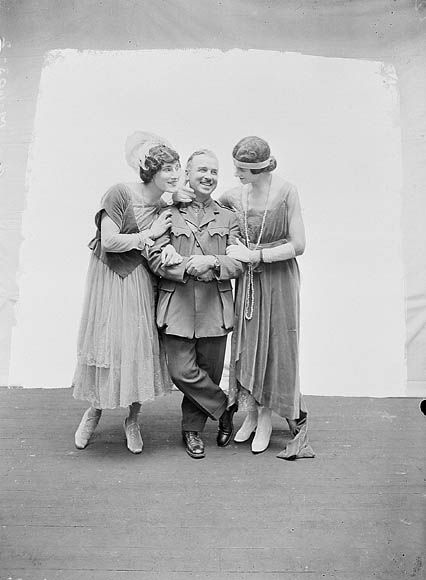


Three of the Dumbells. Their founder, Capt. Merv Plunkett, is in the centre.


Through the second half of 1915, padres had earned greater freedoms to pursue their frontline ministries.  Canon Scott wrote that “Chaplains were being looked upon more as parish priests to their battalions.  They could be visited freely by the men, and could also have meals with the men when they saw fit”.  During the sodden winter of 1915-1916, some found that maintaining morale could be difficult.  Even the diligent Canon Scott discovered this challenge when he met a unit, “wet and muddy”, coming out of the line.


I stood by the bridge watching them pass and, thinking it was the right and conventional thing to do, wished them all a Merry Christmas. My intentions were of the best, but I was afterwards told that it sounded to the men like the voice of one mocking them in their misery.


Christmas 1915 was a varied experience for Canadian troops.  If they were in the front line, it might pass with scant celebration.  The 10th BN (Calgary Rifles) spent Christmas in the trenches, supporting the engineers with working parties day and night.  The 10th’s war diary states tersely: “No notice of Christmas Season other than issue of plum puddings and gifts of cigars and fruit at midday meal”.  However the men of the 7th BN (British Columbia Regiment) found time to publish a Christmas edition of their regimental newspaper, “The Listening Post”, with an image of a stern Father Christmas and wishes “To one and all of our Fellow Countrymen at home in Canada, and to our many friends and relatives where ‘ere they be … a right MERRY CHRISTMAS and a HAPPY NEW YEAR”.


Pte. Alan Manderson with the 49th BN (Edmonton Regiment) wrote to his mother to describe a fine Christmas dinner of chicken, plum pudding and beer served by the sergeants.


We got a Christmas sock from the people of Canada for the Canadians in France.  Mine came from a lady in the east end of Toronto.  I may write and thank her for it.  At seven we had supper - just custard and figs.  Then followed the concert — a pantomime, “The Babes in the Wood”.  It was great.  The actors were all soldiers in camp here, but I’ve seen worse shows in Toronto lots of times.


For those troops in the front lines, however, war and danger were ever present.  Canon Scott was summoned on Christmas Eve by a sergeant “who told me he had some men to be buried”.  After prayers over their graves with the burial party, he set up in a barn “which for some reason or other, although it was in sight of the enemy, had not been demolished and was used as a billet” and celebrated a midnight Eucharist with the men of the 16th BN (Canadian Scottish).  This candlelit barn, with empty biscuit tins as an altar, was a far cry from Scott’s previous Christmas, celebrated in the lovely English parish of St. Mary and Melor, Amesbury.
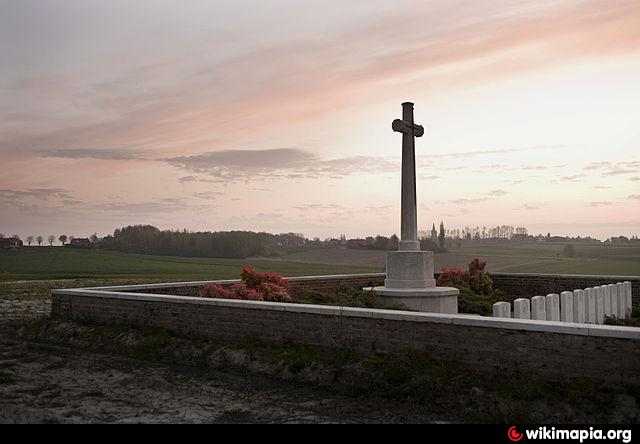


St. Quentin Cabaret Commonwealth Cemetery

Somewhere near here, Canon Scott celebrated the Eucharist on Christmas Eve, 1915


The Highlanders assembled in two rows and I handed out hymn books. There were many candles in the building so the men were able to read. It was wonderful to hear in such a place and on such an occasion, the beautiful old hymns, “While Shepherds Watched their Flocks by Night,” “Hark the Herald Angels Sing,” and “O Come All Ye Faithful.” The men sang them lustily and many and varied were the memories of past Christmases that welled up in their thoughts at that time.   


Christmas 1915 also saw one of the famous informal soldier’s truces.  For some Canadian troops, the memories of the gas attack at Second Ypres left them feeling too uncharitable for such a gesture.  The CEF official history notes that “front-line battalions were instructed that any attempt by the enemy ‘to bring about a temporary cessation of hostilities’ must be met by rifle, and if necessary artillery fire”.  However, in Canon Scott’s part of the line, all was peaceful.  To the Canon’s “astonishment”, German and Canadian soldiers strolled in plain view of one another, and bottles of beer were exchanged as gifts.  Miraculously the rain had stopped.  “Christmas parcels had arrived and the men were making merry with their friends, and enjoying the soft spring-like air, and the warm sunshine”. 


The unofficial soldiers’ truces of Christmas 1915 earned

significant media attention.


Later that day Scott celebrated Eucharist with another battalion, “in the cellar of a ruined building” and “down some broken steps”.  He would later write that “We had two more war Christmases in France, but I always look back upon that first one as something unique in its beauty and simplicity”.  


No Canadian soldier that Christmas could imagine that three more years of war, each more terrible than the last, lay ahead of them.


Blessings to you and yours this Christmas.

MP+

Monday, May 11, 2015

Canadian Anglican Chaplaincy in the Great War: The Road to Ypres, 1915

 The excellent Great War blog reminded me that 8 May was the 100th anniversary of Frezenberg Ridge, a defensive action during the German offensives in the Ypres Salient when the Princess Patricias Canadian Light Infantry, as part of a British brigade, held the line in a bloody but successful action that the PPCLI remember to this day.


The Patricias at Frezenberg, as painted by William Barnes Wollen.  Prints of this painting probably hang in every Canadian Army Officers’ Mess across Canada.


This story reminded me that back in late March, when I was very busy finishing my MA thesis, I wrote a piece for the Canadian Armed Forces Anglican Ordinariate newsletter continuing my account of Canadian Anglican padres and what they were doing in the Great War a century ago.   A previous piece, blogged here, describes chaplaincy during training in England at Christmas, 1914.


I didn’t blog the subsequent piece I wrote for the Easter newsletter, which takes the account up to Holy Week, 1915, when the Canadian Expeditionary Force was relocating northwards to the Ypres Salient, where they would arrive just in time for the German offensive now known as Second Ypres.


While it’s a bit late, here’s the article.


Holy Week 1915 saw the 1st Canadian Division finally in France and on the move to the Ypres salient.  Of the thirty-three chaplains who had sailed to England with the First Contingent of the CEF, one would never see action.  


Padre George Leycester Ingles, an Anglican, was the victim of an outbreak of spinal meningitis that had afflicted the Canadians during the winter of 1914-15 on Salisbury Plain.  He had “worked unremittingly”, ministering to soldiers in No. 1 Field Hospital.  The Ontario Star reported that he “had been in the habit of reading by the the hour to men of the regiment who were suffering from meningitis”.  It was in the performance of this ministry that Ingles contracted the disease, and died at age 28.  Padre Ingles was born in Toronto in 1886, and was a graduate of Trinity College and General Theological Seminary in New York, serving as a curate at St. George’s, Toronto.  An avid ruby  player and cricketer, before his ordination he had served as a sergeant in the Queen’s Own Regiment, and had gone over to England with them as their chaplain.  He was buried in the church cemetery at Bulford in Wiltshire (Grave Reference 1. 3. 2) and is remembered in the war memorial on the walls of the baptistery at St. Thomas’ Church, Huron Street, Toronto.


One of my CAF Anglican colleagues, Padre Don Aitchinson, informs me that Padre Ingles was also an alumnus of Trinity College School, a boys’ school in Toronto, and was the first TCS boy to fall in the Great War.  Ingles was at least the sixth generation of his family to have served as clergy in the Church of England.   A previous Rev. Ingles had been headmaster of Rugby School in England in the 1700s.  Ingles had a brother, Major Charles James Ingles, who also went to France as a major in  the 98th Battalion, CEF, from Lincoln/Welland in Ontario, who became adjutant of the 2\0th BN and was wounded on 26 August, 1918.


As the First Division prepared to deploy to France, there was a controversy over their established strength of chaplains.  While the British War Office had allowed the Canadians to take eleven chaplains to France (a divisional allotment for the British was five padres), the Senior Canadian Chaplain, Major Richard Steacy, an Anglican, was persuaded to assign only three chaplains to the three frontline infantry brigades.  The remaining eight went to headquarters, artillery and hospital units.  Among the Anglicans going to France with First Division were Steacy, his deputy John Almond who was a veteran of South Africa, Montreal’s Canon Scott, who essentially smuggled himself into the trenches, and Newfoundland’s George Wells.  The remaining twenty-two Canadian chaplains kicked their heels at Shornecliffe Camp in England, under the direction of another Anglican, Frederick Piper.


The first Canadian troops to land in France were actually the Princess Patricias Canadian Light Infantry, who had been assigned to a British Division.  They spent the first Christmas of the war in France.  The Canadian First Division began crossing in early February, landing at St. Nazaire as depicted in Edward Bundy’s famous painting.


Canadians landing at St. Nazaire, France, as painted by Edgar Bundy.


The Canadians spent March in Fleurbaix, south of Armentières, learning their new craft under the tutelage of experienced British troops.  


That month First Division played a peripheral role in the failed British offensive at Neuve-Chapelle.  While their introduction to the trenches was relatively quiet, it was not without cost.  Of the 18,000 Canadians who were the first in France, March 1915 cost them 68 killed and 210 wounded from snipers, artillery, and small skirmishes.  About 35 men in the Division answered Sick Call each day, many suffering from the effects of long-term exposure to cold and water, a condition known as trench foot, and about 10% of these were evacuated to field hospital  Chaplains too were learning their craft as they ministered to sick and wounded, and buried the first dead.  Already the ludicrously small ratio of a half dozen frontline chaplains to 18,000 soldiers must have been apparent to all who cared to consider it.


In late March, First Division became part of the British Second Army and was ordered to relocate to the key Ypres sector of the line, where it went into reserve positions.   By 1 April, elements of the Division had marched to Estaire, a small French town on the River Lys, some distance south of Ypres.  Canon Scott remembers his time in Estaires as one of rest “before the storm”, and described fine spring weather.   For the troops it was a time of some rest, interspersed with regular drills, practice attacks and route marches.   Scott held a Good Friday service on the steps of the Town Hall in Estaires, and struggled to be heard above the sound of “lorries” and a stream of motorcycle dispatch riders.


 On Easter Sunday Scott commandeered a hall which had been used as a cinema.  “There was a platform at one end and facing it, rows of benches.  On the platform I arranged the altar, with the silk Union Jack as a frontal and with cross and lighted candles for ornaments.  It looked bright and church-like amide the sordid surroundings.  We had several celebrations of the Holy Communion, the first being at six a.m. A large number of officers and men came to perform their Easter duties.  A strange solemnity prevailed.  It was the first Easter spent away from home; it was the last Easter that most of those gallant young souls spent on earth.  The other chaplains had equally large attendances.  We sang the Easter hymn at each service, and the music more than anything else carried us back to the days that were.” 


Individual units appear to have observed Holy Week in some fashion.  The War Diary of the 7th CEF, a battalion composed of men from the West Coast (the 7th is perpetuated today as the British Columbia Regiment), indicates that the unit held “divine service” on Good Friday, 2 April, before dedicating the rest of the day to drill and mock attacks.  On Easter Sunday the 7th went to Ploegsteert and La Boutillerie “to place [word indistinct] over graves of those killed in action”.  The next day the men of the 7th were on the road north by 07:00hrs, marching towards Ypres.  Unbeknownst to them, they were also marching to the Calvary of their trial by battle.

Wednesday, February 4, 2015

Remembering The Four Chaplains


A friend of mine reminded me that yesterday, Feb 3rd, was the anniversary of the sinking of the US troopship Dorchester during World War Two in 1943.  This incident made famous the story of the Four Chaplains, a Rabbi, a Roman Catholic priest, and two ministers  (Methodist and a Dutch Reformed).  The story of how they gave up their lifejackets and were last seen, praying and singing as the ship sank in the frigid North Atlantic, is told here.

An American scholar, Kevin M. Schultz (Tri-Faith America:  How Catholics and Jews Held Postwar America to Its Protestant Promise (New York: Oxford University Press, 2011), has noted how this story of cooperation was turned into a symbol of religious pluralism in postwar America by those who wanted Catholics and Jews to enjoy the same privileges as Protestants.   One of the Hollywood studios even considered making a film about the story, but to my knowledge it was never made.

The Four Chaplains are icons of selfless service and interfaith comradeship for all military chaplains.

MP+

(See 

 Kevin M. Schultz, Tri-Faith America:  How Catholics and Jews Held Postwar America to Its Protestant Promise (New York: Oxford University Press, 2011), 5

Monday, December 29, 2014

Incarnational Ministry In A "Suicide Wagon": A British Army Padre's Story Of Afghanistan


During my time working with the staff of British Army Training Unit Suffield, I was fortunate to get to know many fine padres from the UK’s Royal Army Chaplain’s Department.  Several kept in touch with me once they left Suffield and deployed shortly thereafter to Afghanistan.  This story is from one of them,  who was in Helmand Province sometime in 2013, and I was reminded of it recently while sorting some emails.  It's as good an illustration of the work of an army chaplain as any I can think of, and it’s too good not to share.

  Some time ago, a young man spoke to me about his role as the resupply fuel truck driver.  He makes journeys to forward patrol bases carrying 50,000 litres of fuel and he affectionately referred to his vehicle as the ‘suicide wagon’.  I made a mental note to travel with him on his next trip and, as the Sergeant Major had to cancel his plans at the last minute, I was fortunate enough to take his place alongside the driver only a week later.  We lined up in a convoy of vehicles waiting to leave the base and the conversation went something like this - Me:  “Shall I say a prayer before we go?”  Driver:  “Go on then, when you’re ready, Padre!”

I gave him a set of ‘dog tags’ with a Scripture verse and a cross and these are now hung by their chain from the seatbelt cutters mounted in the cab.  As we chatted the driver asked about my sharing the risks and not carrying a weapon for protection.  (As chaplains we are ordained ministers from our sending Churches and although we wear uniform we are not soldiers and do not bear arms, we are here simply to serve).  I always take the stance that the lads are my protection; “we’ll be alright, Padre” he said, “you’ll see!”


The Church calls this ‘Incarnational’ ministry – in the same way that God emptied Himself of all the glory of heaven and lived an earthly life among us as Jesus – so we seek to share the same lives and conditions as those we serve.  That young man is getting married in October at the end of the tour.  He didn’t need me to say I would pray for him, although I do – he needed me to travel with him along the road.  Oh, and he was right too, we were fine!


I’m happy to say that this Padre and the young driver returned safely from their tour.  MP+


Mad Padre

Mad Padre
Opinions expressed within are in no way the responsibility of anyone's employers or facilitating agencies and should by rights be taken as nothing more than one person's notional musings, attempted witticisms, and prayerful posturings.

Followers

Blog Archive

Labels