The Symbol of God Functions? by Ben Crosby
How attention to the practical function of Christian belief helps and hinders contemporary theology
Read on Substack
Just stumbled across a poem by W.H.Auden from For The Time Being.
Now, recollecting that moment
We can repress the joy, but the guilt remains conscious;
Remembering the stable where for once in our lives
Everything became a You and nothing was an It.
Benjamin Crosby is a voice in the Anglican church worth attending to. In a new article in Plough (another voice worth attending to), Benjamin speaks about being a young (thirty two year old) priest in a declining denomination, and feeling like a lookout in the Titanic whose reports about icebergs ahead go ignored on the bridge.
Nevertheless, his faith is encouraging, and his faith is in the clear and unambiguous proclamation of the gospel that matters because: "everyone is beloved of God, who sent his Son to bring good news to a fallen and suffering world. There can be no doubt this world is suffering from evil and despair. So why on earth would we, who have been entrusted to share the hope of Christ, withhold or obscure it where it is so clearly needed?"
In a church where some of my clergy appear comfortable with having questions rather than answers, I appreciate Crosby’s faith in a gospel of life, resurrection, and hope. In the words of the singer Jason Isbill, I’ll work hard till the end of my shift, and then I’ll go to my rest grateful that younger clergy like Crosby will lift high the cross when my generation is gone. It will be a very different church, but as Crosby notes, it will the church of God who "is good and he is faithful, even when we are faithless”.
Today on Yom Kipur, I’m grateful that Religion News Service chose this fitting day of atonement to post a short interview with American Rabbi, Danya Ruttenberg. Rabbi Danya has just published a new book, On Repentance and Repair: Making Amends in a Non-Apologetic World, which I’m very keen to read. Several comments from this short interview struck me.
First, her answer to a question about slavery reparations to African Americans offers some insight into what an ongoing process of reconciliation and dialogue with indigenous Canadians might look like.
Truth-telling is so vital. A robust process of national truth-telling to echo Archbishop Tutu’s (Truth and Reconciliation Commission) where everybody understands what’s been done to Black Americans, not just enslavement, but everything since. We don’t stop until people find changes of the sort this country has never seen.
Also, her comment about repentance as a kind of self-care, as in healing of the soul/self, is helpful in terms of better understanding how repentance and atonement help us better inhabit the image of God, the self that God wants us to be.
If you’re causing harm, something’s off with you. You’re not aligned with your integrity, your values, your highest self. This is a chance to say, “Hey self, you’re not acting like the person I know you to be. You’re not listening to the voices inside talking about who you can really be. Are you so stressed out you’re not paying attention to other people? How do you get back to wholeness? The work of teshuva (the Hebrew word for “return” or “repentance”) is an opportunity to grow into the person you could be. That’s an amazing opportunity.
I’ve got the book on order, more here soon.
MP+
Hi! Here’s a brief post to say that I've recently discovered a theologian, Michael Di Fuccia, who has some interesting things to say on spirituality, the contemplative life, and spiritual development. Here he is in a Sept 2020 conversation with Michael (sorry, don’t know his last name) from a YouTube channel called The Meaning Code. It’s a dense and far-ranging conversation. If you only can give a few minutes, pick it up at 103:10 until about 1:09. Michael Di Fuccia talks about how, if we want to attend to transcendence and be instructed to it, then that posture will entail a fair degree of humility. That’s a stance that I think we could all take more consistently on our social media platforms.
Michael Di Fuccia was a student of the Anglican theologian John Millbank (co-founder of the Radical Orthodox movement), and has recently published a book on Owen Barfield, who travelled in the same Oxford circles as J.R.R. Tolkien and C.S. Lewis. Barfield is not someone who was on my radar screen - he is briefly mentioned in Humphrey Carpenter’s book The Inklings (1978) as a student of Coleridge and of a German early 20th century spiritual and philosophical movement called Anthroposophy. You can find some of Barfield’s writings here.
Di Fuccia is also associated with The Martin Institute, an organization inspired by the Christian writer Dallas Willard and dedicated to spiritual formation; it hosts an interesting site called Conversatio Divina: A Centre for Spiritual Renewal.
On that site you can find a resource called 12 Spiritual Practices For A Pandemic, which looks fascinating - I’ve bookmarked for further study.
I pray that this is helpful and that God goes with you today.
Cheers and blessings,
Michael
Technorati Tags: Theology, Michael Di Fuccia

(A Scene of Profound Theological Reflection)
It’s often observed that the word liturgy, which we think of as “worship” or “a religious service”, originates in two Greek words, laos (people) and eras (work), and that the word liturgy thus means something like “the work of the people”, although the nuances can be argued.
As an Anglican Christian, I appreciate that our prayer is common, meaning that there is clearly defined role for the people, who, with the priest or minister, come together to give praise and thanksgiving to God. In this regard, our liturgies are formative, in that thanks to our shared roles as clergy and people, we are taught and shaped by our worship.
At the end of his chapter on “Moral Communication” in his book, Self, World, and Time: Ethics as Theology, the Anglican theological Oliver O’Donovan finishes his discussion of the role of the Lord’s Prayer in the Sermon on the Mount with a meditation on the importance of the first person pronoun in our liturgy. O’Donovan’s insight that prayer should feature “we” rather than “I” helps me to explain a slight discomfort that I have sometimes felt in attending some evangelical protestant religious services. This discomfort (and this is not meant as a criticism of evangelical forms of worship so much as an awareness of a difference) arises from the sense that the worship leader or pastor’s experience of faith and belief is normative, for example, in whatever ad lib explanation of communion is offered before the action itself, so that the congregation is left as best they can to map their own experience to what they hear expressed.
Here’s O’Donovan:
At the very centre of this text of moral teaching (Mt 6:1-18) there is the teaching of a prayer - not only how to pray, that is, but what to pray. Precise words are prescribed. If we have understood the relation of prayer to moral thought, we shall not be surprised at this. That such words should be open to private and public elaboration (economical elaboration, if we take Jesus’ warning seriously!), that they should generate noble liturgies and passionate private intercessions may be taken as a matter of course. Yet the words are not merely an outline, a set of heads of advice or agenda items. They are themselves a possession of irreplaceable importance in forming the “we”, the community of moral practice (italics mine). That is why they should be placed - the bare text without embroidery or expansion - at the core of every Christian liturgy.
The conception of worship as magnified personal self-expression, a large-screen projection of the “i”, obstructs the formation of the community by depriving lay members of the congregation of their proper ownership of the words of prayer. If the primary material for common reflection, replacing hymns and prayers that can be learned, possessed, and used by every worshipper, comes to be the spontaneous feelings of the minister and the autobiographies of selected model Christians, there is no room for the interaction of community and individual to develop. The model “I” overwhelms the (genuinely) personal contribution of the worshipper with a fake personality, imposing sentiments, moods, narratives, and reactions even to the minister, who affects them at the price of forcing his or her real personality into a straitjacket, trying to be the one and single and embracing personality that will serve for all.
In traditional liturgies the occasional appearance of the first-person singular (in baptism and at the recitation of the creed) points to the Holy Spirit’s grafting of the believer into the community. Yet its comparatively restricted liturgical presence and its total absence from the prayer Jesus taught, where the first-person is always plural, points to the common identity built up by prescribed prayer, the “we” within each and every “I” can realize itself. The formal and predictable character of liturgy, giving us a purchase on the common “we”, enables us to accomplish a personal self-offering together with all others who are gathered for worship. The liturgical consideration of the “we” is one aspect of what should be meant by that pregnant, if elusive phrase, “ecclesial density”.
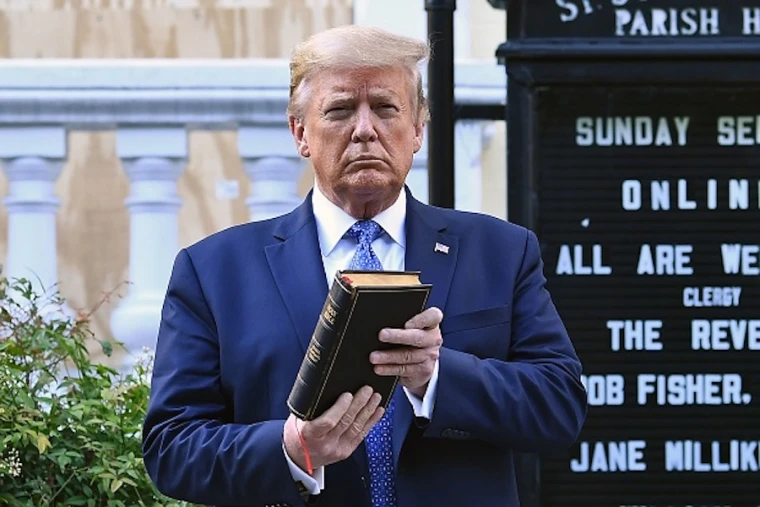
This blog entry continues a series of meditations on the Three Days of Holy Week, guided by The Undoing of Death, a book of sermons for Holy Week by the Anglican preacher Fleming Rutledge. This entry focuses on her sermon, “Midnight in the Kingdom of Death”.
38 After these things, Joseph of Arimathea, who was a disciple of Jesus, though a secret one because of his fear of the Jews, asked Pilate to let him take away the body of Jesus. Pilate gave him permission; so he came and removed his body. 39Nicodemus, who had at first come to Jesus by night, also came, bringing a mixture of myrrh and aloes, weighing about a hundred pounds. 40They took the body of Jesus and wrapped it with the spices in linen cloths, according to the burial custom of the Jews. 41Now there was a garden in the place where he was crucified, and in the garden there was a new tomb in which no one had ever been laid. 42And so, because it was the Jewish day of Preparation, and the tomb was nearby, they laid Jesus there. (John 19:38-42)
At the end, or what seems to be the end, it is Nicodemus of all people who, with Joseph of Arimathea, comes to lay Jesus to rest. Nicodemus, as John reminds us, ”had at first come to Jesus by night”, brings the spices and ointments to prepare the body for burial. It sounds like a costly amount, “a hundred pounds” of “myrrh and aloes”, but Nicodemus was a wealthy, prominent man. Perhaps, as Jesus’ body was brought to the tomb, if Nicodemus thought about that night when the rabbi had told him, that “God so loved the world that he gave his only Son, so that everyone who believes in him may not perish but may have eternal life” (Jn 3:16). If he did remember those words, I wonder what he thought of them as Nicodemus watched the works roll the stone into place, as the tomb was sealed, and the finality of death asserted itself?
As the Anglican preacher Fleming Rutledge reminds us, night and darkness in John’s Gospel are symbolic of sin and death, the forces opposed to God. Jesus tells Nicodemus as much when he says “this is the judgement, that the light has come into the world, and people loved darkness rather than light because their deeds were evil” (Jn 3:19). Now, as Nicodemus and Jospeh leave the tomb and the shadows begin to lengthen, darkness and evil seem to have won.
Normally the church’s observance of Easter Eve occurs at night. The liturgy of the Great Vigil invites us back into a church that was left darkened and bare at the end of Maundy Thursday, all the fair linens, bright colours and brass and gold removed. It is a time when, as Rutledge says, “The realm of darkness appears to be victorious. There is nothing left of the Messiah but the grave” (p. 236). On the Eve of Easter, the church normally gathers in darkness to remind itself of what is at stake.
“Jesus has entered the realm of Death. The mythology of the Greeks and Romans is by no means wrong here; the dead must cross over the black waters of the river Styx into the kingdom of darkness from which no one can ever return. The Son of God, by his own permission, has been given over to the realm of night. This is where he has gone. We say in the Creed, “He descended into hell.” Death rules there. Satan rules there. The corpse lies there twenty-four hours, thirty-four hours. It is night” (p. 237).
Normally at the start of the Great Vigil, the New Fire outside the church, and the return of the church’s white linens and hanging, would signal the victory the we come to celebrate. However, today on this Easter Eve I am recording this service of Morning Prayer in the light of day, and yet as we lie in the grip of this pandemic and wait for it to peak, does it not feel like night? The trees are in bud, snowdrops and crocuses have emerged, but even in that spring sunshine the coronavirus lies in wait. In hospitals across the world people are struggling to breathe, refrigerator trucks are filling with the dead, and families mourn without the comfort of funerals. If we are not in the realm of death, we are somewhere adjacent to it, in a place where the reality of Jesus’ tomb seems more apparent to us now than it has for many Easter’s past.
If there is a gift in this strange time, it is that every health care worker who risks their lives daily, every person who comes off a ventilator and lives, every act of kindness done for the isolated and vulnerable, all these things point to hope and life. We may now in a place where death seems more real, but we are also situated so that we may better perceive the promise of resurrection. We are in a better place to appreciate the enormity of God’s victory. As Rutledge notes, and as the Great Vigil of Easter will tell us in better times to come, the resurrection happened at night. When the light of dawn entered the tomb, all it revealed were the empty grave cloths of the risen Christ.
As we the church remain apart from one another, this Easter may feel like a pale shadow of what we normally celebrate. One day, soon, I pray, we will have a chance to gather and celebrate at the table of our Risen Lord, and won’t that be a joyous occasion? I think of that day, when St. Margaret’s is full again, and I know I will cry for happiness on that day. For now, though, as we gather virtually, let us remember that we know what Nicodemus could not know as he walked away from he sealed tomb in the gathering dusk. We know that the grave is empty and that death has been defeated. God spoke in the night, the Spirit raised our Lord’s body, the stone was rolled back, and Jesus walked out into the garden, into the dawn, into the realm of life.

This blog entry continues a series of meditations on the Three Days of Holy Week, guided by The Undoing of Death, a book of sermons for Holy Week by the Anglican preacher Fleming Rutledge. This entry focuses on her sermon, “The Third Sign: The Open Tombs”.
Good Friday is replete with devotional themes - the Stages of the Cross, the Wounds of Christ, our Lord’s Last Words, among others - Fleming Rutledge’s Three Meditations on Three Signs of Calvary draw our attention to the events triggered by the death of Jesus. These events include the darkness at noon, the tearing of the Temple veil, and the opening of the tombs described in Matthew 24.
50Then Jesus cried again with a loud voice and breathed his last. 51At that moment the curtain of the temple was torn in two, from top to bottom. The earth shook, and the rocks were split. 52The tombs also were opened, and many bodies of the saints who had fallen asleep were raised. 53After his resurrection they came out of the tombs and entered the holy city and appeared to many. 54Now when the centurion and those with him, who were keeping watch over Jesus, saw the earthquake and what took place, they were terrified and said, ‘Truly this man was God’s Son!’
It is as if the cross, at the moment of Jesus death, is the epicentre of a disruption that radiates out with seismic force. To say that these events are unnatural would scarce do them justice. Creation itself is profoundly shaken, not just physically but in the case of those awoken and emerged from the opened tombs, metaphysically. It is as if the paradox of the death of the one who was with God in the beginning, before all things were made, cannot be reconciled by nature.
Rutledge is I believe right to focus on these strange events and say they mark the start of something new.
“The course of the world is interrupted here. Things will never again be as they were before, and in the eclipse as well as in the earthquake and the splitting of the rocks, God calls forth his whole creation as witness to his divine intervention. The universe is benched off its axis and sent spinning in another direction. The turn of the ages takes place today” (190).
Rutledge puts these events in Pauline terms as signs of a new creation which interrupts “the present evil age” (Gal 1:4), reorienting away from its inexorable entropic decline and heralding a hitherto unknown future which “gives life to the dead and calls into being the things that do not exist” (Rom 4:17).
As Rev. Rutledge writes, “God has not abandoned his creation to its own fate. God in Jesus Christ places himself squarely in the path of this world’s careering course towards self-destruction and reverses it. … We orient ourselves not to what we have been, but to what by the grace of God we shall be” (191-192).
There is trope in popular culture, now strip-mined to parody and exhaustion - of the undead rising from the graves, and I confess that as a child this Matthean detail of the dead appearing to many did creep me out. However, the fact that these wakened sleepers are “the saints” should allay out fears. These faithful ones are not the walking dead, but rather are the first fruits of Jesus’ conquest of death.
Rutledge again: “Life is given to the dead through Jesus’ death. … The opening of the tombs takes place, not on the morning of the Resurrection, but at the moment of Jesus’ last struggle for breath. Matthew is telling us that “the powers of death have done their worst” and they cannot contain him.
And so the sign of the open tombs and the risen saints is this: Jesus Christ did not enter death in order to give us an example of a good and brave death, nor even in order to come back from the dead himself, but rather, to unlock our prison doors and lead us free” (Rutledge 192).
In this new world, made possible by Jesus’ death, we are reoriented towards life, freedom, and possibility. What will we find if we, the faithful, free from a story that leads inevitably to our decline and death, emerge from our open tombs?


For one of my grad courses this fall, I am being introduced to the work of David Martin, a sociologist associated with the London School of Economics, and an Anglican priest, who has made a long and distinguished career thinking about topics such as secularization.
This paragraph, from Martin's On Secularization: Towards A Revised General Theory (Ashgate 2006) jumped off the page at me today as a remarkably succinct description of what can happen to Protestantism when it divests itself of its traditional ritual expressions of the holy and reserves holiness to what Martin calls "heartwork". I also like it because of the metaphor of the road roundabout, of which Kitchener-Waterloo traffic planners appear quite enamoured.
"In spite of this necessary retention of institutional and conceptual boundaries, evangelicalism incurs a cost on account of the ease with which the heartwork can be taken to imply that there is no need for efficacious ritual and institutional mediation. Ritual and mediation are all too easily dismissed as mere mumbo jumbo and priestcraft: that is the sentiment or sediment deposited by a receding Protestantism. Christianity comes to be popularly received as no more than neighbourliness or decent personal attitudes and well-meaning sentiment. Decency is the eminently natural virtue and in political terms it has to provide the agreed point of reference for moral consensus. It offers the working version of faith in the political sphere. The reason is that a public institution, like a road roundabout, requires a decent law-abiding citizenry, not Christianity."
I'm thinking I might make Friday theology a regular feature of this rather irregular blog.
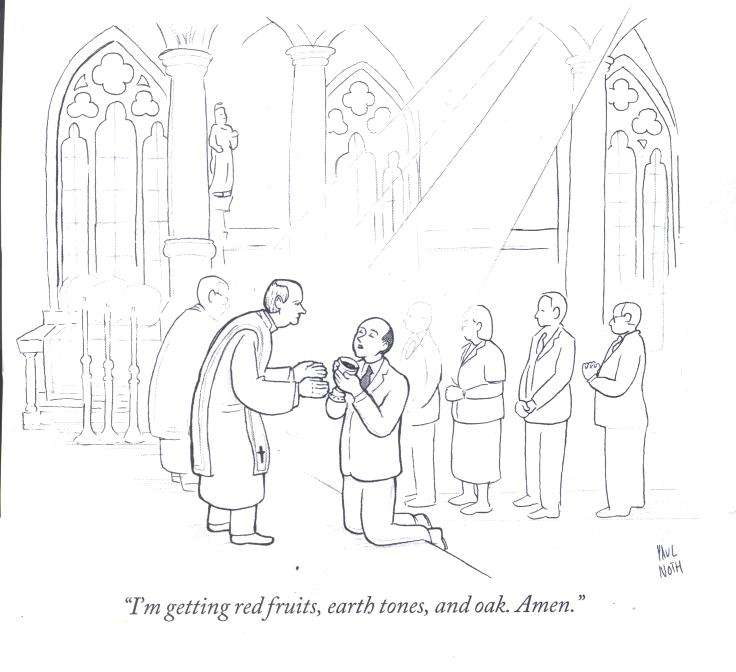
Not everyone understands what eucharistic practice is all about.
American theologican Stanley Hauerwas, however, nails it in this video from The Work of the People, a liturgical resource ministry that I've noted here in past. We ran this video before Communion last Sunday in chapel. Note that I couldn't get this to run on my iPad, so you may need Windows to make it work.
This Easter I've been struggling with the question of how one ends up assenting to the resurrection as being something real rather than being a myth or fairy tale. Preachers feel enormous pressure to be on top of their game at Christmas and Easter, as if their homiletic efforts could persude strangers to return to church the following Sunday. I suspect that this self-imposed pressure has more to do with our need to fill the pews by converting C&E (Christmas and Easter) Christians into regular parishioners than it does with persuading others of the realities of Incarnation and Resurrection, as if such a thing were possible.
I'm currently in conversation with a friend, a young officer and engineer whose girlfriend is Christian and wants him to become one. One of the sticking points for my friend is that he perceives religion as being "unscientific", not only because of its claims about Jesus, but also because of Christians he has met in his girlfriend's church who denounce Darwin and evolution. While we have fascinating and enjoyable conversations, I've given up trying to convince my friend that he should set aside his concerns and agree to my claims. I don't think evangelism works that way, even though the Book of Acts, the text that the church listens to in its Easter season liturgy, features long speeches leading to mass conversions.
Another friend of mine recently put me on to an essay (http://www.bbc.co.uk/news/magazine-14944470) by the British political philosopher, John Gray, on how it is that people come to assent to faith. Gray uses the example of novelist Graham Greene, who converted to Catholicism but couldn't recall anything said to him that he found convincing or causal to his conversion. He just came to it. (I need to check this, but I am sure a similar process happened to C.S. Lewis). Gray uses the case of Greene to argue that it's not helpful to think of faith as a rival to science, with both claiming our exclusive assent and approval.
"We tend to assume that religion is a question of what we believe or don't believe. It's an assumption with a long history in western philosophy, which has been reinforced in recent years by the dull debate on atheism."
"In this view belonging to a religion involves accepting a set of beliefs, which are held before the mind and assessed in terms of the evidence that exists for and against them. Religion is then not fundamentally different from science, both seem like attempts to frame true beliefs about the world. That way of thinking tends to see science and religion as rivals, and it then becomes tempting to conclude that there's no longer any need for religion."
"The idea that religions are essentially creeds, lists of propositions that you have to accept, doesn't come from religion. It's an inheritance from Greek philosophy, which shaped much of Western Christianity and led to practitioners trying to defend their way of life as an expression of what they believe."
I found Gray's ideas helpful. As I think about how the invitation to follow Jesus works in the gospels, it starts with the invitation to experience: "Come and see", "Taste and see that the Lord is good", and the like. It's not "Come and agree". The creeds follow as attempts by the early church to define questions (where did Jesus come from, who was he, how was he related to God) that are partial attempts to explain the faith to its first generations of believers. I suspect that few in Corinth or Rome or Philippi were ever convinced by Christian propositions so much as they were convinced by the reality of communities which could live and worship and share a way of life in which all had value, in contrast to the dominant Roman proposition that Caesar was emperor and God and all must submit to him.
In the end, says Gray, the best thing to do is to "stop believing in belief".
"Not everyone needs a religion. But if you do, you shouldn't be bothered about finding arguments for joining or practising one. Just go into the church, synagogue, mosque or temple and take it from there. What we believe doesn't in the end matter very much. What matters is how we live."
That final sentence in particular is something that I know my young engineer friend would agree with. I would agree with it too, as a starting point. I think though that the next time we talk about the resurrection, I'll ask him to let go of the resurrection as a fact that humans want him to believe in, and get him to think about the resurrection as something that God did, and why (assuming he will humour me here) God might have done it and what God might be communicating in that action. In this month's Canadian church journal, Presbyterian Record (http://presbyterianrecord.ca/2013/03/01/the-threat-of-resurrection/), John Vissers thinks through the implications of the resurrection as God's strange, threatening, and wonderful declaration to us:
Vissers writes: "Sin, death and evil do not have the last word. The resurrection reminds us that we don’t simply need a little help to renew our flagging spirits. We are dead and we need resurrection. And only the triune God of grace is in the resurrection business. The real truth of the resurrection seems too strong for us, says Barth. But it refuses to be hidden in the harmless clothes with which we dress it at Easter. “It always breaks forth; it rises up and shouts at us.” It asks us, “Do you not see that Jesus came to set you free, to give you life?”
Thinking through the implications of the resurrection, I suspect, would be more helpful, and more exciting, to my engineer friend than putting it to him as a proposition.


