Showing posts with label Epiphany. Show all posts

Saturday, February 17, 2024

Eternal Light: A Final Epiphany Homily

Preached at All Saints, Collingwood, Anglican Diocese of Toronto, as part of our  Saturday Apres Ski series.  March 17, 2024.   

Text:  Mark 9:2-9



 "And he was transfigured before them, and his clothes became dazzling white, such as no one on earth could bleach them." (Mk 9.3)

Tonight is the last night in our Apres Ski series that we will look at one of the themes of the Epiphany season,  even if that means looking back over our shoulder, since we are of course now in the season of Lent.

The climactic and final reading in Epiphany is usually the story of the Transfiguration, that moment in the synoptic gospels when Jesus goes up a mountain with three of his disciples and is momentarily seen in an unearthly brightness and glory.   Most commentators would agree that the Transfiguration story is intended to remind us that before Jesus became the incarnate Word made flesh, he was one with the Father in the glory of heaven.

The story is called The Transfiguration because that is the word that English bibles, since the King James version, have used to translate the Greek word used by Mark and Matthew – metamorphoo (Luke uses another Greek word that means “altered”).    We of course know the word “metamorphosis” from grade school biology, for example as when we learn how pupae turn into butterflies, but what if Mark is saying something different, that Jesus is not showing us a future state of being, like the butterfly, but rather showing us something from whence he came, his eternal and Trinitarian being with God the Father?

Since the Season of Epiphany is about the revealing of Jesus’ true, let’s think a little about what the Transfiguration story tells us about what Jesus turns into.   In fact, we aren’t told a lot, Mark merely says that Jesus’ clothes became an unearthly, “dazzling white” (Mk 1.3) whereas Matthew tells us that Jesus’ face “shone like the sun” (Mt 17.2’ Luke repeats the “dazzling white” but only says that Jesus’ face “changed” Lk 9.28) .   So all we really have is the impression of lightness and brightness, qualities which are consistently associated in scripture with God and the divine.

A short service like this does not allow time for a deep dive, so one example, from the prologue of John’s gospel, might suffice.
In the beginning was the Word, and the Word was with God, and the Word was God. 2He was in the beginning with God. 3All things came into being through him, and without him not one thing came into being. What has come into being 4in him was life, and the life was the light of all people. 5The light shines in the darkness, and the darkness did not overcome it. (Jn 1.1-5)

St John tells us, in so far as we can comprehend it, that Jesus came from the Father, from an existence before creation and created being, from the source of all light and life.   We also know that God is the source of life thanks to the creation story in Genesis, where the first thing that God says is “let there be light” (Gen 1.3).  The fact that the first thing God creates is light, I think, says something profound about the character and good purposes of God.

However, there is something even more profound going on.  The light God creates in Genesis is created, it is second order, it is not God itself, in the same way that the earth, or you or I, are created by God but are not God.  The light that belongs to God, the light that I think we see in the Transfiguration, belongs to God, it is the uncreated, self-sufficient essence of God, it is the glory of God, and the glory that we see revealed glory in Christ is what Epiphany is all about.

If Jesus remained in his transfigured state, there would be no gospel, and no salvation.   If Jesus is fully God and fully human, then the human Jesus must be the lens through which we can see God the Father. 

Indeed, this is one of the great themes of John’s gospel, where Jesus several times explains to his disciples that since they know him, Jesus, then they also know and have seen the Father (Jn 14.7).  This knowledge is made possible by the incarnation, by God’s graciousness in sending the Son in human form, so that relationship, friendship, teaching and salvation through death on the cross are possible.   Otherwise there would only be the inaccessible glory of God that we see in the Old Testament in places like Moses’ encounter with God on the mountain (Ex 33:18-20).

This is all very abstract stuff, so let me address the “so what” question with some brief, concrete and (I hope) hopeful thoughts.

We know that our lives take us by and through some dark places, be they guilt, despair, loneliness, or even mortality, the darkness of the valley of the shadow of death.  Our hymns and prayers around evening time, including the ones we sing regularly at his service, address our need for light in the midst of our darkness. 

What better light can there be to guide our feet, and our lives, than Jesus, our friend and our brother, who with his Father shares and is the eternal light from whom all evil things are revealed and vanquished?    What better guide and guardian can we ask for than the gracious light of Jesus, who will accompany us until we reach the heavenly city glimpsed in Revelation, the city which “has no need of sun or moon to show on it, for the glory of God is its light, and its lamp is the Lamb” (Rev 21.22).


Saturday, February 10, 2024

The Glory of Service: An Epiphany Homily


Text:  Mark 1:29-39


During this series, we’ve been looking at the various themes of Epiphany, the miracles and signs that reveal Jesus in his glory as the Son of God.  Tonight we will take a look at last Sunday’s gospel, which never got a proper sermon, poor thing, on account of my absence sick, and we will talk about healing as one of the signs of who Jesus is and what he has been sent for.

Last Saturday we looked at a kind of healing, when Jesus in Capernaum frees the man of the unclean spirit (Mk 1:21-28). That was an act of healing in that the man was made whole again, but as I said last Saturday, that healing needs to be seen as a kind of cosmic confrontation, as Jesus routing the evil powers that occupy the world and frustrate his Father’s good purposes.

As we continue with Mark’s gospel, the healing of Simon Peter’s mother-in-law doesn’t have any cosmic overtones.  It’s not an exorcism, there is no evil spirit, just a woman with a fever.    There’s a few things we can say about this story of healing.

First, it’s intimate and domestic, whereas the healing of man with the spirit in the synagogue was very public, in the synagogue.   This story should comfort us in that Jesus comes into a home, bringing love and healing with him.  It shows Jesus’ interest in us and love for us, wherever we are, especially for those of us who think that we can only find God in a church.

Likewise there is something comforting in the intimacy of touch and contact in this story.  Jesus taking the woman by the hand and raising her up reminds us of how Jesus raises Jairus’ daughter from the dead later in Mark’s gospel (41He took her by the hand and said to her, ‘Talitha cum’, which means, ‘Little girl, get up!’ 42And immediately the girl got up and began to walk about (she was twelve years of age).”   That Jesus should bother with this physical, comforting gestures, rather than airily waving his hand, says something profound about the incarnation and about a God who cares to be with us in the midst of our lives.    Anyone who has felt sick and frail can I think relate to this idea of Jesus’ healing touch and proximity.

There’s two more important things we can say about this healing miracle.  The first is that, like the other Epiphany signs, it functions as a revelation of the glory and power that the Father has given to the Son.   People throng the streets to see Jesus in hopes that he will heal them and their loved ones.    If the turning of the water to wine at the Wedding of Cana was a miracle of creation, then the healings are miracles of restoration, showing Jesus sharing in the creative power of the God, restoring people to wholeness.

The second thing we can say about this miracle is that it shows us that at it’s heart, the Kingdom of God is about service.    Healed of her fever, Simon’s mother in law can return to her vocation of hospitality to her guests. We might think it sexist of Mark to give her a name, and to think that her only role is to make sandwiches, but in Mark the word “serve” is vitally important.   The Greek word, diakaneo, is the origin of word “deacon”, one of the three holy orders with a specific focus on ministry to others.   It’s the same word that Mark uses to describe how the angels wait on Jesus after his time with the devil in the wilderness.

Jesus himself uses the word diakeno to describe his mission: “For the Son of Man came not to be served but to serve, and to give his life a ransom for many” (Mk 10.45).   In our culture, the words “serve” and “service” can often have a menial connotation – think of how little prestige we attach to jobs in the “service industry” – but for Jesus, the kingdom of God is about service as a vocation, about a purpose in life.   Healed, Simon’s mother can resume her proper vocation which includes offering hospitality to her guests.   Hospitality and service are what makes community and communion with others possible.   Likewise, in your food ministries, you the people of All Saints rightly see service to others as vocation.  Service is an action that unites heaven and earth, service binds the kingdom of God together.

Jesus in Mark is thus revealed as someone who wields so much power that demons fear him, and yet he used that power to heal and restore.   Jesus’ message is that we see the kingdom of God most fully when we are in community and communion, with God and with one another.   In this communion that we find our healing, and our saved from the forces that would refocus us selfishly on our needs and our desires, a kind of possession that can only lead us to the despair of our inadequacies.   Epiphany is about the glory of God revealed in Christ, as we see tomorrow with the Transfiguration, but amidst all this bright glory is the simplicity of service that restores us all to wholeness.


Saturday, February 3, 2024

The Major Dude and the Demons: An Epiphany Homily

A Homily for the All Saints Saturday Apres Ski Series.


Preached at All Saints, Collingwood, Anglican Diocese of Toronto.  Saturday, 3 February, 2024.


Text:  Mark 1: 22-28


So far in our Apres Ski meditations, we’ve focused on the major themes of the Epiphany season.  We began with Christ’s baptism and how it opens our way into adoption and new life with God.  We talked about the star that led the Magi and how the light of Christ leads us.     Last Saturday we talked about the Wedding at Cana and how the changing of water into wine not only establishes Jesus’ identity of power as the Son of God, but we also looked at how the abundance of excellent wine looks back to Isaiah who envisioned a day when God would  all his people together in feasting and joy.


Today I’d like us to think briefly about the first miracle that Jesus performs in Mark’s gospel, the healing of the man with the unclean spirit (Mk 1: 21-28), which we might call an exorcism.  It’s the first of many such episodes in Mark and in the synoptics, Matthew and Luke.   In John’s gospel, while there are healings of people with unclean spirits, but Jesus does have a lot to say about how he has come to oppose the demonic powers of the world.  When Jesus in John’s gospel says,   “Now is the judgement of this world; now the ruler of this world will be driven out (Jn 12:31), he isn’t talking about Caesar.  Rather he is talking about the demonic order that opposes the rule and purposes of God.


As I’ve been thinking about this homily, there’s a lyric from of my favourite bands, Steely Dan, that’s been in my head.   


Any major dude with half a heart surely will tell you, my friend

Any minor world that breaks apart falls together again

When the demon is at your door

In the morning it won't be there no more

Any major dude will tell you 


Our gospel reading from tonight and from last week (Epiphany 4) is about that Major Dude who banishes demons.


In our gospel reading, Mark’s account of Jesus’ first healing, the man says “"What have you to do with us, Jesus of Nazareth? Have you come to destroy us? I know who you are, the Holy One of God” (Mk 1.24).  Who is speaking here?  Is it the man himself, or is it the unclean spirit?   I think we can say the latter for several reasons.   First, the voice uses the first person plural (“What have you to do with us?”) which reminds us of a later episode in Mark where a demon says to Jesus “My name is Legion, for we are many” (Mk 5.9).


Another reason to think that the voice here is a demon is that it knows who Jesus is, and it knows that Jesus is hostile to it:  “Have you come to destroy us?” Jesus isn’t having any of this conversation.  He silences the demon and drives it out of the man, and the process, with the convulsing and crying out, suggests the malignant influence that the demon has.


When the demon is at your door

In the morning it won't be there no more

Any major dude will tell you 


So is this a healing, or is this an exorcism?   Well, I would say that it’s both, but it’s certainly more than just a healing.  I think that’s important to note, because I’ve often heard it said that demonic possessions in the gospels are just just pre-scientific attempts to explain psychiatric conditions such as schizophrenia.    Thus, Jesus’ healing looked to people at the time as if it was an exorcism but it was really just Jesus restoring people to mental health.  The danger here, I would say, is that we reduce Jesus’ purposes as being simply therapeutic, an ancient advocate for mental health and psychiatry.


I have two concerns about this way of thinking.   First, a miracle is still a miracle.   Jesus doesn’t treat the afflicted man as a client to be treated over many sessions.  He restores him to wholeness suddenly.   So why wish to diminish Jesus’ power by qualifying it.  Second, the psychiatric interpretation of these episodes ignores what is actually said by the spirits, specifically these words:  "What have you to do with us, Jesus of Nazareth?”  


Those words “What have you to do with us” sound a bit like someone protecting their turf: “What are you doing here?  You’ve got no right to be here.”   That sort of thing.  But that’s exactly what Jesus’ mission is.   Fleming Rutledge, from whose wonderful book on Epiphany I’ve quoted before in this series, writes this about the first healing in Mark:


“The incarnate Son of God did not arrive in peaceful neutral territory, but in a world under occupation.  If Jesus’ identity is to be fully displayed, then his power has to be established”.    


When the demon is at your door

In the morning it won't be there no more

Any major dude will tell you 


Epiphany establishes the Son of God’s identity, power, and glory because his mission is to free us from the reign of sin, death, and the devil.     Understanding Jesus’ identity and mission does not mean that we have to buy into Hollywood stereotypes about the demonic such as the Exorcist films.    Perhaps it’s enough, as Rutledge says, to understand the demonic as “the rampaging adversary of God, the would be destroyer of all of God’s purposes”.   Anything that pulls away from wholeness and the image of God - racism, oppression, wars of conquest, genoicide, dictatorship, addiction, etc - could fit into this category.   It’s enough to know that Jesus has set his face implacably against these things, and that they will not survive when God’s kingdom is established.


Epiphany always brings us to light, the light that guides the Magi, the light that aged Simon recognizes, the light drives dark shadows away, guides our feet into the way of peace, and leads us to Christ the Lord of life.


When the demon is at your door

In the morning it won't be there no more

Any major dude will tell you.


Saturday, January 27, 2024

Christ the Guest and Christ the Bridegroom: An Epiphany Homily on the Wedding At Cana

This homily is part of our Apres Ski series of Saturday Eucharists that All Saints, Collingwood, hosts during the ski season here (though this season is pretty terrible, thanks to climate change).  During this series, we’re reflecting on the church’s traditional Epiphany readings and on how they teach us about God’s glory as reflected in Christ.   I’m enormously indebted to Fleming Rutledge for the ideas in her book, Epiphany, the Season of Glory, from the Fullness of Time series published by IVP.  MP+

Jesus did this, the first of his signs, in Cana of Galilee, and revealed his glory; and his disciples believed in him. (Jn 2.11)


If you’ve been to a wedding recently, you’ll have noticed that our social practices and customs around weddings have changed.  Churches have been largely replaced by wedding venues in picturesque locations.   Clergy as officiants have largely been replaced by a friend or family member with a temporary license from the state.  And the nature of refreshments offered to the guests has changed as well.

Last summer Joy and I were invited to a wedding at a winery just north of Barrie.   Among the treats on offer were attractive glass boxes full of carefully rolled cannabis cigarettes for the guests to enjoy, and by late in evening the air outside was quite fragrant.   I thought it was unusual, but cannabis is of course legal now, and one of the criteria of a successful wedding is that the hosts are generous and the guests are relaxed and happy.

It’s tempting to understand our gospel story, the Wedding at Cana, in the same way, that Jesus wants to help the hosts, please his mother, and make the guests happy.  Thus, the water jars are filled to the brim and when the steward tastes the miraculous wine, he declares that it is “the good wine”.   As an aside, I leave it to you to decide if we have served equally good wine at our reception following our eucharist tonight!However, as Fleming Rutledge notes in her wonderful short book on Epiphany, we should not sentimentalize this story (“how nice that Jesu wanted everyone to be happy”) but rather see it in the spirit of Epiphany, as a manifestation of Christ’s glory.


The Wedding at Cana has long been associated with the season of Epiphany.   In the old Book of Common Prayer, it is the gospel reading for the Second Sunday After the Epiphany, though today the Revised Common Lectionary offers us other choices.   In the traditional Epiphany gospel readings, the Wedding at Cana follows the Baptism of Jesus, and this is deliberate.  At the Baptism, God the Father is the actor, and declares that Jesus is his beloved Son.  At the Wedding, it is God the Son who is the actor, and by the miracle of the wine he shows that he is indeed the Son who is one with the Father.  The point of what Jesus does at the wedding is not to make the guests happy, but to reveal the Father’s glory, and the revelation of glory is a key theme of the season of Epiphany.

That the miracle happens at a wedding feast is also deliberate.   Rutledge notes that the wedding feast reminds us of the heavenly banquet, the Messianic feast, that the prophets speak of.  Isaiah spoke of a time of hardship when there was “an outcry in the streets for lack of wine” (Isa 24:11) but he also promises a day of wonderful abundance:

6 On this mountain the Lord of hosts will make for all peoples
   a feast of rich food, a feast of well-matured wines,
   of rich food filled with marrow, of well-matured wines strained clear.
7 And he will destroy on this mountain
   the shroud that is cast over all peoples,
   the sheet that is spread over all nations;
8 he will swallow up death for ever.
Then the Lord God will wipe away the tears from all faces,
   and the disgrace of his people he will take away from all the earth,
   for the Lord has spoken.  (Isaiah 25:6-8) 

So the Son’s actions at the Wedding are not just an act of kindness but also a revelation of Jesus’ glorious purpose:  to be the Saviour who brings abundance and joy, who brings all people together and who frees us from death and pain.  Think of this story as a first instalment in the glory of the Resurrection, when we see the Son’s glory most clearly. 

Finally, some more quick thoughts about weddings.   The Wedding at Cana is one of the traditional gospel lessons recommended for the Christian celebration of marriage.   Our ideas of marriage in the church have deep roots in scripture, going back to the Song of Songs in the Hebrew Scriptures, and finding fulfilment in the idea of Christ as the Bridegroom.  The old Prayer Book marriage rite mentions that marriage signifies “the mystical union that is betwixt Christ and his Church” (BCP 564).   So, just as we hope and pray that marriage unites two people and changes them for the better, so Epiphany calls us to welcome Christ into our church and into our lives, so that we may grow closer to him and thus reflect his glory.

Sunday, January 14, 2024

Not Dazzled But Befriended: A Homily for the Second Sunday After the Epiphany

Preached at All Saints, Collingwood, Anglican Diocese off Toronto, on the Second Sunday after the Epiphany January 14 2024


Nathanael said to him, "Can anything good come out of Nazareth?" Philip said to him, "Come and see." (John 1:46)

Today I’d like us to think about the word “glory”, one of the words that’s key to the season of Epiphany that we’ve recently entered (Epiphany means the showing of God and God’s glory in Christ).


First, let’s think a bit about the word “glory” itself.  It’s rich in meaning, but it’s not one that we use in everyday speech, is it?   It can mean beautiful, as in “that was a glorious sunrise”.  Sometimes we use it to speak of olden days when things were better, particularly in sports.   Toronto fans might speak wistfully of the glory days of the Leafs, though that age is fast receding from living memory.   


The word has long been associated with military exploits and feats of arms.  The heroes of Homer fought for glory, and probably the Victorians were the last people who could speak sincerely about fighting and dying for glory.    Since the mass murder of World War One,  death in battle just seems tragic and wasteful.  As for politics, if anyone thinks they will find glory in elected office, well, that person should get help.


Perhaps church is one of the only places left where we we can use the word “glory” with sincerity.   The psalmist says that “In the [Lord’s] temple all say Glory!” (Ps 29) and that’s pretty much what we do here on Sunday.   We begin our worship with a song of praise called the Gloria, and we end with another song of praise called the Doxology which has become a bit of a dance number at All Saints.  The prayer’s Doxology, comes from the Greek word doxa, which means glory, so “doxology” literally means “speech about God’s glory”.


But God’s glory is hard to talk about because it can seem like looking at the sun.  In the Hebrew Scriptures, glory is one of the fundamental attributes of God.   God’s glory is overpowering, otherworldly, it overpowers those who see it, which is why Moses turns white on Mount Sinai.   The prophet Isaiah sees a vision of God - “Holy, holy, holy is the Lord of hosts; the whole earth is full of his glory” and is ashamed because be is “a man if unclean lips” (Isa 6.3-5).    Fleming Routledge notes that Isaiah’s “vision of the glory of God results in an instantaneous perception of the contrast between God’s purity and his people’s contamination, their “uncleanness” because of sin”.


A faith that stressed our continued unworthiness wouldn’t be very interesting or healthy for many, and it’s not our faith.  Thanks to Christ, as one of euchariststic prayers says, we “are made worthy to stand before [God}”, and instead of dwelling on our sinfulness, Jesus has given us the much more interesting job of being his chosen and loved disciples.


Thus, we can sing confidently about God’s glory on Sundays, but, if we maybe grow a little too confident and even a little blasé about how wonderful God is, then maybe that’s what this Epiphany is for.  I’m grateful for the season of Epiphany because it calls us to be like the Magi, to seek out and honour the gloriousness of God as revealed in Christ.


The lovely collect for Epiphany in the Book of Common Prayer puts it well when it asks that “we may be led onward through this earthly life, until we see the vision of thy heavenly glory” (BCP 117). 


The season of Epiphany traditionally includes several stories about the glory of God revealed in Christ, from the star that leads the Magi to the voices from heaven at the Baptism and at the Transfiguration which proclaim Jesus as the Son of God, to miracle of the water turned to wine at the Wedding at Cana.   All of these stories show something about who the child in the manger was born to be:  a king, messiah and saviour of Israel, a miracle worker, the beloved son of God.     But these are all momentary revelations.   The beloved Son goes off alone into the wilderness, the light fades and he comes off the mountain to journey with his friends.   If we see glory in Jesus, do we not also see the ordinary?


Take today’s gospel reading, from the first chapter of John.  In the prologue to that gospel, we heard that “we have seen his glory, the glory of a father’s only son, full of grace and truth” (Jn 1.14).   Then John the Baptist appears, and when he sees Jesus he hails him as the Lamb of God and the Son of God.   But, when Jesus finally comes on to the stage for the first time, we’d expect him to say he’s going to Jerusalem, to be at the centre of things, but instead he’s decided to go to Galilee, a backwater province whose residents had a funny accent.  It would be as if a superstar, like a Taylor Swift, coming to Ontario, chose to bypass th Roger’s Centre in Toronto in favour of an arena in deepest Grey County.


Certainly that’s why Nathanael is unimpressed when his friend Philip tells him he’s found the Messiah, from Nazareth.   Scholars think that at the time of Jesus, Nazareth was a village with a population of around 400, not really very impressive.   And so he responds with a sneer that any of us can recognize, because one thing that unites most of us is that there’s always some town smaller than ours that we like to fix our scorn and ridicule on.  But those of us who wish we were better at evangelism should note how his friend Philip responds.  He doesn’t try to prove his case, he doesn’t bombard his friend with dogma or arguments, he just offers three simple words:  “Come and see.”  It’s a good tactic because it invites someone into a relationship, and that’s exactly what happens.


When Nathanael does met Jesus, there is no display of power or majesty, but rather a relationship that begins in Jesus’ deep knowledge of Nathanael and affection for him.   Jesus says, in effect,  “here’s an honest man”, which isn’t said with any kind of banter or bonhomie.  It reminds us of th scene in John’s account of Jesus meeting the women of Samaria at the well, and already knowing all the details of her life.  It’s not glory as in a heavenly choir or a bright light, but it’s a kind of glory in that it’s a manifestation of Jesus’ knowledge of people, their thoughts and motives, in some profound and supernatural way.   It’s evidence of this knowledge (how could he have seen me under the fig tree when he wasn’t even there) that convinces Nathanael that Jesus is the Messiah.


So yes, Jesus demonstrates a power of foreknowledge that impresses Nathanael, but what follows next is ordinary friendship.  Nathanael and Philip and Andrew will become disciples, the twelve friends and companions who will walk dusty roads, eat and laugh together, and often get Jesus wrong.     If it is glory, it is the glory of relationship that deepens over time and survives even dark betrayal as when the disciples abandon Jesus in the garden.   If this is glory, it is wrapped up in ordinary lives and ways of living.


Certainly there will be miracles and signs and wonders.  When Jesus tells Nathanael that he “will see greater things than these”, those words will very soon come true at the Wedding in Cana.  Some of these greater things, Jesus says, will be apocalyptic, “heaven opened and the angels of God ascending and descending upon son of Man”.   Those words remind us of an old story from Genesis, Jacob’s dream of the ladder to heaven busy with angels, and the Lord God standing beside him.   Jacob was crooked and wily, not honest like Nathanael, and yet when he woke Jacob had the wisdom to say “Surely the Lord is in this place, and I did not know it” (Gen 28.16).


Maybe this is how God’s glory works, it is present even when it is not seen.   It comes unexpectedly to ordinary places.  Yes, Nazareth may have seemed like a joke to Nathanael, but yet it was where the Angel Gabriel came to visit Mary and give her the best news anyone has ever received.   Jesus saw an ordinary guy sitting under a tree, perceived  the good in him, and called him to be a disciple and apostle, a founder of the church.     It’s fortunate for us that God reveals God’s glory in these ordinary ways and in these everyday places, because we could not stand it otherwise.   As the poet Emily Dickinson wrote, “The truth must dazzle gradually, / Or every man be blind”.    


Someone told me last night that they come here every week and somehow they find God here.   We may not see God in majesty and power, but as our song says, we see glory in each face, and that glory comes from a Saviour who chooses not to dazzle us, but rather chooses to befriend and accompany us.  And just maybe, this side of heaven, that’s all the glory we need.  

MP+


Notes:


Many of the insights on Epiphany and glory come from Fleming Rutledge’s wonderful book, Epiphany: The Season of Glory (IVP, Nov 2023, Kindle Edition).


 I’m grateful to L.M. Sacasas for the quote from Emily Dickinson, he includes it in a meditation on the gradually disclosed beauty of a sunrise.  From his Substack, The Convivial Society, Jan 12, 2024.


Saturday, January 13, 2024

Glory Shared: Epiphany and Baptism

A Meditation for the Eve of the Second Sunday of Epiphany

Apres Ski Eucharist Series, All Saints, Collingwood, Anglican Diocese of Toronto

Preached Saturday, January 13, 2024


Since our Apres Ski services start within the season of Epiphany, and since that part of the church year is not understood as well as it could be, Rev Sharon and I have agreed that we would devote our meditations to various themes of Epiphany, at least until we get up to Lent, at which point we’ll change themes and we’ll change the wine and cheese to dry bread and water (just kidding).


So here’s a quick sketch of the background of Epiphany.  It starts on a fixed date, January 6, and the name comes from the Greek word epiphaneia, meaning showing, as in divine revelation.   Thus in the early church the season was also called Theophany, meaning the showing or self-revealing of God.  By the fourth century, the Season of Epiphany came to focus on four particular moments when Christ’s glory as the Son of God was seen:


  • The Visitation of the Wise Men or Magi
  • The Baptism of Jesus in the River Jordan
  • The Miracle of the Wine at the Wedding in Cana
  • The Transfiguration of Christ on the Mountain


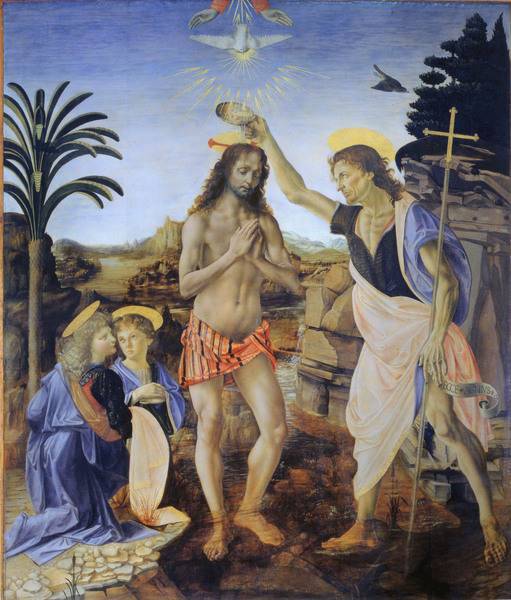
Our meditations will focus on these and other important moments in the weeks to come, but let’s look back to last Sunday and think some more about baptism.   The baptism of Jesus in the River Jordan has long been remembered within the first eight days of the season, called the Epiphany Octave.   In the Eastern church, that included a liturgy involving baptismal water.


Today we heard the account of Jesus’ baptism from Mark’s gospel, in which John the Baptist identifies Jesus as the promised Messiah and new King of Israel (“the one who is more powerful than I is coming after me”).   John’s words are confirmed by the voice from heaven which proclaims Jesus as “my Son, the Beloved” (Mk 1:11).  


We will hear the voice from heaven again at the end of the Epiphany season, when the traditional reading is the story of the Transfiguration, when we temporarily see Jesus in the full blinding glory of heaven.  But, in Mark’s gospel as in the other Synoptics, after Jesus’ baptism there is no blaze of glory.  Instead, there is the only the hard and solitary forty days of temptation in the wilderness which confirms Jesus’ identity as the sinless Lamb of God.


As we sing each Sunday, it is the Lamb of God who takes away the sins of the world, and it is through baptism, his and ours, that Jesus achieves this.   We think of baptism mostly nostalgically now, as the christening of cooing, innocent babies in whom it is impossible to imagine any sin.   But baptism is really about rescue, our rescue from the three things that haunt us most:  fear of our guilt and worst natures (sin), fear of being abandoned, and fear of death.


Thus Paul in Colossians writes that through baptism we are brought into the family of “the saints in light”, we are rescued from “the dominion of darkness” and brought into “the kingdom of his beloved Son, in whom we have redemption, the forgiveness of sins” (Col 1:12-14).  And likewise in Romans, Paul writes that through baptism we are “bought from death to life” (Rom 6:3, 11-16).


Our baptism has rescued us from sin, brought us out of loneliness into the family of God, and allows us to rise with Christ to eternal life.   After this homily, as we say the Apostle’s Creed, we will remind ourselves of these things by a gentle sprinkling with holy water, a custom normally done in churches at Easter, but also very appropriate for now at Epiphany.    Because, if Epiphany is about God’s glory being revealed, then how wonderful it is that we are invited to share in that glory as God’s family in Christ?

The water is blessed, three times, with the sign of the Cross or with a Cross dipped in the water; each time the following is said:


Now sanctify this water, we pray you, by the power of your Holy Spirit.

Almighty and Merciful God, in the Baptism of your Son, you have restored Creation and fulfilled it as a means of salvation. Show this water to be the water of redemption and the purification of flesh and spirit, through Jesus Christ our Lord, who lives and reigns with you, and the Holy Spirit, one God, now and forever. Amen.


From A Rite for the Blessing of Waters, Anglican Church of Canada

https://www.anglican.ca/wp-content/uploads/2012/01/A-Blessing-of-the-Waters.pdf

Mad Padre

Mad Padre
Opinions expressed within are in no way the responsibility of anyone's employers or facilitating agencies and should by rights be taken as nothing more than one person's notional musings, attempted witticisms, and prayerful posturings.

Followers

Blog Archive

Labels