Showing posts with label Friday Theology. Show all posts

Friday, March 15, 2024

Classroom, Communion and Creed: A Homily on the Place of the Creeds in the Church Today


Classroom, Communion and Creed:   A Homily for the Signs of Our Common Faith Lenten series at Trinity Church, Barrie, Anglican Diocese of Toronto, March 15th, 2024.  There is a video recording of this service and homily here.


It would have been about this time of year, 1700 years ago, in the later weeks of Lent, that those seeking to become Christians, called catechumens, would have been preparing for baptism.   As part of this preparation, they would have been expected to learn the statement of our faith that today call the Apostles’ Creed (the Nicene Creed was first written in 325 but did not come into wide use until a few centuries later).  Then, just before Holy Week, the catechumens would come before their bishop and, one by one, be expected to recite the Apostles’ Creed as well as the prayer we call the Our Father, and to answer questions put to them.

St Augustine, a learned and socially prominent figure, would have had to submit himself to this process of instruction and preparation before he was baptised by Bishop Ambrose of Milan in 387.   By that time, the persecutions had ended and Christianity was now the official religion of the Roman Empire, but the church still regarded the ability to say and understand the Creed as a necessary qualification for baptism, and only then could the new Christian participate in the Mass and receive the sacrament.

So the Creed functioned then as it does now, as a sign of Christian identity.  However, the place of the creeds in the life of the church has changed considerably.   For the early church, the Creed (specifically the Apostles’ Creed) was used as a core curriculum, so that the novice Christian could understand the identity and the saving actions of the three persons of the Trinity – Father, Son, and Holy Spirit.  The Creed in the early church was for the classroom, not for communion.   It did not have a place in the liturgy of the church.

Where the creeds came from is a long story that can only get a brief answer in a short homily. The Apostle’s Creed was not, as was charmingly claimed, written by the original apostles.   However,  we know from scripture that the earliest Jesus followers had statements of core belief that proclaimed Jesus as Lord (Christus kyrios) and which contain the building blocks of Christian belief.   

Remember Jesus Christ, raised from the dead, of the seed of David, according to my gospel.  (2 Tim 2,8)

The Apostle’s Creed probably came together over time as a synthesis of these scriptures and teachings around them.   

By the fourth century the Apostles’ Creed had become a way to instruct new Christians and to distinguish them from pagans.    The Nicene Creed, as Gregory Dix noted, was written to answer theological debates among Christians – was Jesus human or divine (answer, both)?  Thus the Nicene Creed, with its more robust Christology, works well in the Eucharist, whereas the Apostle’s Creed is sufficient for services of the word and for the daily offices.  By the sixth century the Nicene Creed had found its place in the mass following the gospel, where it still lives today, though before the Reformation it seems that the people recited the Apostle’s Creed while the priests said the Nicene Creed.

Today, I think it’s fair to say that we know and say the Creeds (Apostles and Nicene) almost exclusively in liturgy.   They don’t really have a secure home elsewhere in the life of our church.  We have communion, but we don’t really have classroom.   Why did this happen?  The practice of infant baptism meant that instruction was shifted to the process of confirmation, which was once a precondition for first communion.  Confirmation in turn lost much of its importance as the Anglican church gradually adopted the practice of the open table, so that we do not ask people to believe before they receive.  One could argue that it’s more grace filled to invite seekers to first encounter Christ in bread and wine and then seek instruction in the faith, but this puts the onus on the church to explain our faith after the fact, rather like giving someone driving lessons after they’ve been on the road.  And, since we see fewer and fewer new believers these days, we have largely lost the skills of catechesis, the instruction of new Christians.

Even so, in liturgy the creeds still function as a sign of belief and of Christian identity.   We say them together, and while the rubrics don’t tell us to, we stand by custom, paying the creeds the same honour that we pay to the gospel and to the processional cross.   By tradition we turn and face the altar, eastward in most churches, east being the direction of sunrise and the direction from which Christ is expected to return.  Some of us make the sign of the cross as we confess our belief in the resurrection.    So the act of participating in, even performing, the creeds is collective, so still a sign of our identity, though perhaps not of unity.   Not all of us, myself included, could recite either creed perfectly, nor could many of us explain the articles of the creeds, even following the old catechism printed in the Book of Common Prayer.

Barbara Brown Taylor once said that we say the creeds together because there are days when we might not believe all we say, and so rely on others to believe for us, and vice versa.    While this statement would likely startle early Christians like Augustine and Ambrose, it does at least have the merit of being honest.   Western Anglicans are, after all, a 21st century church which sometimes seems more comfortable living the questions than it does having all the answers.   Believing and reciting ancient creeds can seem charmingly archaic in our postmodern age.  

However, our task is not to be relevant but to be faithful.   The creeds tell us that a good and gracious God created all things.   The creeds tell us that Jesus is Lord of heaven and earth, that he has conquered sin and death, and that he gives us the hope of the resurrection.  The creeds assure us that the Holy Spirit is amongst us.  The creeds unite us with those who have believed and proclaimed the gospel over the long centuries.   These are the beliefs that I would offer to someone seeking to learn our faith.  

Let me finish with a final thought as to what the creeds are not.   Some churches and Christians call themselves creedal in a way that suggests that others are not true, faithful Christians. I dislike this use of creedal.  And in that spirit, let’s notice some of the things that the creeds do not say.  The creeds say nothing about how to do liturgy, they are silent as to the number and nature of the sacraments, and the creeds do not tell us how to govern or structure our churches.  The creeds tell us that the world was created but not how or when;  they allow us to believe in dinosaurs.  The creeds say nothing about gender, about marriage, or about preference.  And the creeds do not tell us that Christians should rule society.   

So the creeds are not weapons to be used in church culture wars. The creeds simply tell us that Jesus Christ is Lord.   And for us, at this time, as it was for Augustine and Ambrose and all those before them, that is surely all we need,


Friday, March 26, 2021

Friday Theology: Remembering John Polkinghorne


I noted with some sadness today the recent passing (9 March) of John Polkinghorne, though he attained the ripe age of 90 and had an illustrious career as a scientist, theologian, and parish priest in the Church of England.   Perhaps his greatest honour was receiving the Templeton Prize for Science and Religion in 2002.     There's a useful one-hour introduction to his thought here.

When you consider the many public figures today who stake their polemics to a 100% materialist and rationalist view of reality, Polkinghorne's career stands in dignified contrast.  That a distinguished physicist who was one of the discoverers of the quark should heed a call to a vocation as an Anglican priest is quiet testimony to the fact that science and religion are not polar opposites.   As Alister McGrath notes in his tribute, in his life and work Polkinghorne never fought in the culture wars, and maintained his own "distinctively irenic and gracious approach".

I was fortunate to hear him speak during a visit to Canada at McMaster University in 2002.   He was an inspiration to my late wife Kay, who as a young adult was persuaded that her vocation as a scientist was incompatible with her faith.  I'm grateful that Polkinghorne could model a balance between the two for her.

Here's an excerpt from his book Faith, Science, and Understanding (Yale UP, 2000), where he is speaking of the necessary place of theology in the contemporary university.

"To speak of theology in this way is to speak of it as a first-order discipline of enquiry, taking its place alongside science's investigation of the physical world or moral philosophy's investigations of the nature of ethical decision.   However, there is a further important role for theology to play, as a second-order reflection upon the whole of human knowledge.  To seek to speak of God is to seek to speak of the One who is the ground of all that is.  Such discourse, which we might call theological metaphysics, must take account of the first-order insights of science, aesthetics, morality, and also, of course, of theology itself in its first-order mode of particular investigation into the understanding and significance of religious experience.  Theological metaphysics must respect the integrity of these primary disciplines.  It is not its role to instruct them or to correct their conclusions, but to listen to what they have to say about their individual fields of study.  The aim of theological metaphysics is the integration of these partial perspectives, afforded by the first-order disciplines, into a single consistent and coherent account of reality.  Thereby it seeks to provide a more profound and comprehensive understanding than could be acquired through any single primary mode on its own" (pp. 19-20).

Saturday, January 2, 2021

Friday Thoughts (On Saturday): On John 16.23b-30 and Praying in the Shadow of the Cross

 Hello!  As you may know, each Friday I write a short commentary on an assigned passage from the Anglican daily office lectionary for a friend who provides his parish with a daily devotional by email.   Normally I try to write these and record them onto YouTube on Fridays, but things got out of hand in the last few days, so there you are.  

 The passage in question is John 16.23b-30.   The NRSV text (courtesy of www.oremus.org) follows, and after that my comments.  I hope that they are helpful to you in some way, and would love to hear your thoughts and responses.

Jn. 16:23b-30

On that day you will ask nothing of me. Very truly, I tell you, if you ask anything of the Father in my name, he will give it to you. Until now you have not asked for anything in my name. Ask and you will receive, so that your joy may be complete.

‘I have said these things to you in figures of speech. The hour is coming when I will no longer speak to you in figures, but will tell you plainly of the Father. On that day you will ask in my name. I do not say to you that I will ask the Father on your behalf; for the Father himself loves you, because you have loved me and have believed that I came from God. I came from the Father and have come into the world; again, I am leaving the world and am going to the Father.’

His disciples said, ‘Yes, now you are speaking plainly, not in any figure of speech! Now we know that you know all things, and do not need to have anyone question you; by this we believe that you came from God.’


In today’s passage from John’s gospel, these are among the last words that Jesus speaks to the disciples before his arrest, death, and resurrection.    The passage begins with Jesus speaking of a “day” to come, it would seem in the near future, when his relationship to the Father will be fully revealed in plain language.   In the last lines of our passage, the disciples seem confident that this day has in fact arrived, but they are mistaken.  


In the chapter that follows (Jn 17) Jesus turns his gaze to heaven and speaks directly to the Father, praying that “the world may know that you have sent me and have loved them even as you have loved me” (Jn 17.23).  We know what the disciples don’t yet know, that the full glory of Jesus and the full love of the Father will be revealed, not in words, but in the grim visual language of a tortured body lifted high on the cross, as Jesus has previously predicted  he would be (Jn 12.32-33).


Surely it is in the context of the cross that we have to understand Jesus’ words about asking “anything of the Father in my name” so that “your joy may be complete” (Jn 16.23-24).  The cross, which is about self-giving love, vulnerability, and forgiveness, should temper our expectations about how our prayers will be answered.  The cross tells us that we are not guaranteed some earthly security or prosperity.   The Father’s love works altogether differently.


Today’s passage asks us to pray trusting that Jesus is exactly who he says he is.  It asks us to pray trusting, as Jesus trusts, in the Father’s will and love for us.  It asks us to surrender what we may want in return for what God wants for us.  Imagine yourself praying in such a manner, and then ask yourself, how could my joy be complete if I put myself in the Father’s hands, as Jesus does?   

Friday, December 11, 2020

Friday Thoughts On Luke 22, The Words Of Institution, Sacrament and Meaning

This week's Friday thoughts: an expanded take on a short piece I write for a friend's devotional email.  While thinking about Jesus' words of institution, I discovered a book by a Canadian Roman Catholic theologically, Brett Salkeld, that I can't wait to dive into.  Links below. 
  
Cheers and blessings,
Michael


Links: Paul VanderKlay and Brett Salkeld Discussion: https://youtu.be/SloRs2yzmvo Brett Salkeld's book Transubstantiation on Amazon https://amzn.to/2uZVqeA

Friday, November 27, 2020

Friday Thoughts: Luke and Jesus' Entry in Jerusalem, Tim Keller, Cancer, and the Sovereign Will of God

A brief meditation focusing on Luke 19:28-40, Jesus' triumphal entry into Jerusalem.
Topics covered: Lordship of Jesus / Reign of Chist Hermeneutics Sovereignty of God Timothy Keller Nicky Gumble Salvation


Links: Tim Keller in conversation with Nicky Gumbel: https://www.alpha.org/blog/leadership... Tim Keller on God's Sovereignty: https://youtu.be/MPcYkKWSRNE

Friday, November 13, 2020

Why Psalm 88 is Better Than Just Screaming in Pain

Friday Thoughts on suffering and why Psalm 88 is better than screaming into the void.

This video is a longer version of a reflection I write each Friday for a friend's parish devotional email.  
This week I talk about our various approaches to our experience of suffering (I'm a little biased, as I say at the end, because I watched my wife die slowly of cancer and it has given me some time to think about this issue).

Other thinkers drawn on:


Please leave a comment if this made you think and consider subscribing to my YouTube channel if you would like to hear more.  

Be well,

Michael+

Friday, August 21, 2020

Friday Theology: Tom Holland on the Appeal of Paul's Gospel


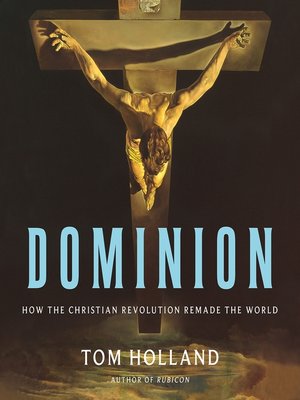
I’m currently reading Tom Holland’s book, Dominion:  How the Christian Revolution Remade the World (New York:  Basic Books / Hachette, 2019).  Holland is book is religious history, written by an outsider with some knowledge of Christianity, but it is not theology.   Nevertheless, I found this description of Paul’s gospel message to be both brief and a compelling summary of Paul’s own theology.  MP+


To an age which - in the shadow first of Alexander’s empire, and then of Rome’s - had become habituated to the yearnings of a universal order, Paul was preaching a deity who recognized no borders, no divisions.  Paul had no ceased to reckon himself a Jew; but he had come to view he marks of his distinctiveness as a Jew, circumcision, avoidance of pork, and all, as so much ‘rubbish’.  It was trust in God, no a line of descent, that was to distinguish the children of Abraham.  The Galatians had no less right to the title than the Jews.  The malign powers that previously had kept them enslaved had been routed by Christ’s victory on the cross.   The fabric of things was rent, a new order of time had come into existence, and all that previously had saved to separate people was now, as a consequence, dissolved.  “There is neither Jew not Greek, slave nor free, male nor female, for you are all one in Christ Jesus”.

Only the world turned upside down could ever have sanctioned such an unprecendented, such a revolutionary, announcement.  If Paul did not stint, in a province adorned with monuments to Caesar, in hammering home the full horror and humiliation of Jesus’ death, then it was because, without the crucifixion, he would have had no gospel to proclaim.  Christ, by making himself nothing, by taking on the very nature of a slave, had plumbed the depths to which only the lowest, the poorest, the most persecuted and abused of mortals were confined.  If Paul could not leave the sheer wonder of this alone, if he had risked everything to proclaim it to strangers likely to find i disgusting, or lunatic, or both, then that was because he had been brought by his vision of the risen Jesus to gaze directly into what it meant for him and for all the world.   That Christ - whose participation in the divine sovereignty over space and time he seems never to have doubted - had become human, and suffered death on the ultimate instrument of torture, was precisely the measure of Paul’s understanding of God: that He was love.   Paul, in proclaiming it, offered himself as the surest measure of its truth.  He was nothing, worse than nothing, a man who had persecuted Christ’s followers, foolish and despised; and yet he had been forgiven and saved.   “I live by faith in the Son of God, who loved me and gave himself for me."

And, if Paul, then why not everybody else?

Friday, August 7, 2020

Friday Theology: John Webster on Cultivating The Theologian's Soul


The last of his six Burns Lectures given in 1998  (U of Otago, NZ) and published as The Culture of Theology (Baker Academic 2019) by the late Anglican theologian, John Webster, is entitled “Habits: Cultivating the Theologian’s Soul”.   Here, Webster concludes one of the main themes of these lectures, that there is no dispassionate place for the theologian to stand and rationally consider his or her subject within the mode of criticism.   To attempt such a stance would be an imitation of academic practices that has little or nothing to do with the gospel and the Christian tradition that, for Webster, the theologian must be grounded within.


Theology for Webster is “Thinking and speaking well of the God of the Christian gospel” and to do this, the theologian must undertake “the rather bruising business of acquiring and practicing certain habits of mind, heart, and will”.   He uses the adjective “bruising” to point to another grand theme of the lectures, that the business of theology involves “mortification”, a willingness to be changed, “to have our hearts subdued by piety”.  As Webster writes, the goal is not to “existentialize” theology, to make it about an authenticity of the self, but rather to pursue an “authenticity to Christ and the gospel which is to define Christian theological existence”.  


Webster:

“So my claim is not merely that theologians ought to cultivate certain modulations of their inner lives (though I think they should), but more that Christian theological existence is nothing other than a form of Christian existence, standing under exactly the same total claim of the gospel.   Part of what is required as a response to that claim is readiness for the kinds of personal growth and change which inevitably afflict us in engagement with God.  Engagement with God means being sufficiently grasped, disturbed, or troubled by the gospel and its dispute with us, that we are provoked (however unwillingly) to learn how to think differently.  But part of the difference that we are to learn is the dawning of the realization that “learning how to think and live differently” is not just a matter of adding on new attitudes or adopting new patterns of action; it involves abandoning my mastery of myself and receiving myself anew from God.  Good theologians are those whose life and thought are caught up in the process of being slain and made alive by the gospel and of acquiring and exercising habits of mind and heart which take very seriously the gospel’s provocation.”

Friday, July 10, 2020

Friday Theology: John Webster on Revelation as the Crisis of Christian Life and Thought

I’m working my way through John Webster’s posthumously published book, The Culture of Theology (Baker Academic, 2019), which contains his six Burns Lectures given in New Zealand in 1998.   I didn’t know Webster much before coming to this book, though I did know of his reputation as “a theologian’s theologian”, as Ivor Davidson puts it in the book’s introduction.  I love the brio and assertiveness of Webster’s writing, as seen in his use of the verb “cleaves” below to describe revelation’s unsettling and unmooring of our prior human identities and priorities.    His discussion of revelation and its work and eschatological nature of the church offers much to think about, especially someone like myself, the priest of a small town parish, who every day has to think about what and how we might live in this unlikely place of divinely inspired crisis.   MP+


Revelation in the Christian sense, we have seen, is the overwhelming splendour of the being and activity of God set before us in creation and redemption.  Such splendour is manifest but not possessed; like the manna in the wilderness, it is an event and not a bit of spiritual stock.  Christian culture has this splendor at its centre, and this splendor both authorizes and disturbs.


Revelation authorizes.   Because of the self-communicative presence and activity of God - because in Jesus Christ the Lord of all things is among us through the Holy Spirit - then the church is given authority to live, speak, and act.   The church’s speech and action are eschatological, bearing witness to a different, new order of reality from far beyond the horizon of human history.  The permission and command that they be so is to be found in that fact that God’s self-manifestation has intruded upon the world.  God’s glory is now visible; God’s mystery, once hidden, is now manifest.  And therefore the church is commissioned to speak and act.  This authorization of the church by revelation is, crucially, something incommunicable.   The authority of revelation is not some quality which can be transmitted to or deposited within the church.   Revelation is, and remains, a summons which cannot be converted into the basis of authoritarianism.  “To say that the God who reveals himself is a hidden God is to confess that revelation can never constitute a body of truths which an institution may boast of or take pride in possessing” (Paul Ricouer, “Toward a Hermeneutic of the Idea of Revelation”).


Hence revelation disturbs.  It is “an interruption which addresses us” (Eberhard Jungel, Gott als Geheimnis).   As it accosts us, revelation establishes a distance - between ourselves and our past, present, and future; between ourselves and our traditions; between ourselves and all aspects of our settled identities.  Revelation cleaves us apart; as God’s eschatological word and work, as the presence of the divine glory, it loosens and sometimes severs the conventions which constitute our individual and corporate selves.   To be addressed by revelation means that we may not rely unthinkingly on those conventions, believing them to be simply what is the case.  However much they form the basic and necessary structures of our historical existence, there is no achieved symmetry between them and the eschatological order of God.  “Revelation means that God comes to the world” and “God’s coming-to-the-world means an elemental interruption of our being-in-the-world” - including our Christian being-in-the-world (Eberhad Jungel, “Dogmatic Significance of the Question of the Historical Jesus”).  Revelation is, in short, the crisis of Christian life and thought.

Friday, July 3, 2020

Theology Friday: Brother Geoffrey Tristram, SSJE, On Vocation

When I was a military chaplain, the badge I wore on my beret (hat) included the Latin word Vocatio, meaning “called”.  The chaplain’s motto in full is Vocation ad servitum, meaning “called to serve”.  Our English word “vocation” comes from Latin verb, vocare, to call.  For Roman Catholics (and often for Anglicans),  a vocation usually refers to some impulse or discernment that leads one into priestly ministry, whereas in many Protestant denominations, the word  “call” has a similar meaning.
The black clad monks of the Society of St. John the Evangelist, a monastic order located in Cambridge, Massachusetts, know all about vocations.   To visit their monastery on retreat, as I have done, is to be welcomed into the company of mature Christians deeply committed to lifelong disciplines of prayer, counselling, and hospitality.  Today’s Friday Theology feature is taken from their online series, “Brother Give Us A Word”, excerpts of their preaching, which is usually of a very high standard.  Here, Brother Geoffrey Tristram reminds us that a vocation is something that all Christians receive from he God who knows us and calls us.
"If you have been baptized, then you have a vocation!  So what is a vocation?  Some people think it must be something that you suddenly get.  You’re walking along quite happily one day, and God suddenly “zaps” you with a vocation!  I don’t think that’s quite right.  I believe that your vocation is that which lies at the very heart, the very core of your identity.   It is discovering who it is that you most truly are.
There are particular moments in life, perhaps when you experience something, meet someone, hear some words, which touch that deep core within, and it resonates.  And you say – Oh – that’s who I am, or that’s what I want to do or be in life.  Sometimes you forget it, or you try to put it out of your mind, if it doesn’t fit in with other plans.  But it usually comes back, and deep down, you just know that it’s truly who you are meant to be.
There are some enigmatic words spoken by Jesus in today’s Gospel, which I think speak to the theme of vocation.  He says, ‘What will it profit you if you gain the whole world, but forfeit your life?”  I think that you can “forfeit your life” deliberately and consistently ignore that inner prompting, the call of your core identity.  You can say no to your vocation.  You can choose a life more in keeping with your parents’ wishes, social convention, or simply greater security and wealth.
God never forces us to say “yes.”  We are always free to choose.  But God, who knows the secrets of our hearts, will never stop calling us, inviting us, enticing us, to live the life for which we have been made.  These hard Gospel words will always resonate in us, and challenge us: “What will it profit you if you gain the whole world, but forfeit your life?”  So, choose life."

Friday, June 19, 2020

Friday Theology: Oliver O'Donovan On The Role Of The People In Liturgy


(A Scene of Profound Theological Reflection) 

It’s often observed that the word liturgy, which we think of as “worship” or “a religious service”, originates in two Greek words, laos (people) and eras (work), and that the word liturgy thus means something like “the work of the people”, although the nuances can be argued.


As an Anglican Christian, I appreciate that our prayer is common, meaning that there is clearly defined role for the people, who, with the priest or minister, come together to give praise and thanksgiving to God.    In this regard, our liturgies are formative, in that thanks to our shared roles as clergy and people, we are taught and shaped by our worship.


At the end of his chapter on “Moral Communication” in his book, Self, World, and Time: Ethics as Theology, the Anglican theological Oliver O’Donovan finishes his discussion of the role of the Lord’s Prayer in the Sermon on the Mount with a meditation on the importance of the first person pronoun in our liturgy.  O’Donovan’s insight that prayer should feature “we” rather than “I” helps me to explain a slight discomfort that I have sometimes felt in attending some evangelical protestant religious services.  This discomfort (and this is not meant as a criticism of evangelical forms of worship so much as an awareness of a difference) arises from the sense that the worship leader or pastor’s experience of faith and belief is normative, for example, in whatever ad lib explanation of communion is offered before the action itself, so that the congregation is left as best they can to map their own experience to what they hear expressed.


Here’s O’Donovan:


At the very centre of this text of moral teaching (Mt 6:1-18) there is the teaching of a prayer - not only how to pray, that is, but what to pray.  Precise words are prescribed.  If we have understood the relation of prayer to moral thought, we shall not be surprised at this.  That such words should be open to private and public elaboration (economical elaboration, if we take Jesus’ warning seriously!), that they should generate noble liturgies and passionate private intercessions may be taken as a matter of course.  Yet the words are not merely an outline, a set of heads of advice or agenda items.  They are themselves a possession of irreplaceable importance in forming the “we”, the community of moral practice (italics mine).   That is why they should be placed - the bare text without embroidery or expansion - at the core of every Christian liturgy.  


The conception of worship as magnified personal self-expression, a large-screen projection of the “i”, obstructs the formation of the community by depriving lay members of the congregation of their proper ownership of the words of prayer.  If the primary material for common reflection, replacing hymns and prayers that can be learned, possessed, and used by every worshipper, comes to be the spontaneous feelings of the minister and the autobiographies of selected model Christians, there is no room for the interaction of community and individual to develop.  The model “I” overwhelms the (genuinely) personal contribution of the worshipper with a fake personality, imposing sentiments, moods, narratives, and reactions even to the minister, who affects them at the price of forcing his or her real personality into a straitjacket, trying to be the one and single and embracing personality that will serve for all.


In traditional liturgies the occasional appearance of the first-person singular (in baptism and at the recitation of the creed) points to the Holy Spirit’s grafting of the believer into the community.  Yet its comparatively restricted liturgical presence and its total absence from the prayer Jesus taught, where the first-person is always plural, points to the common identity built up by prescribed prayer, the “we” within each and every “I” can realize itself.   The formal and predictable character of liturgy, giving us a purchase on the common “we”, enables us to accomplish a personal self-offering together with all others who are gathered for worship.   The liturgical consideration of the “we” is one aspect of what should be meant by that pregnant, if elusive phrase, “ecclesial density”.


Friday, June 5, 2020

Friday Theology: Rowan Williams on Trump and Idolatry


This week I’m reviving an old (and intermittent) feature of this blog, the Friday Theology post.   I had intended to focus on a book I’m currently reading on Christian Ethics, by Oliver O’Donovan, and hopefully I’ll do that next week, but today will be a more topical post.


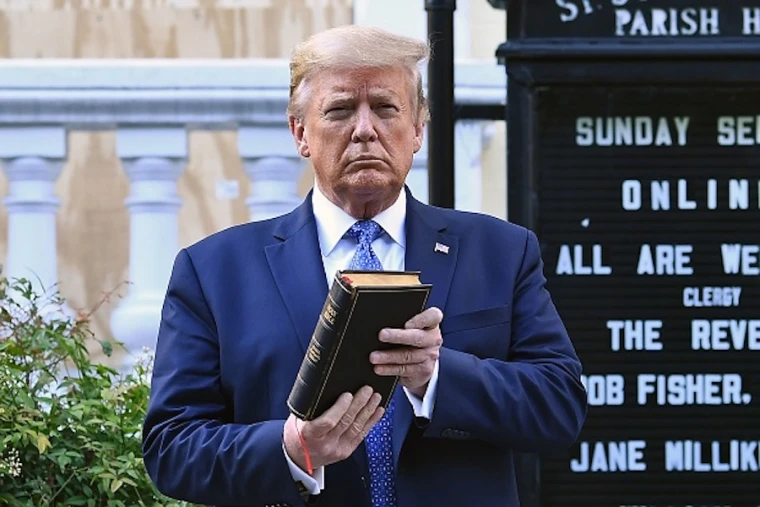
The incongruity of Donald Trump’s decision to have riot police clear a way to St. John’s Episcopal Church in Washington, DC, last week, has been lost on some Christians, but widely condemned by many others.  In the latter groups Rowan Williams, the former Archbishop of Canterbury, and now an academic at Magdalen College, Oxford.
In a short essay carried by the Episcopal News Service, Williams contrasts the “outpouring of God’s life”, our fellowship with the Trinity which is ours by baptism, with idolatry, "the reduction of God to the scale of my wants and my comfort. And it is horribly easy to take even the signs and witnesses of God’s truth and turn them into idols in this sense, into things that reinforce who I am or who we – as a nation, a class, a race – are”.
Williams’ comments on Trump have been widely quoted and can be found in the original article.  As a theologian rather than a polemicist, however, Williams does no let us off the hook.  He writes:
"All of us are in some way touched by idolatry because we all inherit a human condition in which we are in thrall to the fear that we are surrounded by enemies, that we are all either winners or losers, that we have to earn our security at the expense of our fellow humans. And this is the world of untruth from which we are rescued in the baptised life.
So our calling is ... to remember that sensation of being unable to measure and contain what surrounds us, and to be reborn in the truth – not so that we can point fingers and judge but so that we can simply declare and show that idolatry in whatever form traps us in a world so much smaller and drier than the real world, the world held eternally in the life of the Father, the Word and the Spirit. ‘This is the true God, and eternal life.’
MP+

Friday, January 8, 2016

Friday Theology: Why The Church Needs Worship

 
I don't know who Jonathan Aigner is in churchland circles.   I just now that somehow Twitter, erratic wandering star that it is, led me to his essay on worship this morning and it's worth a read.

Ironically I read it two days after learning that a church I served as a priest in the last decade has dwindled to the point that it will close later this year.  I also learned that another church in my old diocese, once a coveted billet for ambitious clergy, closed just before 2015 ended.  There's a lot of that going around these days.   When I was ordained, a friend of mine said that the Anglican Church of Canada is folding up like a cheap suit at an August wedding.  Twelve years later, his comment seems prescient, or maybe it wasn't obvious to me at a time.

How much of this decline is due to demographics?  A lot, undoubtedly.   How much of it is due to secularism, what Charles Taylor called the age of disenchantment?  Surely that has something to do with the decline as well.  Others will say that the established churches are paying the price of their embrace of liberal theology.  It may be true that the evangelical churches are doing better, but some data suggests they are merely holding their own.

Aigner's suggestion that the decline of liturgy is also a factor is also worth considering. 

Set aside, for a moment, the idea that differences over styles of music and praise are the church`s equivalent of society`s culture wars.  Think instead about how the way we worship can influence us, train us, and form us as Christians.

My seminary taught me an old Anglican battlecry, lex orendi lex credendi, meaning roughly 'what is prayed is what is believed`.  As Aigner argues, when we turned liturgy into traditional worship, a menu item at the buffet table of the Christian experience, we lost much.  We lost the ability of prayer to shape us week by week, year by year.  We traded tradition for fad.   We embraced social justice, thinking that it was enough that we advertised our churches as inclusive, welcoming, and ecologically friendly.  We didn't ask ourselves if just community itself would suffice, or wonder what would differentiate such a church from, say, the Sunday morning running club.  We innovated and tried to be relevant.  Well intentioned women squeezed themselves into dancewear and twirled ribbons up the aisle.  One church I visited in Guelph, Ontario (now closed) invited worshippers to pray to the spirits of the four winds, without feeling the need to explain who they were or what they had to do with the triune God.  We embraced trendy prayer books from New Zealand or Iona, so no two churches looked or prayed the same.

And we wonder what happened?

Today I see signs of the liturgical revival that Aigner is calling for.  A university chaplain in Halifax told me about the popularity of sung evensong with undergraduates at his chapel.   At an Antiochan Orthodox parish I attended last Easter, the place was packed, converts mixing with New Canadians/old country Orthodox.  At the base where I work, the Roman Catholics are rediscovering the Latin mass.

I respect the faithfulness and piety of my evangelical friends.   The church needs them.  For me, though I need my own place in liturgy, my own places to respond during the service so I can own the work of the church.   I need the eucharist prayed faithfully and seriously by my priest.  I don`t want to wonder what will come out of the pastor`s mouth next, or ask myself if I can agree with it.

I may be arguing for a nostalgic, boutique form of church that will never attract more than the educated or the aesthetic.  Time will tell.  Certainly the old infrastructure of the church will be pared away.  Lovely old buildings will continue to close.  An epoch will end.

I suspect, though, that what arises next will look much like the liturgical church that Aigner is calling for.


Friday, October 9, 2015

Friday Theology: Rabbi Abraham Heschel on Religious Dialogue

I learned about Rabbi Heschel's document, No Religion Is An Island, during a conference I attended yesterday on Nostra Aetate, one of the conciliar documents coming out of Vatican II which set a tone for discussions between Christians, Jews, and Catholics.  This quotation from Heschel is taken from this website.
 
On what basis do we people of different religious commitments meet one another ?
First and foremost we meet as human beings who have so much in common : a heart, a face, a voice, the presence of a soul, fears, hope, the ability to trust, a capacity for compassion and understanding, the kinship of being human. My first task in every encounter is to comprehend the personhood of the human being I face, to sense the kinship of being human, solidarity of being.
To meet a human being is a major challenge to mind and heart. I must recall what I normally forget. A person is not just a specimen of the species called homo sapiens. He is all of humanity in one, and whenever one man is hurt we are all injured. The human is a disclosure of the divine, and all men are one in God's care for man. Many things on earth are precious, some are holy, humanity is holy of holies.
To meet a human being is an opportunity to sense the image of God, the presence of God. According to a rabbinical interpretation, the Lord said to Moses : "Wherever you see the trace of, man there I stand before you..."
When engaged in a conversation with a person of different religious commitment I discover that we disagree in matters sacred to us, does the image of God I face disappear ? Does God cease to stand before me ? Does the difference in commitment destroy the kinship of being human ? Does the fact that we differ in our conceptions of God cancel what we have in common : the image of God ?

For this reason was man created single ( whereas of every other species many were created ) ... that there should be peace among human beings : one cannot say to his neighbor, my ancestor was nobler than thine ( Talmud, Sanhedrin 37a ).
The primary aim of these reflections is to inquire how a Jew out of his commitment and a Christian out of his commitment can find a religious basis for communication and cooperation on matters relevant to their moral and spiritual concern in spite of disagreement.
There are four dimensions of religious existence, four necessary components of man's relationships to God : a ) the teaching, the essentials of which are summarized in the form of a creed, which serve as guiding principles in our thinking about matters temporal or eternal, the dimension of the doctrine; b ) faith, inwardness, the direction of one's heart, the intimacy of religion, the dimension of privacy; c ) the law, or the sacred act to be carried out in the sanctuary, in society, or at home, the dimension of the deed; d ) the context in which creed, faith and ritual come to pass, such as the community or the covenant, history, tradition, the dimension of transcendence.
In the dimension of the deed there are obvipusly vast areas for cooperation among men of different commitments in terms of intellectual communication, of sharing concern and knowledge in applied religion, particularly as they relate to social action.

In the dimension of faith, the encounter proceeds in terms of personal witness and example, sharing insights, confessing inadequacy. On the level of doctrine we seek to convey the content of what we believe in, on the level of faith we experience in one another the presence of a person radiant with reflections of a greater presence.
I suggest that the most significant basis for meeting of men of different religious traditions is the level of fear and trembling, of humility and contrition, where our individual moments of faith are mere waves in the endless ocean of mankind's reaching out for God, where all formulations and articulations appear as understatements, where our souls are swept away by the awareness of the urgency of answering God's commandment, while stripped of pretension and conceit we sense the tragic insufficiency of human faith.
What divides us ? What unites us ? We disagree in law and creed, in commitments which lie at the very heart of our religious existence. We say "No" to one another in some doctrines essential and sacred to us. What unites us ? Our being accountable to God, our being objects of God's concern, precious in His eyes. Our conceptions of what ails us may be different; but the anxiety is the same. The language, the imagination, the concretization of our hopes are different, but the embarrassment is the same, and so is the sign, the sorrow, and the necessity to obey.
We may disagree about the ways of achieving fear and trembling, but the fear and trembling are the same. The demands are different, but the conscience is the same, and so is arrogance, iniquity. The proclamations are different, the callousness is the same, and so is the challenge we face in many moments of spiritual agony.
Above all, while dogmas and forms of worship are divergent, God is the same. What unites us ? A commitment to the Hebrew Bible as Holy Scripture. Faith in the Creator, the God of Abraham, commitment to many of His commandments, to justice and mercy, a sense of contrition, sensitivity to the sanctity of life and to the involvement of God in history, the conviction that without the holy the good will be defeated, prayer that history may not end before the end of days, and so much more.
There are moments when we all stand together and see our
faces in the mirror : the anguish of humanity and its helplessness; the perplexity of the individual and the need of divine guidance; being called to praise and to do what is required.


Friday, June 19, 2015

Friday Theology: From The Papal Encyclical On Creation, the Environment, and Stewardship

I have had a chance to skim the long-awaited papal letter from His Holiness, Francis, entitled “Laudato Si” (Praise to you, our Father), or “Care for our Common Home”.   The English text can be found here.  There is a useful overview of the encyclical’s message offered by the New York Times here.  

While some politicians have already pushed back and said that the Pope should mind his own business, there is a long tradition in Christian theology of reflection on creation as God’s gift to humanity and indeed as the medium through which we, as created beings ourselves, experience our relationship with God.  This emphasis is true of Catholic, Orthodox and Protestant teaching.  For example, Karl Barth’s monumental systematic theology, Church Dogmatics, devotes an entire volume (3) to the subject of Creation.

There is much to admire here.  While a divine belief in creation is often supposed to be antithetical to scientific, empirical belief, Francis has much to say about the value of science.  What I appreciate most about Laudato Si is its emphasis on interconnectedness, of us to the earth, of we humans to one another, and of God’s presence in all of those relationships.  In this excerpt, the interconnectedness of the Trinity, of the persons of God, is held up as the model, and indeed the animating force, of creation.


VII. THE TRINITY AND THE RELATIONSHIP BETWEEN CREATURES

238. The Father is the ultimate source of everything, the loving and self-communicating foundation of all that exists. The Son, his reflection, through whom all things were created, united himself to this earth when he was formed in the womb of Mary. The Spirit, infinite bond of love, is intimately present at the very heart of the universe, inspiring and bringing new pathways. The world was created by the three Persons acting as a single divine principle, but each one of them performed this common work in accordance with his own personal property. Consequently, “when we contemplate with wonder the universe in all its grandeur and beauty, we must praise the whole Trinity”.[169]


239. For Christians, believing in one God who is trinitarian communion suggests that the Trinity has left its mark on all creation. Saint Bonaventure went so far as to say that human beings, before sin, were able to see how each creature “testifies that God is three”. The reflection of the Trinity was there to be recognized in nature “when that book was open to man and our eyes had not yet become darkened”.[170] The Franciscan saint teaches us that each creature bears in itself a specifically Trinitarian structure, so real that it could be readily contemplated if only the human gaze were not so partial, dark and fragile. In this way, he points out to us the challenge of trying to read reality in a Trinitarian key. 


240. The divine Persons are subsistent relations, and the world, created according to the divine model, is a web of relationships. Creatures tend towards God, and in turn it is proper to every living being to tend towards other things, so that throughout the universe we can find any number of constant and secretly interwoven relationships.[171] This leads us not only to marvel at the manifold connections existing among creatures, but also to discover a key to our own fulfilment. The human person grows more, matures more and is sanctified more to the extent that he or she enters into relationships, going out from themselves to live in communion with God, with others and with all creatures. In this way, they make their own that trinitarian dynamism which God imprinted in them when they were created. Everything is interconnected, and this invites us to develop a spirituality of that global solidarity which flows from the mystery of the Trinity.


Friday, March 7, 2014

Friday Theology: Ross Douthat On Adam Gopnik and Atheism

Russell Crowe as Noah channelling Mel Gibson’s Braveheart

Before we get to today’s theologian, Ross Douthat, I’ve learned recently that Darren Aronfsky is making a film about Noah’s Ark, starring Rusell Crowe as Noah.   I can think of half a dozen reasons why a Hollywood studio might have agreed to bankroll such a film:

1)  Russell Crowe for star power, not to mention Emma Watson and Anthony Hopkins. '

2) Russell Crowe on a boat in a storm  - echoes of Master and Commander.

3) Lots of animals.   Who doesn’t like lots of animals?

4) Apocalyptic weather.  Who isn’t worried about killer storms and aberrant weather these days?

5) The apocalypse.   Because there aren’t enough end of the world movies out there.

6) A handful of people surviving the weather apocalypse on a giant boat - because it worked so well for Roland Emmerich in 2012.

These six reasons, I would suggest, might all combine to be a satisfactory explanation of why a studio would spend a lot of cash on a story from Genesis - not a bible story, per se, so much as a mash-up of apocalyptic images that scratch the same filmgoing itch as the new Godzilla remake.  So, I’m not convinced that there is any grand “religious motive” behind the making of this Noah film, despite Lawrence Krauss lamenting several days ago that Hollywood is hostile to atheism.  

Mr. Krauss is a collaborator with Richard Dawkins, whom he describes as “the world’s most famous atheist”.  Krauss complains that while Hollywood is making films about Noah, Jesus, and a little boy who sees heaven after a near death experience, not to mention Matthew McConaughey thanking God at the Oscars, the studios have passed on the documentary Krauss produced about him and Dawkins travelling the world talking about atheism.   By preferring stories that are “facile at best and demeaning at worst”, while not backing him and Dawkins, Hollywood thus “reinforces a pervasive cultural tilt against unbelief and further embeds religious myths in the popular consciousness”.  

There is something rather naively charming about a man who earnestly takes on the task of disabusing the popular consciousness of the “myths” of religion, and yet is puzzled to find that atheists are not universally loved, and are often “the least trusted of all listed categories aside from rapists”.   I am genuinely sorry for Mr. Krauss’ distress, though I suspect that someone who hangs around with Richard Dawkins probably has a fairly robust ego and is coping well enough.  

More curious, I think, is his wanting to argue things both ways.  On the one hand, he says, the numbers of the non-religious are growing “in the United States and the rest of the developed world”.   Here we hear echoes of what sociologists and religious studies scholars call the secularization thesis, the claim that as societies become more modern, technological, and sophisticated, the numbers of those who persist in the primitive, magical thinking of religion will diminish.   Bit, on the other hand, Krauss argues that Hollywood, that legendary den of liberal, worldly leftists, is reinforcing the cultural tilt in favour of religion and thus drowning him and Dawkins out.  Well, either history is on the side of atheism, or it isn’t.  Please make up your mind.

The essayist Adam Gopnik wrote a more thoughtful piece recently on atheism where he seemed to be celebrating the secular victory.  Untroubled by Krauss’ fears of the machinations of Hollywood, Gopnik sunnily writes that science and materialism have won a decisive victory over faith, leaving those he calls the Super-Naturalists, those who still want their account of the world to include the transcendent, to be falling back into less and less convincing generalities.   Gopnik writes:

“And here we arrive at what the noes, whatever their numbers, really have now, and that is a monopoly on legitimate forms of knowledge about the natural world.  They have this monopoly for the same reason that computer manufacturers have an edge over crystal-ball makers: the advantages of having an actual explanation of things and processes are self-evident.  What works wins.  We know that men were not invented but slowly evolved from smaller animals; that the earth is not the center of the universe but one among a billion planets in a distant corner; and that, in the billions of years of the universe’s existence, there is no evidence of a single miraculous intercession with the laws of nature.  We need not imagine that there’s no Heaven; we know that there is none, and we will search for angels forever in vain.  A God can still be made in the face of all that absence, but he will always be chairman of the board, holding an office of fine title and limited powers."

Conservative columnist Ross Douthat offers two worthwhile responses to Gopnik’s essay, and I recommend them if you have the time    In the first, he writes that we are in a moment when history seems to be on atheism’s side.  The current prestige of evolutionary biology, the general economic prosperity of western life which seems to have made philosophy almost irrelevant, the rise of Islamic fundamentalism which “almost seems laboratory-designed to give the idea of atheism-as-Progress a new lease on life”, and deeply unfashionable conservative Christian teachings on sexuality, all combine to make secularism seem like a safe bet.

In his second essay, Douthat chides Gopnik for his broad caricature of serious religious belief.  The argument, as Gopnik develops it, is that the God of popular belief, “the God of miracles and commandments, signs and wonders, heaven and hell”, is simply impossible to believe in any more, and so serious intellectuals who still feel the urge to believe, fall back on the vague and mysterious.  Here’s Gopnik describing one such account:

As the explanations get more desperately minute, the apologies get ever vaster. David Bentley Hart’s recent “The Experience of God: Being, Consciousness, Bliss” (Yale) doesn’t even attempt to make God the unmoved mover, the Big Banger who got the party started; instead, it roots the proof of his existence in the existence of the universe itself. Since you can explain the universe only by means of some other bit of the universe, why is there a universe (or many of them)? The answer to this unanswerable question is God. He stands outside everything, “the infinite to which nothing can add and from which nothing can subtract,” the ultimate ground of being. This notion, maximalist in conception, is minimalist in effect. Something that much bigger than Phil is so remote from Phil’s problems that he might as well not be there for Phil at all. This God is obviously not the God who makes rules about frying bacon or puts harps in the hands of angels. A God who communicates with no one and causes nothing seems a surprisingly trivial acquisition for cosmology—the dinner guest legendary for his wit who spends the meal mumbling with his mouth full.

Douthat’s response is so good, and so rich, that it is worth quoting in full.


"Okay, but hang on a minute. Is this what Hart actually believes about God — that he “communicates with no one and causes nothing,” that he has no interest in bacon or seraphs or any other created thing? Well, no, actually Hart is a (capital-O) Orthodox theologian with (small-o) orthodox beliefs about not-insignificant matters like the incarnation and resurrection of Jesus of Nazareth, among other cases where Christians believe that God has very directly communicated with his creatures, and intervened directly in the time and space that he sustains. Hart’s view of God, in other words, is maximalist in its conception and expansive in its potential implications, which include most of the things (angels, miracles, etc.) that Gopnik has already insisted that the modern “we” must pre-emptively dismiss.


And the same would go for an awful lot of the “ayes” whom Gopnik implies have replaced the old-time religion with a more abstract, post-personal God. Of course there are believers whose conception of divinity is functionally deistic, liberal religious intellectuals for whom apophatic faith substitutes for revelation rather than enriching it, and probably Gopnik’s social circle includes more examples of this type than it does of Hart’s more traditional sort. But make a list of prominent Christian scholars and philosophers and theologians (to say nothing of apologists and popularizers … artists and novelists … or, God help us, journalists), and you’ll find that plenty of the names — from Charles Taylor to Alvin Plantinga, Alasdair McIntyre to N.T. Wright, Rowan Williams to Joseph Ratzinger — do actually believe in all that Nicene Creed business, believe that the God of philosophy can still care about Phil and Ross and Adam, and share Hart’s view that religion can be intellectually rigorous without making prayer empty and miracles impossible.


Now it would be fine for Gopnik to straightforwardly scoff — in the style of Jerry Coyne, name-dropped in his essay as “my own favorite atheist blogger” — at these thinkers and the tradition they represent. (Or traditions, more aptly, given the confessional divides and philosophical variations involved.) But it’s entirely ridiculous to present the attempted synthesis of reason and revelation as some sort of contemporary theological retreat toward divine impotence, and to suggest that arguments like the one advanced in “The Experience of God” represent a last-ditch, faintly-pathetic response to the steady advance of atheism and naturalism. In fact, the case Hart is making is not even remotely new: His book is explicitly a defense of classical theism, meaning a view of God’s nature and relationship to creation that was developed in eras and civilizations when the Voltaires and Nietzsches and Dawkinses weren’t even in the wings yet, let alone on the intellectual stage.


If Hart’s God is a vast irrelevancy or a senile dinner guest, in other words, then so is the God of Aquinas and Augustine and Anselm (and, as Hart would be quick to point out, the God of various Jewish, Muslim, Hindu and pre-Christian philosophers as well). If his argument is an implicit surrender to secularism, then the real surrender happened ages back. But it seems passing strange to suggest that the greatest thinkers of the age of faith were actually just engaged in a pre-emptive retreat from an atheism that hadn’t even taken shape. Did the “long, withdrawing roar” really begin — and more than that, end — with the Summa Theologica? It’s an argument, I suppose: The Angelic doctor as John Shelby Spong. But it can’t really be the one Gopnik intends to make.


And the fact that he can read “The Experience of God” and come away with the idea that its author is just trying to save some gruel-thin version of theism from science’s inexorable advance is itself a vindication of that book’s underlying premise, which is that the modern mind has shrunk its conceptions of God to caricatures, and reduced the complexity of religious history and debate to just three categories: Dug-in fundamentalists, perpetually-retreating modernists and nonbelievers, with no room for any other form of faith. (And no room, especially to recognize that it’s fundamentalism’s science-envy, not traditional theology’s apophatic side, that’s the real modern innovation.)


Thus Gopnik, while trying to be fair-minded to those believers who have genuinely “considered the alternatives,” concludes that they simply must belong, albeit perhaps unawares, to some version of the second camp — to a form of faith effectively straightjacketed by naturalism, perpetually retreating from the God of the Bible, and defining divinity too far up to matter or too far down to count.


But this is not at all what Hart is doing … any more than it’s what most of the people populating the Society of Christian Philosophers are doing … any more than it’s what Jacques Maritain or Elizabeth Anscombe or Hans Urs Von Balthasar or Edith Stein or Karl Barth were doing, or John Henry Newman or Blaise Pascal or John Calvin or really any famous figure that you want to pick, going back across the centuries of atheism’s challenge to Christianity and further back still, until you get all the way back to Aquinas and the medievals … who obviously weren’t doing it either. And Gopnik’s failure to grasp that fairly elementary point — that the possible conceptions of God are not exhausted by the lightning-hurling sky-god and the mostly-irrelevant chairman of the board — suggests, not for the time, how little they know of religion who mostly secularism know."

I have to say that I’m as uninterested in seeing Krauss’ film of him and Dawkins as I am of seeing Aronfsky’s film about Noah.   Neither are likely to convince me one way or another as to the health of secularism vis a vis religion in the marketplace of culture.  A more interesting question, I think, is what drives people like Charles Taylor, N.T. Wright, Ross Douthat, and even myself to walk in the footsteps of Aquinas and Augustine, knowing that we are on the far side of a great materialist and scientific revolution from the thinkers of the early church, and still feeling that there is profit and meaning to be found in the work of serious theology.

Mad Padre

Mad Padre
Opinions expressed within are in no way the responsibility of anyone's employers or facilitating agencies and should by rights be taken as nothing more than one person's notional musings, attempted witticisms, and prayerful posturings.

Followers

Blog Archive

Labels