Saturday, March 7, 2026

Hope Is Better Than Resilience: A Homily for the Third Sunday of Lent

Preached at All Saints, Collingwood, and Good Shepherd, Stayner, Anglican Diocese of Toronto, on 8 March, 2026, the Third Sunday In Lent.   Readings for this Sunday: Exodus 17:1-7; Psalm 95; Romans 5:1-11; John 4:5-42


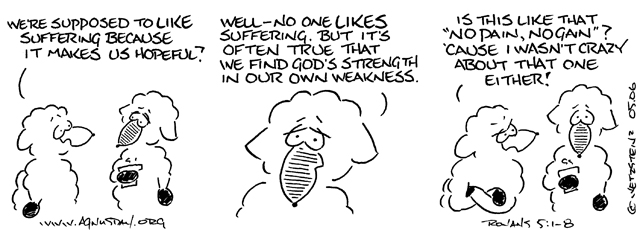
“…we also boast in our afflictions, knowing that affliction produces endurance, and endurance produces character, and character produces hope,” (Romans 5:4-5)

One of the modern virtues, it seems to me, is resilience.  When people speak of someone’s resilience, they usually mean it as a compliment.   To be resilient means things like being unflappable, quickly bouncing back from a crisis, or, as Shakespeare put it, suffering “the slings and arrows of outrageous fortune”.   Resilience is sometimes equated with the lyrics from that Kelly Clarkson song, “what doesn’t kill you makes you stronger”.   

The problem with resilience is duration.  For how long can a person be resilient?   If we’re talking about a load-bearing wall, say, then we expect that wall to be resilient 24/7, every day.   But people aren’t designed to be reslient for ever.   We need a break.   If you think of that old David Bowie/Queen song, “Under Pressure”, there’s only so much pressure we can take.  And the problem with the “what doesn’t kill you makes you stronger” mentality is that it only works if you’re not killed, but the odds are against you.  You won’t grow infinitely stronger.  At some point you’ll be killed.   

St Paul didn’t know the word “reslience” but he did understand the idea of pressure.  Indeed. the Greek word he uses in Romans for “afflictions” (“we also boast in our afflictions”) is thipsis, which literally means “pressure” or “pressing together” though he also uses it in the sense of “affliction” or “suffering”.  

The idea of anyone “boasting in their afflictions or suffering”, as Paul puts it, seems on the face of it absurd.  There are monsters, like Pete Hegseth and his master, who boast in the sufferings of others, thus revealing their morally deficient character.  But the many people suffering under bombs and missiles as I write this, whose homes have been leveled and who are living under tents or tarps, what can good can they say about their stuation?   What can they boast of?  

Paul goes on to say that “endurance produces character”, which is true, in that there are always some brave and good souls who run towards the explosions so they can dig out and help the trapped and injured.    Such people surely display good character.    And while Paul goes on to say that “character produces hope”, hope can seem illusive in the face of great suffering.    When there are more explosions than there are helpers, it’s hard to see hope lasting for long.  So again, resilience only gets us so far, and after would lie cynicism and nihilism if it wasn’t for our faith.

Here’s something that a Christian and a cynic/nihilist would agree on, that suffering is meaningless.   The Christian writer and monk Thomas Merton once write that “Suffering has no value and no power of its own”, which means that there is no reason to be proud of our resilience.  Suffering, Merton wrote, only has value accidentally, because it brings us to the mercy of God in Christ.

On the cross, Jesus accepted suffering and death because of love for us.  As Paul says in our second lesson, “God proves his love for us in that while we still were sinners Christ died for us” (Rom 5.8).   Lent brings us closer week by week to the cross, the place where we know that we are saved because Christ takes all suffering, ours and his and gives them into the infinite love of God, which destroys all evil and all death.

This brings us back to what Paul says about how “character produces hope”.  The lesson of the cross, therefore, is hope.  The character or trait of the Christian is to put one’s hope and faith and love in the love of God shown in the cross.  If we resist God’s love, and only love ourselves, then suffering will always seem evil because it only threatens to destroy us, and so there no resilience, no hope.  But if we love God and love others as God leads us to love them, then our suffering ultimately does not matter.   But as Merton says, the Christian knows that suffering will only destroy that which in us does not matter,  because what truly matters is the love of God which saves us.

Last Sunday in John’s gospel we heard John’s famous line, “for God so loved the world”.   Let this be our hope, then, that only the love of God in Christ and in us can save a world that seems so full of suffering. 

Sunday, March 1, 2026

Keeping Calm and Faithing On: A Homily for the Second Sunday of Lent

 Preached at All Saints, Collingwood, and St Luke’s, Creemore, Anglican Diocese of Toronto, on 1 March, 2026, the Second Sunday in Lent.   Texts for today:  Genesis 12:1-4A; Psalm 121; Romans 4:1-5, 13-17; John 3:1-17


“… in the presence of the God in whom [Abraham[ believed, who gives life to the dead and calls into existence the things that do not exist”.  (Romans 4:17


This last week I went to a Town of Collingwood event on heritage buildings and how to look after them, which was interesting and useful, because our parish has two heritage buildings.   But it also occurred to me that our faith has a heritage aspect, in that it is handed down by those who have gone before us.  


It would be interesting to go around the church this morning and hear your stories of how you came to believe.   Maybe for some it was a personal decision, reached entirely independently of anyone else, though I suspect that such cases are rare.  For most of us, I would be willing to bet, our faith depends on the faith of someone who was an example to us.   Perhaps it was a priest, or a Sunday school teacher, a friend or a neighbour, or somebody you read about.  Whoever it was, somebody’s belieif, their acts of kindness and encouragement, their serenity in the face of adversity, or some combination of those things, made us more willing to believe in God and to follow Jesus.


So history is important because our faith as Christians is founded on the past.   As John Kirby reminded us in the latest issue of All Saints Alive, our vestry meeting last Sunday was the 170th such meeting in our parish’s history.   Today I’ll be going to St Luke’s, Creemore, for their vestry meeting, and they’ve been holding vestry meetings for 175 years.   Vestry season reminds us that we are here because of the faith, labour, and generosity of those who went before us.   As the hymn “The Love of Jesus Calls Us” puts it, we are blessed by “the generations who faithfully believed”.


The idea of spiritual ancestors who have handed down their faith to us is a prominent theme in hymns and also in scripture.   The Book of Hebrews in the New Testament, for example, includes a long section which is a sort of religious Hall of Fame of heroes of the faith that we can look to for inspiration.   And in our second reading today from Romans, Paul is focusing on Abraham as a model of belief for all believers.


Romans is in part a letter that tries to reconcile Jewish and non-Jewish (gentle) followers of Jesus in the small house churches of Rome.  Paul’s stategy here is to help these disparate believers to find common ground by pointing to their common ancestor, Abraham.  This is a bold strategy because Jews regarded themselves as children of Abraham and Paul is saying, actually yes, you are, but Abraham was not really Jew, all the law that God gave to Moses for the Jews came later.  Abraham, or Abram, as he was known then, was just a good man who believed in the promises of God, and likewise, gentlies can be good people who are saved because they believe in the promises of God.


And if we look at our first lesson, Paul is right, Abraham is truly a model of heroic faith.   Consider the story that Genesis tells.  Abram as he was known then didn’t know God at all.  He wasn’t a Jew because Judaism didn’t exist yet!  But when God called, Abram listened and obeyed, even though the request was incredible.  To just up and leave your kinfolk in the ancient world was unthinkable.  Your kin and clan guaranteed protection and belonging.   Abram was being asked to leave all that security behind.


Furthermore, God asks Abram to go to “the land that I will show you” (God doesn’t say where it is and what it’s like, he just promises that there will be a land at the end of the journey) and God further promises that “I will make of you a great nation, and I will bless you, and make your name great” (Gen 12:    ).  How precisely God will do that when Abram and his wife Sarai are both 75 is not explained either.   Going on a bus tour or cruise with a well defined itinerary and amenities is one thing, but I’m not sure many of us senior citizen types would be keen on the kind of trip that God asks Abraham to embark on.


So yes, for Paul, Abraham is a spiritual ancestor who showed great faith and in turn received God’s grace and generosity in making him the founder of religions and, in a way, the founder of our church.   But Genesis leaves so much unside.  Was Abraham troubled by doubts as he packed his camels?   How did that conversation with Sarah go when he told her they were moving and going to …only God knows where?  What did Abraham’s son  Lot think about this?  And at night, in his tent, in the middle of the wilderness, what went though Abraham’s head?  Did he wonder if he might just have gone mad?


One of the helpful things I read this week was to think of the word faith as a verb, as in, “to faith”.   To faith, or faithing, can be understood as a process.   Think of faithing as putting one foot in front of another, one day after the next, trusting that God is both leading us and travelling with us.  Faithing is Jesus sending the disciples out to heal diseases and to preach.   Faithing is God journeying with us when our vision is clouded by doubts and sadness, as when the risen Jesus walks alongside the two disciples on the way to Emmaus.  Faithing is that Psalm 23 walk through the dark valleys that our lives sometimes take us through. Faithing is the the perseverance of a congregation meeting for yet another vestry meeting and yet another year of keeping the lights on and the doors open.


Keeping the lights on and the doors open is an example of faithing.   We do it because like Abraham we believe in the goodness of the God that keeps calling us to a better place.  We do it because we believe, like Paul, that God keeps wanting to add new members and new people’s to the family of God.  We do it because we want to honour the faithing of the generations before us who have brought us to this place.   


And we keep the lights on and the doors open because we believe in the God who does wonders, who, as Paul said, “gives life to the dead and calls into existence the things that do not exist”.   Someone once said that tradition is the living faith of the dead”.  We have been given a living faith handed down by are those who have ceased their journey and who are not dead, but merely resting in God’s care.


This season of Lent is long enough that it is often compared to a journey,   Our Lenten journey will take us to Easter and the empty tomb is , will take us to a place where God will do new things and create a new existence where death and sorrow will be no more.   We make this journey not as heroes but as ordinary people that God believes in even when we struggle to believe in God.  And so,in that spirit,  let us keep calm and faith on.  

Sunday, February 22, 2026

The Temptations of the Church: A Homily for Vestry Sunday:

A Homily for the First Sunday of Lent, preached on Vestry Sunday at All Saints, Collingwood, Anglican Diocese of Toronto.  Readings for Lent 1A: Genesus 2:15-17, 3:1-7; Psalm 32; Romans 5:12-19; Matthew 4:1-11. 


 THE HOLY GOSPEL OF OUR LORD JESUS CHRIST 

ACCORDING TO MATTHEW
Then Jesus was led up by the Spirit into the wilderness to be tempted by the devil. He fasted forty days and forty nights, and afterwards he was famished. The tempter came and said to him, "If you are the Son of God, command these stones to become loaves of bread." But he answered, "It is written, 'One does not live by bread alone, but by every word that comes from the mouth of God.'" Then the devil took him to the holy city and placed him on the pinnacle of the temple, saying to him, "If you are the Son of God, throw yourself down; for it is written, 'He will command his angels concerning you,' and 'On their hands they will bear you up, so that you will not dash your foot against a stone.'" Jesus said to him, "Again it is written, 'Do not put the Lord your God to the test.'" Again, the devil took him to a very high mountain and showed him all the kingdoms of the world and their splendour; and he said to him, "All these I will give you, if you will fall down and worship me." Jesus said to him, "Away with you, Satan! for it is written, 'Worship the Lord your God, and serve only him.'" Then the devil left him, and suddenly angels came and waited on him.


Which would you rather be:  independent?  or dependent?  

A lot of us value independence, particularly teenagers, those reluctant to get married, and the current premier of Alberta.   Independance is about autonomy, self-determination, charting your own course, being master of your own fate.

Dependence, on the other hand, can often be seen in a negative light.  Being dependent on someone else can make one feel like a burden.   It might inspire feelings of resentment - why do I have to help so and so?   

The story of Jesus’ temptation in the desert is about dependence.    In the three temptations, Satan tries to get Jesus to chose independence over reliance on God the Father.  First, Jesus is encouraged to rely on his own powers turn rocks into bread and end his fast.   Next, Jesus is challenged to perform a miracle to prove his identify as the Son of God.  Finally, Satan offers Jesus all the power in the world if only he will give up his loyalty to God, which, ironically, just leads to Jesus depending on Satan rather than on God.

In resisting all three temptations, Jesus chooses to put his trust and his faith in God the Father.   He knows he belongs to God, and he trusts that God will bring him through this ordeal.  He will be tested again in worse moments, as when he is taunted to show his power and come down off the cross, but then as he does here, he trusts that God will deliver him.

God will look after Jesus, just as God looks after the church.  I think there’s a certain divine humour at play in that just before our annual vestry meeting, we hear the story of Satan tempting Jesus in the wilderness.  This story announces the beginning of Lent this week, and introduces some traditional Lenten themes such as fasting and austerity, but it’s also a useful text for us to hear today because it helps us resist temptations to try and be what church shouldn’t be.

The church, most Anglican churches, really, live in our own  wilderness time.  We have our own temptations.  The first is what I call the bread temptation. Just as Jesus must have been tempted by fresh bread, so we are tempted to imagine having more resources.  Funds are scarce, our people are aging, and our buildings are getting old.  But we have what we really need, which is Jesus in our midst.   If we listen to him, as he listens to every word of his Father, we can trust that we will get what we need for as long as it pleases God to give to us.  And we trust in Jesus because we know he does provide and he does feed us.

The second temptation of the church is what I call the miracle worker temptation.   Just as Jesus is asked to perform a miracle save himself from falling, I think we wish that we as church could perform miracles, with the best of intentions.  We see so much need around us — hunger, homelessness, just raw human need.   It’s tempting to think that we could do so much more - another meal, maybe a breakfast program, maybe do something around sheltering people overnight.   Recently I heard a talk by the new principal of Wycliffe College, Dr Kristen Johnson, and she said that God wants saints, not heroes.   If at the end of the day, we as individuals and as church do what we can with what we have, that’s enough for the moment.   Jesus said love your neighbour, he didn’t put a quota on how many neighbours we had to love each day.

The third temptation of the church is what I call the boss temptation.  Satan promises Jesus all the authority on earth if Jesus will worship Satan, but Jesus already knows that all authority on heaven and on earth has been given to him by his Father.   The authority of God isn’t the Satanic authority of so many kings and dictators on earth.  We know that just by watching the news.   In the kingdom of God there are no bosses, only servants.   Scripture calls us as church to remember that we all rely on one another’s gifts and efforts, just as all the body parts work together.  This idea of interdependence is especially relevant to us as we will lean more into regional ministry in the years to come.   It’s not just big All Saints supporting our smaller churches, it’s also about how they enrich us and about our common life together.

So my friends, as we soon move into our vestry meeting, and as we think about the future of this church, let’s resist the temptation of independence and keep in mind that are wonderfully, happily, and fulfillingly dependent, dependent on God, and dependent on one another.  


Saturday, February 14, 2026

High Anxiety: A Homily for the Last Sunday of Epiphany

Preached at All Saints, Collingwood, Anglican Diocese of Toronto, on the Last Sunday of the Epiphany, 15 February, 2026.  Readings for this Sunday:  Exodus 24:12-18, Psalm 2, 2 Peter 1:16-21, Matthew 17:1-9


:But Jesus came and touched them, saying, “Get up and do not be afraid.” (Matthew 17:7)

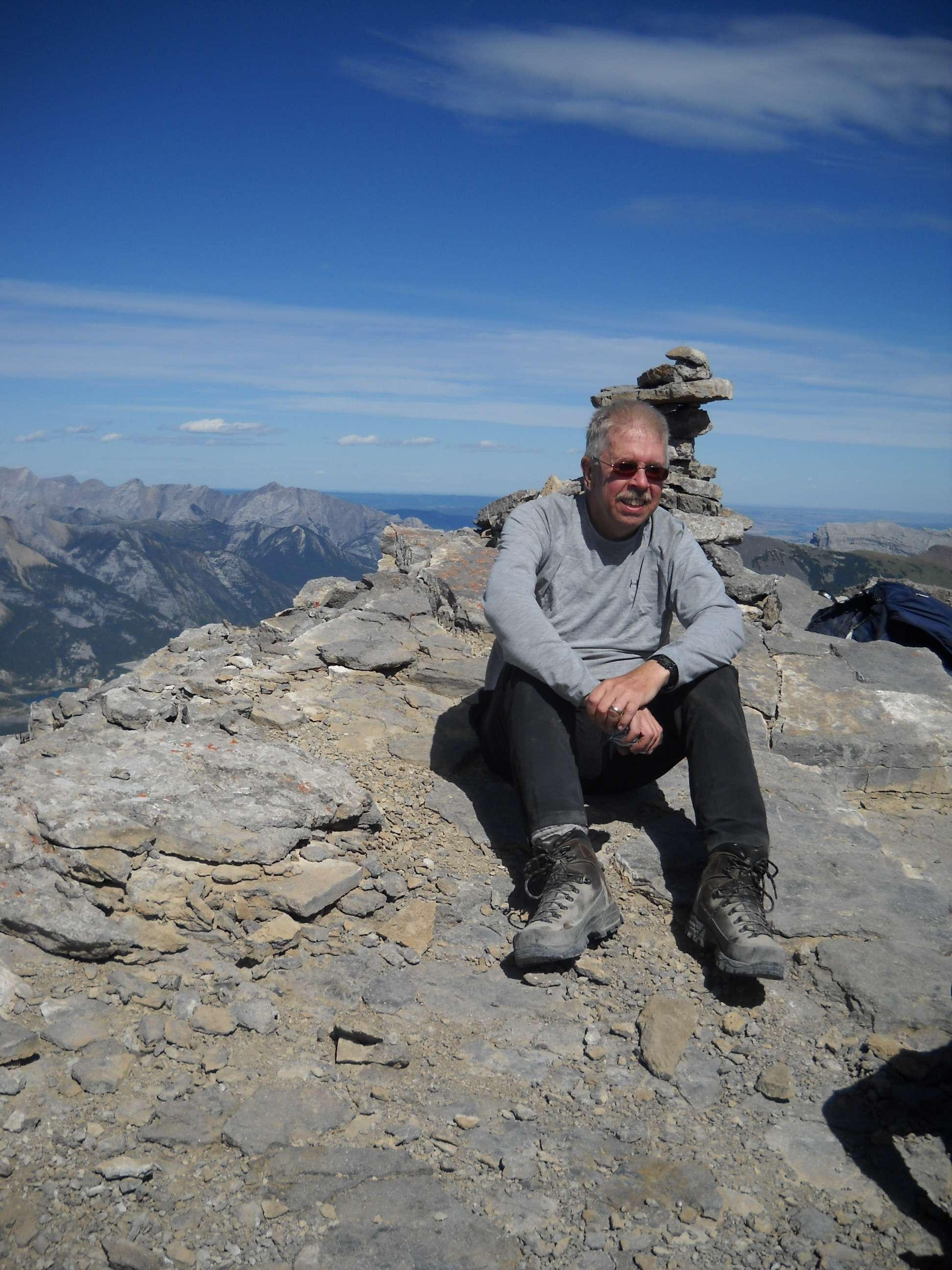
Mountains are scary, wonderful, and mystic places.    During my military career, I had the opportunity to climb three mountains in three days as part of a strenuous kind of holiday that the Army calls Adventure Training.  This wasn't the kind of technical climbing with ropes and pitons, but it was challenging and the mountains, on the Alberta side of the Rockies, had names like The Fortress and Windy Tower.  

I was part of a small group of soldiers, and we were ably led by Major McKnight, who was a qualified Canadian Armed Forces mountain warfare instructor and intimately familiar with this part of the Rockies.    At the start on the first day he told the driver of our van to put the keys under a rock near the parking lot.  When the driver asked why, the Major said "If you fall off the mountain with the keys, I'm not getting home".  That explanation sobered us up quickly.

When you first climb a mountain, at least in the Rockies, you start climbing a forest trail, but eventually you reach the treeline, and at first you can see the tops of the trees, and then the trees just blur into a green mass.   As you get higher, the mountain starts to narrow.   You make your way up, sometimes skirting the edges of steep rock faces, and realize you need to tread carefully.   The air thins a little and you're fully exposed to the sun so you get thirsty.  As we reached the top, it felt like there were just a few feet you could go either way and still be safe.  I felt enormously vulnerable, for I was wrapped in a  sense of great height and almost a feeling of vertigo, which haunted my dreams for some weeks after.  It was reassuring as we rested there to see how calm the Major was, and while I enjoyed the view, I was grateful when he said it was time to go back down.

The author trying not to look down.

When Jesus takes his two disciples up "a high mountain", it's not just for an adventure.   The purpose of the trip seems to be revelation, a chance for the disciples (and for those who heard their testimony, which includes us) to learn who Jesus is.  The theme of learning who Jesus is what the season of Epiphany is all about.   It's therefore fitting that Epiphany is bracketed by two utterances from the divine voice.  At the start of the season, at Jesus' baptism, we hear the voice say "This is my Son, the Beloved, with him I am well pleased".  At the end of Epiphany, on the mountain, we hear the voice say the same thing, but adds the key phrase, "Listen to him".    So in addition to this affirmation of Jesus' identity we get the call to discipleship.  Our job is to follow the Son of God, to learn from him, and to do what he tells us to do.

For the disciples, this message is terrifying, as moments of revelation often are in scripture.   Perhaps the disciples remember the Exodus story from our first lesson, of how Moses went up another mountain to listen to God, who was like "a devouring fire" (Ex 24.16).  In Exodus God's voice on the mountain is like trumpet blasts, shaking the mountain and covering it with smoke, so perhaps the voice that Jesus' disciples hear is equally alarming.   And of course there is the bright cloud, the presence of Moses and Elijah, and their friend and rabbi transformed into a dazzling being of white, so no wonder this all a bit too much for them.  I think in similar circumstances, I'd fall down and find a large rock to hide behind.

I think the most important detail in the story comes near the end, when Jesus touches his disciples and tells them "Get up and do not be afraid" (Mt 10.7).   In the many healing miracles of the gospels, Jesus' touch (or even touching his cloak) is important.  It's a sign of deep connection and compassion between Jesus and his friends, which means that it's a sign of deep connection and compassion between God and humanity, or between the divine and mortals, or however you want to think about it.

It's tempting to think that this relationship of compassion and connection is a new thing in scripture, that Jesus is doing a new thing.  However, even in the terrifying Exodus stories around Mount Sinai, there is also a surprisingly tender moment.  Before Moses goes up the mountain, God invites Moses and some seventy of the leading Israelites to the foot of Mount Sinai for a dinner party.  Exodus reports that "God did not lay his hand on the chief men of the Israelites; they beheld God, and they ate and drank" (Ex 24:10).  So before God gives the law and the ten commandments to Moses, God wants the people to know him.  Maybe in this little passage we see a glimpse of the Last Supper and the Eucharist, and I think it's safe to say that throughout scripture, as in this moment, we see a God who wants to be known by us.  As I've said before, our God is a God of relationship.  If we fear God, then it's not much of a relationship.

Mountain top moments can be moments of revelation and exhilaration, but they can also be moments of fear and anxiety.   In our colloquial speech, when we want to descalate and calm someone, we say that we want to "talk them down".   One of Alfred Hitchcock's scariest films is Vertigo.  A place like those glass floors at the top of the CN Tower may be fun to some but terrifying to others.   Fear of flying is a real thing for many.  Heights underscore our fragility and are a perfect metaphor for anxiety, something this this world seems excessively well stocked with.

We started our worship today with some prayers for the people of Tumbler Ridge.  That mass shootings could happen even in a small Canadian town feels like a violation, an infection of our country's social and political body by forces of violence and hatred.  It can seem like no one and no place is really safe.   Our children are experiencing a crisis of anxiety, which we try to overcome by medication and social media bans.   We adults aren't immune either.  As someone wrote recently, social media helps me stay in touch with friends and helps me learn about new disasters.   

As Christians, we need to cling to Jesus' words "do not be afraid".   The God of thunder and justice meets us as a friend, and takes us by the hand, and leads us down from our mountaintop anxiety.   Jesus comes down the mountain with us, with a message of peace and love for the world.    We are called to follow, to listen, and to tell others that there is a truth and a way of life that is one of peace rather than anxiety.   As Christians, we begin our journey of Lent this Wednesday with ashes and a sign of the cross.  It's important for us as we journey not to think that death and violence have dominion, for the Jesus' appearance on the mountaintop, dazzling white, is a foretaste of the resurrection that lies before us on Easter Sunday.  For ultimately we are Easter people, and God's message then and always is that we have nothing to fear.

Seeing the Unclean: A Meditation for our Après Ski Focus On God's Healing

Our Après Ski services this year feature meditations from members of our clergy team on God's healing as it's described in scripture and experienced in our lives.   Tonight's meditation focus on Jesus and the ten unclean men as described in Luke 17:11-19.


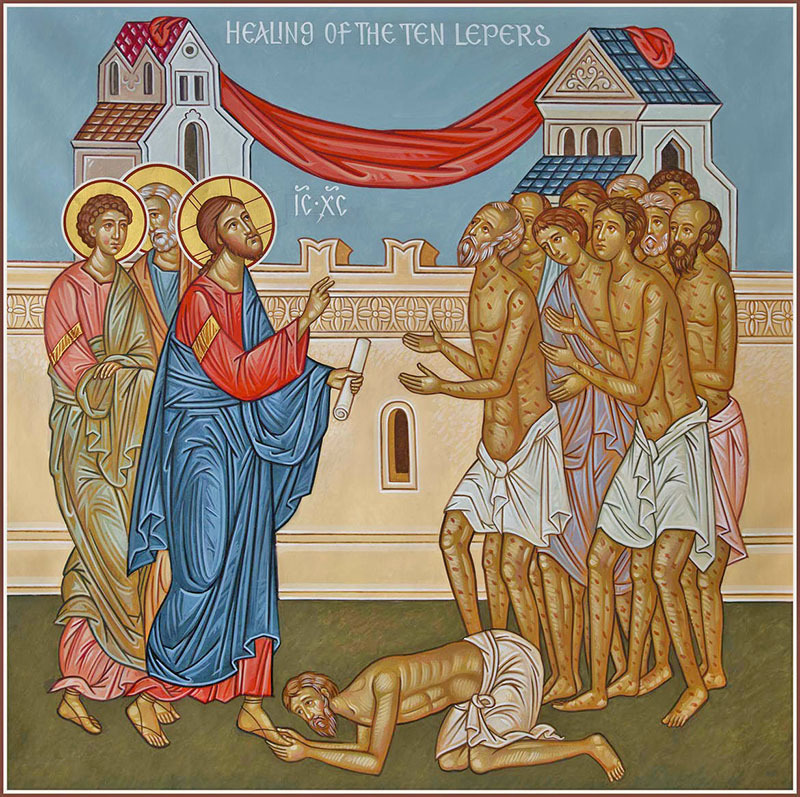
 11 On the way to Jerusalem Jesus was going through the region between Samaria and Galilee. 12 As he entered a village, ten men with a skin disease approached him. Keeping their distance, 13 they called out, saying, “Jesus, Master, have mercy on us!” 14 When he saw them, he said to them, “Go and show yourselves to the priests.” And as they went, they were made clean. 15 Then one of them, when he saw that he was healed, turned back, praising God with a loud voice. 16 He prostrated himself at Jesus’s feet and thanked him. And he was a Samaritan. 17 Then Jesus asked, “Were not ten made clean? So where are the other nine? 18 Did none of them return to give glory to God except this foreigner?” 19 Then he said to him, “Get up and go on your way; your faith has made you well.”


You may have noticed that our translation of Luke’s gospel mentioned “ten men with a skin disease” and that may have taken you by surprise because in the versions of this story that we are familiar with, going all the way back to the King James version, the men are described as “lepers” (indeed, the Greek word used in Luke is lepros).  


Our translation today reflects recent biblical scholarship, which notes that what the ancient world called leprosy was not quite what we see in the film Ben Hur, and certainly not what medical science today calls Hansen’s Disease (more medical background here).  In ancient Judaism, what we used to call leprosy could be a wide variety of skin conditions such as psoriasis, dermatitis, scabies, lesions, or even thinning or balding hair.  


All of these conditions fell under a Hebrew word called tzaraat and all these various conditions are decribed in the Book of Leviticus.   The diagnosis would be done by a priest, and if a priest declared you as tzaraat, then you were unclean and not fit to be part of society.   Hence, when Jesus cures the ten men, he sends them to the priests so they can be declared as healed.    Thus, to be tzaraat in Jesus’ time was as much a religious conditon as it was a medical condition.


There is a further religious dimension to this story because of the ten men healed, only one returns to thank Jesus and praise God “with a loud voice”.  Jesus tells him that his “faith has made him well”, which is a little odd, because ten men were healed.  All ten were healed by Jesus, and only one has his faith recognized.  So were the other nine not healed by their faith?  It all seems a little confusing.  What is the connection between faith and healing?


If we step back a bit, we can make some sense of the story by putting it in its larger context.  The story, like most gospel stories, is about the power and authority that Jesus has been given by God the Father.    Jesus, as he says elsewhere, does not abolish the law of Torah - sending the men to the priests to be declared clean clearly shows his respect for Torah.   But Jesus also uses his authority to go beyond law to grace.


The man who returns to praise God is a Samaritan, an outsider to faithful Jews of Jesus’ day.   As we see elswehere in Luke’s gospel and in Acts, outsiders (Samaritans and gentiles) can be as worthy of God’s love and mercy as faithful Jews.  Indeed, the Good Samaritan shows more love and mercy than do the faithful Jews in the parable (Luke 10:25-37).  


So our gospel story tonight is about healing, to be sure.  The ten men are healed by Jesus.  But perhaps more importantly, it’s also about Jesus being willing to see and love and heal those who are not seen.  It’s about Jesus being merciful with the definitions of unclean and outsider.  


In her book Encampment: Resistance, Grace, and an Unhoused Community, Maggie Helwig begins by saying, in effect, that our society effectively treats the unhoused and most marginal as tzaraat, unclean.   She writes that ”there is a great gulf fixed, and very few people are willing to cross it. People who have not lived in the world of which encampments are part are afraid, and they are angry. And they cannot imagine that there is a way to cross that line, to speak to a homeless person as a fellow human being, without somehow themselves being harmed, being damaged, being touched by a world they would rather deny.”


I think we as a society can actually imagine what it would take to help the unhoused if we wanted to make real, costly investments in affordable housing, in addiction and mental health treatment, in accessible medical care, and a universal basic income.  But before we get there, we have to overcome our secret fear that the unhoused are the new tzaraat, the new lepers.   Today’s gospel story suggests to us that God’s healing can begin when we can let go of our fear of the unclean and see people for who they are, as loved children of God.


Helwig, Maggie. Encampment: Resistance, Grace, and an Unhoused Community (pp. 7-8). (Function). Kindle Edition. 


Saturday, January 31, 2026

I'll Take The Message of the Cross for Five Hundred: A Homily for the Fourth Sunday of Epiphany


Preached at All Saints, Collingwood, and St Luke's Creemore, Anglican Diocese of Toronto, 1 February, 2026, the Fourth Sunday of Epiphany (Yr A).

Texts for this Sunday: Micah 6:1-8; Psalm 15; 1 Corinthians 1:18-31; Matthew 5:1-12

Where is the one who is wise? Where is the scribe? Where is the debater of this age? Has not God made foolish the wisdom of the world?  (1 Cor 1.20)


Some of you longtime ˆJeopardy fans may remember the Rev. David Sibley, who had a four night run on the show in 2022, and came back in 2024 to win the quarter final but lost in the semi final.  A pretty good showing for the Rector of St Paul’s, Walla Walla, Washington, whose smarts earned him around $78,000, though as he said, his bishop reminded him that his winnings should be tithed.

Sibley is in fact one of three Episcopal (Anglican) clergy who have appeared on Jeopardy, for which, I suppose, we as a denomination might take some pride.   Anglicanism has long valued the education of its clergy, many of whom have been scholars and scientists, such as Edward Stone (inventor of aspirin) and Charles Darwin, who began his career in a seminary.   Indeed, a famous quote from long ago, one of the Popes, then arch enemies of the Anglican church, admitted that the clerics of England were, because of their superior education, the wonder of the world (clericus Anglicanus, stupor mundi).

However, lest we get too self-congratulatory, it’s worth noting that Rev. Sibley was knocked out of Jeopary’s semi-finals because he got a bible and Shakespeare question wrong (what biblical city is Comedy of Errors set in?  Ephesus.  Sibley guessed Corinth).   In life, as in quiz games, our intellects only get us so far, and the same is true of theology, which is what Paul tells the Christians in Corinth in our second lesson today.

So for the last few Sundays, our second reading has been from the first chapter of Paul’s first letter to the church in Corinth.   After praising this church as a collection of saints called by God and “enriched in him in speech and knowledge of every kind” (1 Cor 1.5), he then scolds them for falling into rival factions, each with its own leader and message.    For Paul there is only one message, the message of the cross of Christ.  And the message of the cross has nothing to do with things that smart people value (“eloquent wisdom”), rather it is a message that Paul calls “foolishness”.

So what is the message of the cross, and how is it foolish?  First, I think we have to understand what Paul means when he dismisses “earthly wisdom”.  Wisdom for Paul is a lot more than just Rev. Sibley’s command of Jeopary facts and figures.  It is the whole cultural and religious system of his day and what it values.   

For Greeks (and Romans), wisdom was science and philosophy, art and beauty, the purity of math and astronomy and logic.  Greek gods were powerful, handsome and gorgeous.  It made no sense to wise Greeks that a god would die in shame and agony on a Roman instrument of torture.  Likewise Jews saw their salvation in a Messiah who would come like a second King David, so ditto for them not understanding how Jesus could be Messiah when he died on a Roman cross.

So for Paul, the cross is the complete oppositie of what his world values.  It would be like Paul, if he were here  today saying that technology, AI, the stock market, finance, capitalism, ideology, fashion - it’s all meaningless. 

Likewise for Paul, the cross has to do where people are in society.  When he talks to the Corinthian Christians, he reminds them that “not many of you were wise by human standards, not many were powerful, not many of you were  of noble birth” (1 Cor 1.26).   The Corinthian Christians might have had a few well off people in the parish directory, but by and large they did not call the shots.  Some scholars estimate that between 70 to 80 percent of people in the ancient world lived in poverty, either at or below the level of subsistence.   Cities were crowded, political life could be violent, taxes were high, and of course many were enslaved.  Human rights as we understand them simply did not exist in the ancient world.  So if you think about the kind of elite people who gathered last week in Davos, Switzerland, Paul would say, “yeah, not you guys”.

I think that when Jesus looked down at the crowds at the beginning of the Sermon on the Mount, he knew exactly who they were and what their lives were like,   Matthew tells us that the crowds included “the sick, those who were afflicted with various diseases  and pains, demoniacs, epiletics, and paralytics” (Mt 4.24).   No doubt most of these were poor, or who, like the woman with the hemorhrage in Mark’s gospel, had spent all they had on the limited skills of physicians (Mk 5.26).  Jesus knew who these people were, and the Beatitudes tare about them and about God’s commitment to them.

I think that when we hear the Beatitudes and hear phrases like “Blessed are the poor in spirit” or “Blessed are the meek”, we think that that these are moral commands.  We think that Jesus is telling us to be betters people,  humbler, more peaceful, and more committed to good causes.    In part this is true, but I think the Beatitudes are about the message of the cross, that God stands with those who are as hungry for their next meal as they are hungry for an end of oppression,  that God sees the downtrodden and the unimportant.  The  Beaitudes are as much about the people of Gaza and Minneapolis as they are about the people of Jesus’ day or Paul’s day, and indeed, they are really the same people.

Mixed in with Jesus’ compassion is the same commitment to justice that we see in the prophets like Micah.  When Jesus says that the reward of the righteous will be “great in heaven”, this is more than a consolation of some afterlife where things will be better.  It’s God’s commitment to be there in the struggle until oppression is overcome.  The Negro spirituals which saw freedom as a from slavery to the promised land knew where God’s heart is, as Dr King knew so well, and as the clergy and people arrested in Minneapolis know.  Tech billionaires, oligarchs and dictators may see talk of freedom and human dignity as so much foollshness, but God’s people know better.

So to conclude, the wisdom of the cross is not a celebration of ignorance.   Jesus told his disciples to be wise and innocent.  Perhaps we can say that the message of the cross, and the vision of the cross, is about seeing and valuing the people that Jesus sees.  I’ll give the last word to Rev. Sibley, who put it well after his run on Jeopary:

“One thing that I love about Jeopardy! is that it is, in many ways, a celebration of curiosity about the world around us. So if I can hope for any one thing, it’s that my little turn in the spotlight might inspire you to become more curious — about others, about our world — and in so doing, grow in love of God and neighbor for seeing the beautiful web in which we all live and move.”


Mad Padre

Mad Padre
Opinions expressed within are in no way the responsibility of anyone's employers or facilitating agencies and should by rights be taken as nothing more than one person's notional musings, attempted witticisms, and prayerful posturings.

Followers

Blog Archive

Labels