Friday, August 19, 2016

Turning Chaplains Into Military Ethicists

The Canadian Forces Chaplain School and Centre (CFChSC) at Canadian Forces Base Borden, where I work, started its annual Intermediate Ethics Course this week. 


The course is a career course for CAF military chaplains to take early in their careers to prepare them for one of their roles as ethical advisors to command teams and to military and civilian personnel generally.   Building on the theological and religiously informed ethical systems that chaplains learned in their formation as clergy, we train them in a variety of ethical systems, including the CAF's Defence Ethics Program .  The training is practical, and uses concrete scenarios and case studies to prepare chaplains for the kind of real-world problems that they will face in the military context.


Chaplain candidates in fierce ethical debate.


One of the problems we face in our training in military ethics is that you need a foothold on both sides of this compound subject.    Most chaplains know something about ethical traditions through their theological formation, though they may know more about Christian ethics than they do about the classical philosophical traditions.    What they lack, sometimes, is a sufficient knowledge of the military environment to do apply the ethical traditions well.

To that end, I offered the class a short reading list of online resources to help them shore up their military knowledge, and to show them how some smart folks in the military community are tinking hard about ethics, particularly in light of new technologies and the changing battlespace.

This list may interest readers of this blog, either chaplain colleagues or folks who are generally interested in the subject.

1)
A privately published military blog – most articles authored by US defence community people including some serving military.   Lots on foreign policy, military news, leadership, strategy, and technology.
Articles like this one on killer robots make it worth the read for military ethicists.

2)
This online journal describes itself as “an international journal focused on strategy, national security, & military affairs”. 
Contributors are mostly US military, serving and retired, with some allied military contributors.
A quick use of the search feature for articles on “ethics”yields some impressive results:


3)
This military news blog is anything but boring.   Its masthead says:  “From drones to AKs, high technology to low politics, exploring how and why we fight above, on and below an angry world”.
 The articles on politics and culture offer food for thought for ethicists.
4)

A very funny and thoughtful blog by a serving US Army officer.   Star Wars fans will find things to like.
 
5) 
By a professor of philosophy whose research and publication interest is in military ethics. 
 
6)
Mostly US military – a group of active duty officers writing about the military and the military ethos.  Many of the contributors here are worth your knowing.  Many of them are also active on Twitter, which is a whole other thing to follow.
 
Enjoy these links and chime in on any others that you would recommend.
MP+


Monday, August 8, 2016

Five Thoughts on Sharing Faith: A Sermon For The Twelfth Sunday After Pentecost


I was filling in for the Rector of Trinity Anglican Church, Barrie, yesterday.   Since I know the parish's recent history, it was relatively easy to prepare this sermon.  They are currently in the difficult process of considering whether to amalgamate with another parish or to try and revitalize the parish and stay in their present location.  I thought some comments on how we share faith (a challenging subject for us Anglicans, who aren't gifted with evangelical skills), might be useful since no matter where we are, our churches need to be persuasive and attractive examples of the positive difference that God in Christ makes in our lives.  MP+

Five Thoughts on Faith Sharing: A Sermon


Texts this Sunday:  Isaiah 1:1, 10-20; Psalm 50:1-8, 22-23; Hebrews 11: 1-3, 8-16; Luke 12: 32-40

"Now faith is the assurance of things hoped for, the conviction of things not seen.” (Heb 11:1)


Sometimes in my work as a military chaplain, I meet people who are uncomfortable with religion, and I sometimes look for a joke to break the ice.   When I meet someone who I know is a Toronto Maple Leafs fan (and believe me, it’s not hard to spot a diehard Leafs fan), I have a line that I like to use.  “I see you’re a Leafs fan”, I say.  “Nice to meet another person of faith”. 


Most Leafs fans will wince and smile good naturally at that little joke.   After all, a Leafs fan is someone who is in it for the long haul, despite the evidence to the contrary.  They may see a Stanley Cup again, but since the last one was in 1967, Leafs fans may well doubt that they will see another in their lifetimes.


Part of the joke is the comparison between faith in a long-shot hockey team and faith in religion.  Both types of faith might seem misplaced to skeptics, whether the skeptics are Ottawa Senators fans, or atheists and agnostics.   Both might say, why put your faith in something that isn’t going to deliver?   The atheist might say, its even worse for you religious types.   At least the Maple Leafs are a real, actual hockey team.  We know they exist. 


Some people will say that faith is necessary because we have no proof of the existence of God.   Faith thus becomes a problem when we try to share our belief with others, because if other people don’t have faith, how do they get it?  How do we help others come to faith?  I think this can be one of our biggest problems as we try to grow and revitalize the church.


And yet, faith is real, according to our first lesson.   Our reading for Hebrews speaks of faith in terms of “assurance” and “conviction”.  The modern language bible, The Message, puts Hebrews 11:1 this way:  “The fundamental fact of existence is that this trust in God, this faith, is the firm foundation under everything that makes life worth living”.  So faith is real, it’s a vital part of our lives, it’s the key to a good life.  So  today I invite you to think with me for a bit about what it means to be a person of faith and how we explain faith to others in a way that makes them want to share it? 


I think this second question, of faith sharing, is super important because we have to know the answer if we want to revitalize Trinity, or indeed, to revitalize the Christian church.    I’ve been thinking about this question since we at Trinity started to think about our future, and whether we can revitalize our church.   I’ve come to the conclusion that it doesn’t really matter if we put out better signs, or change the music, or even make the building more accessible.   All of those things are good in and of themselves, but they don’t make our faith attractive to others.   I think the only thing that will revitalize this, or any, church, is if we can show others that our faith makes a difference in our lives, that we have found something that they need and want.  So how do we do that?  I want to suggest five ways to understand and share faith.


  1. Faith isn’t invisible
     
    Yes, tour reading from Hebrews says  that faith is about things “hoped for” and “not seen”.  In v 3 it says that what we know, the world around us, was prepared by God  “from things that are not visible”.   There is a sense in which God is invisible.   Indeed, Jesus tells Doubting Thomas that “Blessed are those have not seen and yet believed” (Jn 20:29).    Fortunately, the church is visible.   The people of God are real.   The word of God can be read or listened to.   The love of God is visible in the world because of what the people of God do.   When Kay and I joined Bill and Diane and Lequita at the Bayside Mission last Wednesday, our faith was visible and it was seen by the many persons who came up after the meal and thanked us.   So, faith is visible in the lives of the faithful.  I think Trinity gets this first part pretty well, because we do a lot.   We just need to keep asking ourselves, when we seem too busy or too overstretched, if our actions are about showing our living faith, or if they have some other motive.  If our actions aren’t about faith, maybe they are not so important.
     
     
    2) Faith comes from God, not from us
     
    Sometimes we think that faith is something we do ourselves, that if only we will hard enough, we can make ourselves believe in God.  Instead, Hebrews makes it clear that faith comes from God and from our relationship with God.   At 11:3 Hebrew says that “By faith we understand that the worlds were prepared by the word of God”.   God created the world, created us, to be in relationship with him and to know him.   There are lots of ways to believe in how the world came to be, whether through evolution or creation.   Personally I don’t believe that science is incompatible with faith.   As Christians we believe that our lives come to us as gifts from God, and that God gave them to us because he is good, he wants us to flourish, and he wants us to know us.   It’s like knowing that we have someone in our lives who loves us deeply for who we are and wants the best for us.   If we open ourselves to that love in gratitude, then we can participate in that relationship,  It’s the same with God.   The starting point isn’t whether we have enough faith to know that God exists.   The starting point is deciding whether we want the relationship that God offers us.
     
    3) Faith is about Jesus.
     
    It’s true, we Anglicans aren’t comfortable talking about Jesus and being born again.   But, we are Jesus people.  We are his disciples and his followers.  It all starts with Jesus.  Literally.   At the very beginning of the book of Hebrews, it says that Jesus “is the reflection of Gods glory and the exact imprint of Gods very being, and he sustains all things by his powerful word” (Heb 1:3).  In other words, Jesus was there at the creation that gave us our planet and our lives, Jesus is like oxygen and sunlight in that he sustains our lives, and Jesus wants to know us.   In our gospel today, we hear Jesus say “Don’t be afraid, your Father wants to make you part of his kingdom”.  Jesus is the one who loves us and wants to be in relationship with us.   These are all good things.  I once heard a friend speak approvingly about the Dalai Lama, the Buddhist leader.  “He talks about love, and being kind to one another, and about forgiveness.  It’s so refreshing!”   That sounds wonderful, I thought.   Jesus speaks about these things, too.  Why don’t we as Anglicans talk about the refreshment, the love, the forgiveness we have found in Jesus?     What if we were as comfortable speaking about Jesus as we were talking about out stained glass, or about our liturgy?  What if we talked about Jesus with an intimacy, even a longing, that made others wish they knew Jesus better?
     
    4) Faith is about the long journey
     
    In our lesson today, we hear about figures from the Old Testament like Abraham who “died in faith without having received the promises, but from a distance they saw and greeted them” (Heb 11:13).   Faith isn’t about believing so hard that we will get what we want when we want.  That’s positive thinking, not faith.   Faith is trusting that things will work out according to God’s timelines, and not ours.   Faith is what keeps the antipoverty activist going, like the people who keep the Salvation Army Bayside Missing in business.   They know that poverty isn’t going to end any time soon, but their faith and their relationship with Jesus tells them that the least among us are the dearest to God.   Faith is what keeps us going through grief, through funerals, and through the long days at the cancer war.   Faith is knowing that God is faithful to us, that his promises to us will come true in God’s time, whenever that may be.    In a world so stressed, fearful and so worried about the future, imagine how attractive faith, and the peace that passes all understanding, could be.   Wouldn’t you want to share that?  Wouldn’t you want to have that?
     
    5)  Faith is found in our lives.
     
    Earlier this summer, a member of this congregation got up to read a lesson.  Before he started, he spoke about what this lesson meant to him, and about how it summed up lessons taught to him by his mother when he was growing up.  He spoke simply and from the heart   I was totally amazed.   I tried to imagine a church where people could do similar things, sharing simple and from the heart stories about the difference that faith makes in their lives.    You see, as Anglicans I think we balk at evangelizing because we don’t know how to do it.  We don’t have the language of witnessing, it’s not part of our denominational DNA.  We are the church of shy introverts who love our books and our prewritten prayers.   Mostly we’re private people.   However, I haven’t met that many people who don’t like to talk about themselves.   Most of us I think could tell a story about how our faith got us through a significant and difficult life event or a dark time.  Imagine if you had the confidence to tell your own story to a friend or acquaintance who was going though a similar dark time, but who didn’t share your faith.  You could say something like, “That sounds like a very tough place that you’re in.  I’m so sorry.   When I went through a dark spell in my own life, my faith really made a difference.   Would you mind if I told you that story?”   I could see that sort of dialogue being far more effective than simply asking a friend to come to church with you on some Sunday.
     
    In this sermon, I’ve tried to suggestive ways in which we can think about faith in a way that might revitalize our church and make it more attractive to others.    I’ve suggested that:
     
    1)Faith is real because it is seen in the lives and actions of the faithful
    2) Faith is a relationship we are invited into
    3) Faith centre on the life, words and love of Jesus
    4) Faith is for the long haul
    5) Faith is found in our own stories, which we can share with others
     
    I pray that these words and these ideas may be helpful to all of us as we think about the future of our church.

Friday, August 5, 2016

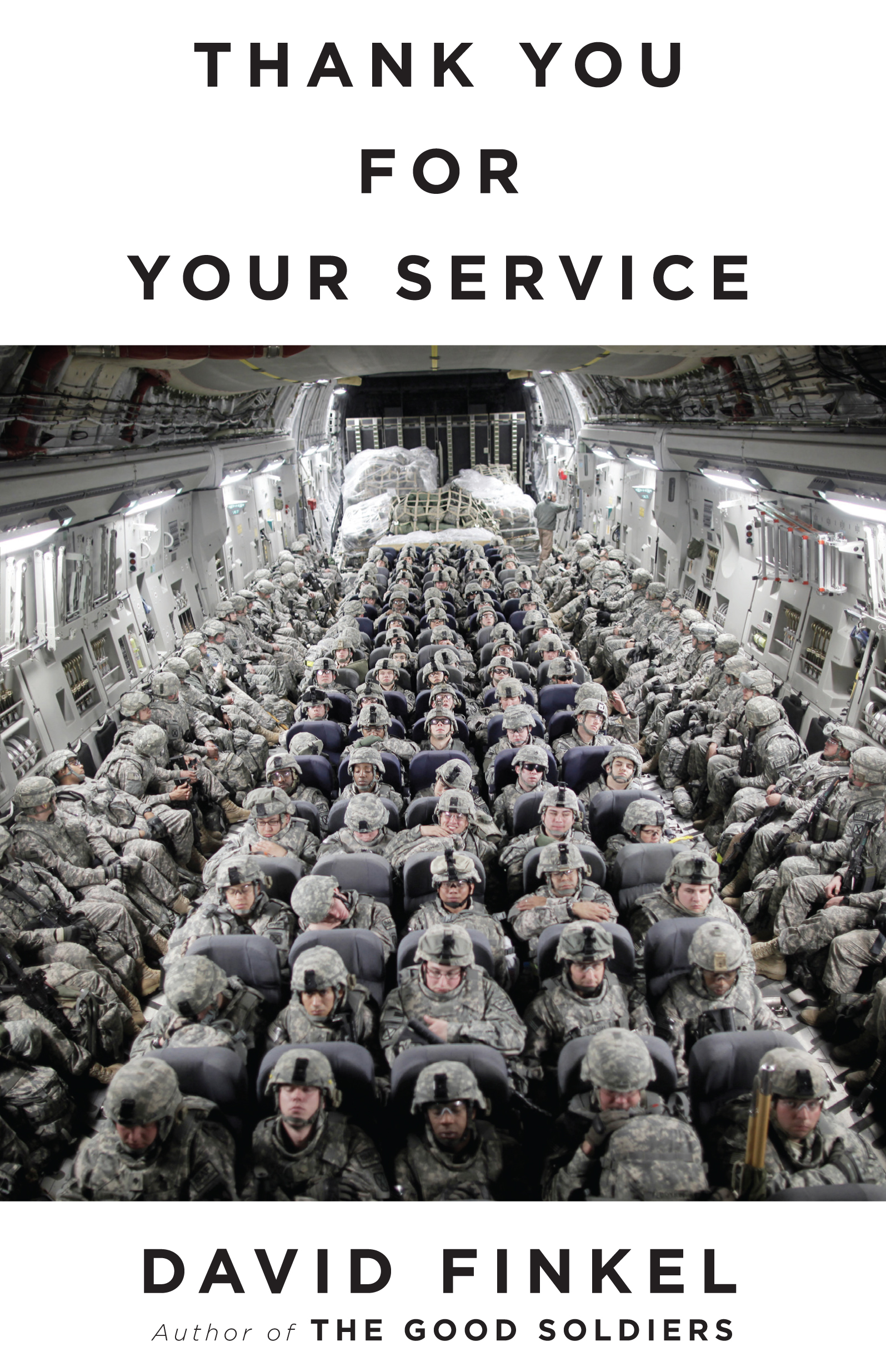
Book Review: David Finkel, Thank You For Your Service


David Finkel, Thank You For Your Service.  Toronto: Bond Street Books, 2013. 

I am slowly working my way through a stack of books about the wars in Iraq and Afghanistan that have been published in the last few years.   My hope is that these books will be useful in the ongoing work of my unit, the Canadian Armed Forces Chaplain School and Centre, and that they will better prepare my colleagues to support those, soldiers and their families, who have been touched by war.

Most of these books are about the US experience in the so-called War on Terror, or as journalist Dexter Filkins called it presciently, almost a decade ago, The Forever War.  However, today's title, while by a US author about US soldiers, seems highly relevant.  As Romeo Dallaire and Carol Off. write in their forwards,  “it could just as easily have been written about Canadians in Afghanistan”. 

“(T)he after-war continues, as eternally as war itself” is how David Finkel ends his book, Thank You For Your Service.  For years now, Finkel has dedicated his work as a journalist to documenting the reality behind the words, “thank you for your service”, too often uttered by those who know nothing to those who can say nothing about the horrible things they have seen and done.  In his honest and unsparing account of ordinary people trying to repair their lives, Finkel reminds us that the terror continues in what he calls the after-war.  Young men return broken and ashamed, afraid to tell their partners “stuff” for fear that they will be seen as monsters.  Young women try to find the patience to raise frightened children and protect them from fathers who have changed.  “As soon as he got home”, one wife says, “he really wasn’t the same no more at all”.

In an earlier book, The Good Soldiers, Finkel embedded with a US Army unit tasked with patrolling one of the most violent parts of Baghdad, “a sorry bomb-filled neighbourhood ... (where) the war felt eventually like the wrong everything”.  These soldiers would armour up, go through their good-luck rituals, and load into convoys of lightly armoured Humvees,   never knowing when they would be blown up.   I reviewed The Good Soldiers here in 2009.  Towards the end of his earlier book, Finkel focused on difficulties of soldiers coming home to the US on leave during their tours. 

He quoted a mental health care specialist who described home as a  "a place of disaster" for most soldiers, whose trips home to the US on leave midway through their tour were not what they expected.   "There's an anger in guys when they go back. They want to go home and be normal, and they're not quite normal," he said, and added, "Coming back from leave is the worst part of the deployment".  Now, years after the war, home is more than ever a place of disaster.

In Thank You For Your Service, Finkel follows some of these same men after their return to the US.  Some came home broken by too many deployments, having seen too much and feeling too much guilt for comrades shot or burned to death inside their vehicles.   The same bonds which held them together would eventually work against them, for as Finkel writes, “To be a soldier in combat was to full love constantly”, only to have the loved one killed or shattered or burned before one’s eyes.


For some of these returning soldiers, these lost comrades haunt them waking and sleeping, like one soldier whose friend appears regularly and says “You let me burn”.  For others, the effects of loss, guilt, and post-traumatic stress are compounded by the physical effects of violence on the body and especially on the brain.  Cognitive loss and dementia are just as real to these soldiers as they are to some professional athletes.   In this harrowing passage, Finkel describes the long-term effects of such an injury on a soldier who, years later, cannot remember how to buy flowers for his wife.

 "Before he got blown up, he could have figured it out.  How hard is it to buy roses?  There’s a flower shop on Fort Riley.  They sell them at Walmart.  But such are the effects of being in a Humvee that rolls over three buried 130-millimeter artillery shells, which explode at the perfect moment.  Up he went, and down he came, and once his brain was done rattling around from a blast wave that passed through him faster than the speed of sound, here came the rest of it.  Memory, fucked.  The ability to pay attention, fucked.  Balance.  Hearing.  Impulse control.  Perception.  Dreams.  All of it, fucked.  “The signature would of the war” is what the military calls traumatic brain injury …  (198)

 Thank You For Your Service takes the reader through a labyrinth of damaged bodies and psyches, and of broken relationships and domestic abuse, that plays out in bleak neighbourhoods around a military base, or in the offices and clinics of a bureaucracy hastily-assembled by a military scrambling to understand and cope with these many unexpected casualties.    While Finkel is sympathetic to the many military and civilian personnel struggling to assist these injured veterans and their families, his conclusion, again and again, is that it is not enough.  Ordered by the chain of command to analyze each suicide, unit and brigade leaders struggle to find out if the member has taken mandated suicide prevention training, as much to cover themselves as to develop lessons learned.  Well-meaning generals cooperate with medical researchers to assess risk factors for suicide, but find that explanations are elusive.  Soldiers are medicated but cannot find adequate long-term treatment programs.   Wives feel alone and cut off from help.  Families struggle to pay the bills as unemployable and wounded veterans run through their benefits.   All of these ongoing struggles are what Finkel calls the “after-war”, as if getting blown up in Baghdad is just the start.

 This is one of the most difficult and demanding books I have ever read about contemporary warfare.   Finkel’s honesty, and the incredible degree of access he has gained to ordinary and damaged people gives this book a brutal and stark truth that a hundred war novels and films could never hope to capture.   It is a book that demands far more of society than empty slogans and cheap celebration of its “warriors”.  While Finkel is not prescriptive in his solutions, he seems to suggest that these veterans demand, and are owed, far more time, attention and care than they currently receive.  However, a society that would pay its debt to these men and women would first have to acknowledge what it asked them to do, and that admission might prove too difficult.

 We should all read this book if only to gain a better understanding of how the ongoing physical, mental and moral injuries of the “after-war” can isolate and oppress those who have returned to an uncomprehending country that no longer feels like home.   A person of faith will note that there is next to nothing said here about how faith or spirituality can be resources for such veterans, a notable absence that should be noted by those chaplains working in the area of spiritual resilience. 

One sees glimpses of hope and endurance here and there, in the care and love that these broken soldiers show one another, or in the determination of a few to walk with them and help them.   As the book ends we see one family seem to start a new life together, somehow still together after countless quarrels and fights, but by then we have learned of  many others who never survived the after-war, having chosen to end their own pain and struggle through suicide.   As a chaplain you will find no easy answers for ministering to veterans like the ones described here, but you will better appreciate the reality of the pain and the immensity of the need.

MP+

Mad Padre

Mad Padre
Opinions expressed within are in no way the responsibility of anyone's employers or facilitating agencies and should by rights be taken as nothing more than one person's notional musings, attempted witticisms, and prayerful posturings.

Followers

Blog Archive

Labels