Showing posts with label Military History American Civil War. Show all posts

Wednesday, December 25, 2013

A Chaplain's Christmas in Italy, 1943

A very merry Christmas to all of you.

Not a lot to say of late, as graduate school has taken up much of my attention and time this fall, and I haven't blogged much because I feel tired and not  especially interesting at the end of each day.   Kay and I are healthy in body and spirits, and enjoying our time here in Kitchener-Waterloo.   At this time of year my thoughts are especially with those of my friends in the Canadian Armed Forces Chaplaincy who are far from home, especially Padre Rob Parker on HMCS Toronto somewhere far warmer than here, and Padre Kevin Olive in Kabul, Afghanistan.  Be well, guys.


Speaking of chaplains, in my spare time this Christmas I am reading a chaplain's memoirs, always a fascinating genre to me.   Israel Yost was a young Lutheran serving a parish in Pennsylvanian when the US entered World War Two, and he soon volunteered to serve.  He was assigned to the 100th Battalion of the 442nd Regimental Combat Team, which happened to be one of the most famous and decorated US Army units of the war.  The 100th Bn was made up primarily of Japanese Americans from Hawaii and the Mainland, many of whom had family in the internment camps established after Pearl Harbour.   It served in Italy and later in France.   Here's Yost's account of Christmas, 1943, shortly before the 100th began it's part in the battle of Monte Cassino, as a small Christmas gift to you.

"During the day some of the medics got together in the chaplain's tent to practice carols.  Others got tin snips and cut tree ornaments out of tin cans from the mess tents: by twisting a long strip with the inside shiny surface exposed, glittering icicles were formed.  Two evergreens were decorated with these and sparkling starts and red berries picked locally.  One volunteer disappeared for several hours and returned with a wooden cross he had painted white; he planted it in a place of honour in front of one of the trees.

When it got dark, the carollers, after singing first at the officers' party, made the rounds of all the companies.  In front of one tent their singing was drowned out at first by the loud noise of a card game in progress under the canvas.  Then a voice sounded from inside the pyramidal (tent).  "Shh, you hear that?  The chaplain has some men outside singing Christmas carols."  In the silence that followed, "Silent Night" and "Joy to the World" rang out."  

It was getting late when the singers reached the last tent.  As the final carol died away on the cold winter's night, the tent flap was flung back and out came a sleepy, half-dressed mess sergeant.  "You men ought to have something for your Christmas spirit," he muttered.  He ushered the group into his mess tent and made hot cocoa for everyone.

… On Christmas Day two services were held, attended by 225.  I also attended the all-musical worship at the regiment and conducted a Lutheran communion service for the 1st Battalion at the request of the unit's chaplain.  One of the companies invited me to their Christmas dinner: turkey, stuffing, rice, a fresh vegetable, wine, oranges, walnuts, and a freshly baked cake with icing and nuts on top."  

Israel A.S. Yost, Combat Chaplain: The Personal Story of the World War II Chaplain of the Japanese American 100th Battalion, (Honlulu: U of Hawaii Press, 2006), pp. 100-101.

In his memoirs, despite his modesty, Yost emerges as a faithful hard-working pastor who put his men and ministry far ahead of himself.   Even though he knew nothing of Hawaii or of Japanese culture when he joined the 100th, he appears to have been a valued member of the unit.  He had a long life of ministry and service after the war, and died in 2000 at age 84.  Chaplains' schools do good work in preparing people for military ministry, but books like this one should appear more often on their reading lists.

Blessings to you all this holidays, and in the year to come, may you know God's peace and presence..


Tuesday, June 11, 2013

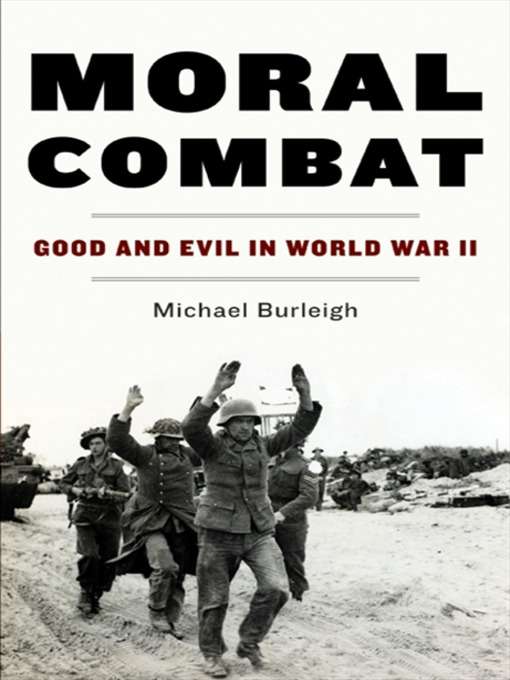
Book Review: Michael Burleigh, Moral Combat: Good and Evil In World War Two

It's been a while since I posted a book review here. This review was published in the Spring 2013 edition of Dialogue, the journal of the Canadian Armed Forces Chaplains Branch.

English historian Michael Burleigh’s 2011 book, Moral Combat: Good and Evil In World War Two (New York: Harper Collins, 2011), is well worth reading by anyone who gets paid to think about military ethics and the use of force. The moral history of World War Two is important because it was, for the Western democracies, a conflict between doctrines of just war, which Burleigh defines as “a series of injunctions about the lawful authorisation of armed conflict and the relationship between ends and means”, on the one hand, and the need, on the other hand, to defeat institutionalised and industrialised evil and barbarism by any means necessary. The outlines of this conflict have been obscured not only by time but by decades of revisionist history, postmodern ambiguity and moral relativism. Burleigh’s book is a convincing rebuttal of these trends, and shows that it is possible to think about war with moral clarity and vigour.

History can be a depressing thing to contemplate. Regular, recurring examples of human failure can threaten to undermine our faith in moral judgement. The decision made in 1938 by France and Britain at Munich to hand over three and half million Czechs to Nazi Germany was, as Burleigh argues, a failure of “moral conscience”. Contemporaries, like France’s Prime Minister Daladier, felt that Munich was only “preparing the way for the destruction of Western civilisation and of liberty in the world”. When one compares Munich to the Yalta Conference of 1945, when the Allies handed the Poles from German to Russian tyranny, it can be tempting to adopt a stance of moral relativism. Slogans such as “history is written by the victors” or, as a young CF Captain told me recently, “We’re in Afghanistan for big oil”, illustrate the prevailing relativistic notion that all war aims are somehow equally corrupt and venal.

The first part of Burleigh’s book is a ground-clearing exercise, rebutting the view that the Western democracies and their enemies were morally equivalent. This exercise is accomplished by a detailed examination of the ideology, governance, and industrialised repression and murder of the police states of Nazi Germany and the USSR”. The police states, he writes, served a cause that was “responsible for the arrest, torture, imprisonment or execution of vast numbers of people because of their class or national origin, with the lucky merely having their lives ruined”. Both regimes abjured moral universalism, dismissing it, in Trotsky’s words, as “papist-Quaker babble about the sanctity of human life” and replacing it with the view, spoken by Hitler, that “the strongest man is right”.

It has been said that the most unethical thing the western democracies could have done in World War Two would have been to lose. In the second half of his book, Burleigh carefully analyzes the “moral calculus” of the Allied war effort, from special operations in occupied Europe, to an alliance of expediency with the USSR, to the bombing of German cities. Burleigh notes that the bombing campaign, still controversial today, was the subject of intense moral debate at the time, a debate impossible to imagine in the dictatorships. It was also a theological debate, with many churchmen, including the Rev. John Collins, a Bomber Command chaplain, condemning the effort as immoral and “soul destroying”. These voices were not universal. William Temple, the Archbishop of Canterbury, felt that the “worst of all things is to fight and do it ineffectively”. Likewise Cyril Garbett, the Archbishop of York, concluded that “it is the lesser evil to bomb a war-loving Germany than to sacrifice the lives of our fellow countrymen who long for peace, and to delay delivering millions now held in slavery”.

It was the opinion of politicians and generals, not church leaders, that decided the fate of the vanquished in 1945, and as Burleigh notes, rebuilding and the rule of law prevailed over rough “victor’s justice”. The Nuremburg and Tokyo trials established precedents and models that are followed today in The Hague. By comparison, “One needs only to imagine a war crimes trial conducted by the Nazis to reach the conclusion that Nuremburg was fair by the lights of the day”.

Burleigh’s book demonstrates that it is possible to think through historical events with moral clarity, and even with moral outrage. As he notes in his introduction, his subject is morals and not moralising, which are as different to one another as religiosity is to religion. World War Two involved millions of responsible adults confronted with difficult decisions and an often “overpowering” temptation to immorality. In such a context, it is indeed remarkable that “a vestigial regard for decent or lawful conduct survived at all”. Seventy years later, in our own age of terror and counter-terror, our militaries, governments, and peoples continue to confront moral temptations in a much more ambiguous war. As chaplains and ethicists, we have a role to play in arguing that it is possible to think and act with moral clarity.

Friday, May 24, 2013

The Canadian Forces iPad Pocket, War, And Literacy

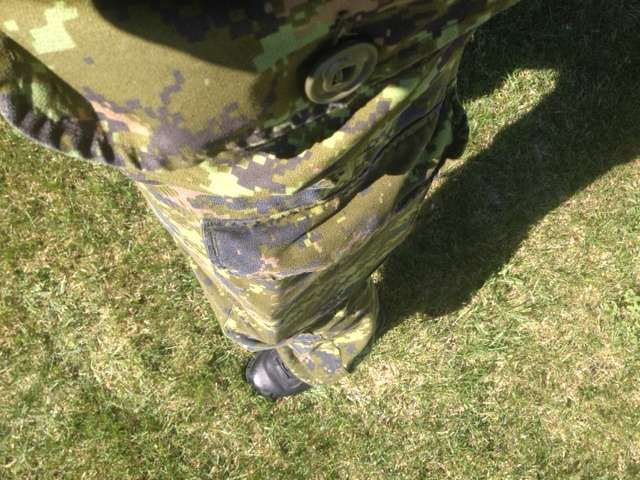
Now that warmer weather is here I like to travel about the base on my bicycle, and found that I faced a problem. I didn't have my small backpack with me and I needed to transport my iPad. How was I to do it?

Fortunately, Queen and Country have clothed me with fairly capacious side pockets in my trousers. Would the iPad fit?

Success!

This solution would only be useful in garrison. I certainly wouldn't recommend it in the field, but then again, I doubt I'd take my iPad into the field. But as I cycled around that day, I recalled reading the late Paul Fussell's book Wartime: Understanding and Behaviour in World War Two, and how his description of the "Penguin pocket". British and Commonwealth troops were issued with serge battledreaa uniforms that had a pocket above the left knee suitable for carrying an entrenching tool (though I've never seen period photos showing this use for the pocket, it seems jolly uncomfortable when going prone suddenly), a field dressing, or similar kit. Because the pocket was perfectly sized to carry one of the ubiquitous Penguin paperbacks that sustained literary minded soldiers in the field, it was named the Penguin pocket.

My inner historian found that a pleasing echo of the past, and I suspect that Fussell might have found it amusing, though I heard him speak once in the late 1980s and he seemed a bit of a curmudgeon to me, so who knows. I was reminded of a Major I knew at Suffield who told me once while climbing a mountain that as a young officer in the early 1990s he took two barrack boxes of books with him to Yugoslavia, and of them all his favourite was an anthology of poems chosen and loved by the British General Wavell. It was called Other Men's Flowers and was published in 1944. I suspect it occupied more than a few Penguin pockets. There was a lovely piece by Ian Jack in the Guardian from 2005 on Wavell, his book, and the lost art of memorizing verse which you can find here.

If I were to deploy somewhere for a long spell I would probably take a few print books with me, but would likely opt to stuff my iPad with as many ebooks as possible and take my chances. And I would take some comfort in the fact that I was part of a long tradition of soldiers who found space, somewhere in their kit, for that weapon most capable of keeping the mind and soul alive, the book.

Monday, May 28, 2012

The American Civil War Day By Day

There are a number of sesquicentenial (175 years if you're wondering -- errr, wait, strike that. 150 years, thanks to an erudite Mad Padre reader) anniversary blogs tracking the American Civil War, but one I discovered today and wanted to flag is this labour of love by a talented amateur historian, Allen Gathman, Seven Score and Ten: The Civil War Sesquicential Day By Day. A quick glance of some recent posts shows that it covers an interesting gamut, from military to social and racial history. Fans of the Civil War should bookmark this blog.

Thursday, March 8, 2012

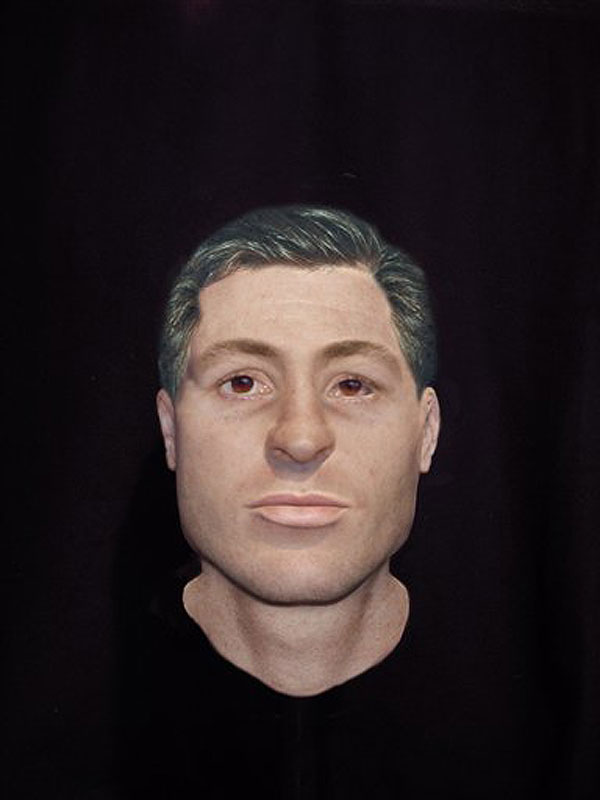
Faces From the Depths: Two Sailors of the Monitor Seen Again

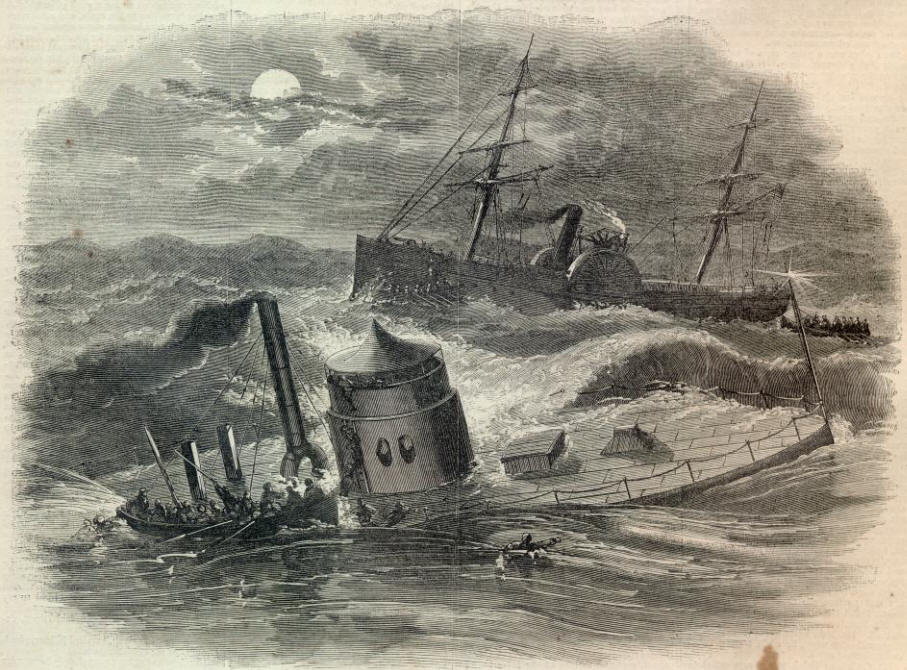
In one of those odd intersections of time and history, the two most famous warships of the American Civil War are in the news. One hundred years ago, the Confederate ironclad warship CSS Virginia, formerly the USS Merimack, sailed up the Elizabeth River to attack a flotilla of Union warships at Hampton Roads. Those wooden ships were no match for the Virginia, but steaming to the rescue was the Union's own ironclad, the USS Monitor. The ensuing duel ended the age wood and sail and started the modern naval era.


The following year, on 31 December, 1863, Monitor foundered and sank off Cape Hatteras, NC, while being towed, with the loss of 16 of her 62 crew. The wreck was located in 1973, and in 2002, when the Monitor's revolving gun turret was raised
to the surface, the remains of two crewmen were discovered inside.

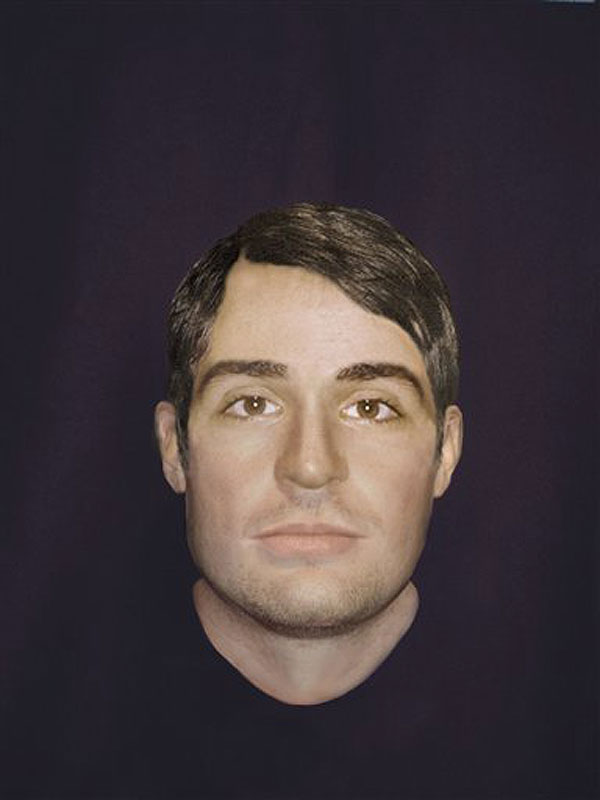
Today the Louisiana State University FACES laboratory, in partnership with NOAA (US Natl Oceanic and Atmosperhic Administration)has released computer reconstructions of the faces of these men, based on their skeletal remains, using criminal forensic methods. An article in the Virginian Pilot Online describes how efforts to identify these men by DNA have failed, but based on the evidence of the remains and on naval records of the time, it is thought that the older of the two men was Robert Williams, the fireman who tended the Monitor's furnace and boilers.

I find it both eerie and moving to look at these faces, recovered from the oceans of time and sea, and see them as they might have once been.


Robert Williams?

Plans for a permanent memorial and resting place at Arlington National Cemetery are under way.

Mad Padre

Mad Padre
Opinions expressed within are in no way the responsibility of anyone's employers or facilitating agencies and should by rights be taken as nothing more than one person's notional musings, attempted witticisms, and prayerful posturings.

Followers

Blog Archive

Labels