Showing posts with label Military Families. Show all posts

Friday, August 5, 2016

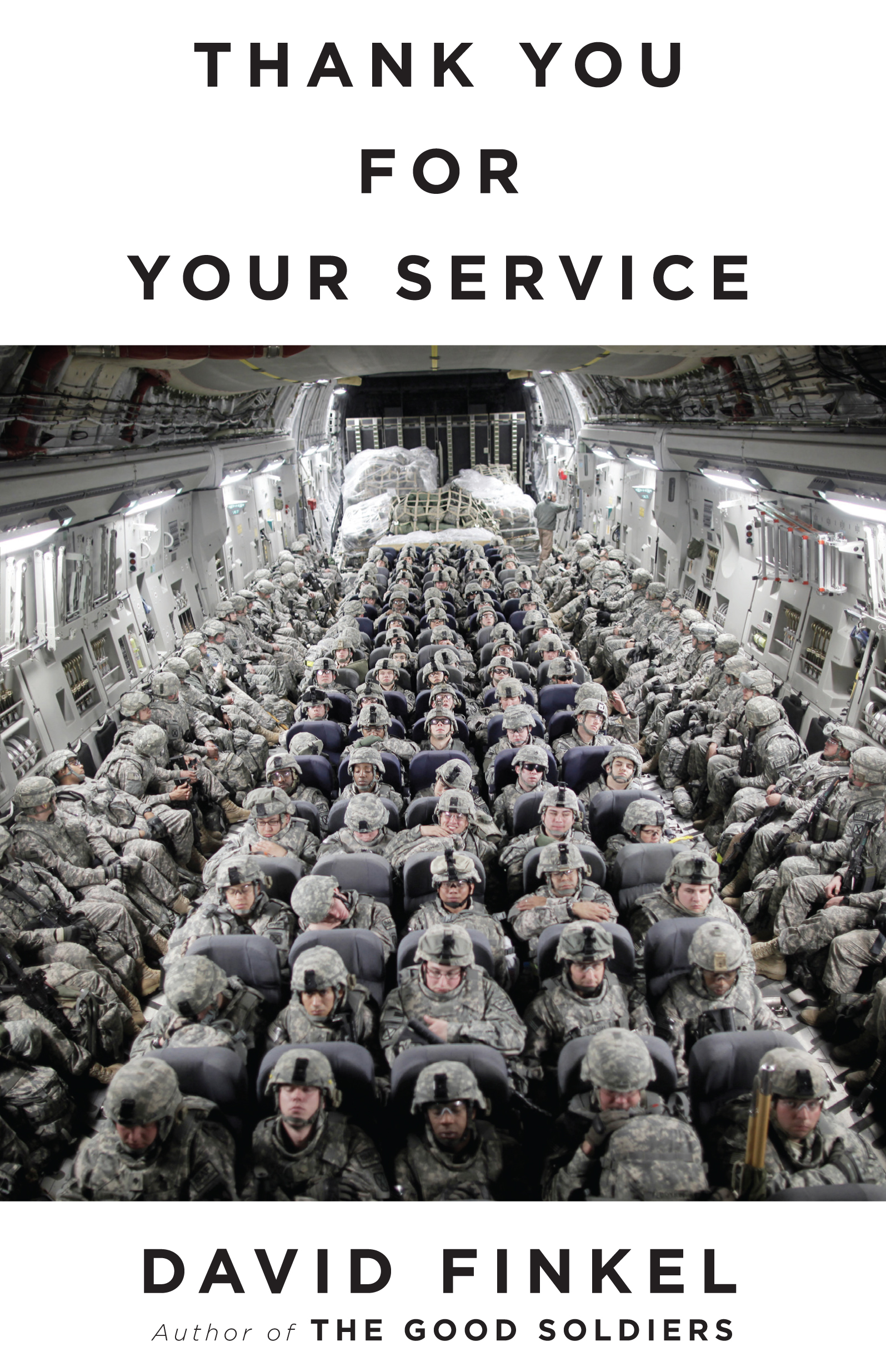
Book Review: David Finkel, Thank You For Your Service


David Finkel, Thank You For Your Service.  Toronto: Bond Street Books, 2013. 

I am slowly working my way through a stack of books about the wars in Iraq and Afghanistan that have been published in the last few years.   My hope is that these books will be useful in the ongoing work of my unit, the Canadian Armed Forces Chaplain School and Centre, and that they will better prepare my colleagues to support those, soldiers and their families, who have been touched by war.

Most of these books are about the US experience in the so-called War on Terror, or as journalist Dexter Filkins called it presciently, almost a decade ago, The Forever War.  However, today's title, while by a US author about US soldiers, seems highly relevant.  As Romeo Dallaire and Carol Off. write in their forwards,  “it could just as easily have been written about Canadians in Afghanistan”. 

“(T)he after-war continues, as eternally as war itself” is how David Finkel ends his book, Thank You For Your Service.  For years now, Finkel has dedicated his work as a journalist to documenting the reality behind the words, “thank you for your service”, too often uttered by those who know nothing to those who can say nothing about the horrible things they have seen and done.  In his honest and unsparing account of ordinary people trying to repair their lives, Finkel reminds us that the terror continues in what he calls the after-war.  Young men return broken and ashamed, afraid to tell their partners “stuff” for fear that they will be seen as monsters.  Young women try to find the patience to raise frightened children and protect them from fathers who have changed.  “As soon as he got home”, one wife says, “he really wasn’t the same no more at all”.

In an earlier book, The Good Soldiers, Finkel embedded with a US Army unit tasked with patrolling one of the most violent parts of Baghdad, “a sorry bomb-filled neighbourhood ... (where) the war felt eventually like the wrong everything”.  These soldiers would armour up, go through their good-luck rituals, and load into convoys of lightly armoured Humvees,   never knowing when they would be blown up.   I reviewed The Good Soldiers here in 2009.  Towards the end of his earlier book, Finkel focused on difficulties of soldiers coming home to the US on leave during their tours. 

He quoted a mental health care specialist who described home as a  "a place of disaster" for most soldiers, whose trips home to the US on leave midway through their tour were not what they expected.   "There's an anger in guys when they go back. They want to go home and be normal, and they're not quite normal," he said, and added, "Coming back from leave is the worst part of the deployment".  Now, years after the war, home is more than ever a place of disaster.

In Thank You For Your Service, Finkel follows some of these same men after their return to the US.  Some came home broken by too many deployments, having seen too much and feeling too much guilt for comrades shot or burned to death inside their vehicles.   The same bonds which held them together would eventually work against them, for as Finkel writes, “To be a soldier in combat was to full love constantly”, only to have the loved one killed or shattered or burned before one’s eyes.


For some of these returning soldiers, these lost comrades haunt them waking and sleeping, like one soldier whose friend appears regularly and says “You let me burn”.  For others, the effects of loss, guilt, and post-traumatic stress are compounded by the physical effects of violence on the body and especially on the brain.  Cognitive loss and dementia are just as real to these soldiers as they are to some professional athletes.   In this harrowing passage, Finkel describes the long-term effects of such an injury on a soldier who, years later, cannot remember how to buy flowers for his wife.

 "Before he got blown up, he could have figured it out.  How hard is it to buy roses?  There’s a flower shop on Fort Riley.  They sell them at Walmart.  But such are the effects of being in a Humvee that rolls over three buried 130-millimeter artillery shells, which explode at the perfect moment.  Up he went, and down he came, and once his brain was done rattling around from a blast wave that passed through him faster than the speed of sound, here came the rest of it.  Memory, fucked.  The ability to pay attention, fucked.  Balance.  Hearing.  Impulse control.  Perception.  Dreams.  All of it, fucked.  “The signature would of the war” is what the military calls traumatic brain injury …  (198)

 Thank You For Your Service takes the reader through a labyrinth of damaged bodies and psyches, and of broken relationships and domestic abuse, that plays out in bleak neighbourhoods around a military base, or in the offices and clinics of a bureaucracy hastily-assembled by a military scrambling to understand and cope with these many unexpected casualties.    While Finkel is sympathetic to the many military and civilian personnel struggling to assist these injured veterans and their families, his conclusion, again and again, is that it is not enough.  Ordered by the chain of command to analyze each suicide, unit and brigade leaders struggle to find out if the member has taken mandated suicide prevention training, as much to cover themselves as to develop lessons learned.  Well-meaning generals cooperate with medical researchers to assess risk factors for suicide, but find that explanations are elusive.  Soldiers are medicated but cannot find adequate long-term treatment programs.   Wives feel alone and cut off from help.  Families struggle to pay the bills as unemployable and wounded veterans run through their benefits.   All of these ongoing struggles are what Finkel calls the “after-war”, as if getting blown up in Baghdad is just the start.

 This is one of the most difficult and demanding books I have ever read about contemporary warfare.   Finkel’s honesty, and the incredible degree of access he has gained to ordinary and damaged people gives this book a brutal and stark truth that a hundred war novels and films could never hope to capture.   It is a book that demands far more of society than empty slogans and cheap celebration of its “warriors”.  While Finkel is not prescriptive in his solutions, he seems to suggest that these veterans demand, and are owed, far more time, attention and care than they currently receive.  However, a society that would pay its debt to these men and women would first have to acknowledge what it asked them to do, and that admission might prove too difficult.

 We should all read this book if only to gain a better understanding of how the ongoing physical, mental and moral injuries of the “after-war” can isolate and oppress those who have returned to an uncomprehending country that no longer feels like home.   A person of faith will note that there is next to nothing said here about how faith or spirituality can be resources for such veterans, a notable absence that should be noted by those chaplains working in the area of spiritual resilience. 

One sees glimpses of hope and endurance here and there, in the care and love that these broken soldiers show one another, or in the determination of a few to walk with them and help them.   As the book ends we see one family seem to start a new life together, somehow still together after countless quarrels and fights, but by then we have learned of  many others who never survived the after-war, having chosen to end their own pain and struggle through suicide.   As a chaplain you will find no easy answers for ministering to veterans like the ones described here, but you will better appreciate the reality of the pain and the immensity of the need.

MP+

Wednesday, January 27, 2016

Mental Health In The Military: From Generation To Generation


Today in Canada a very welcome national conversation is happening on the subject of mental health.  As part of that conversation, You can follow it on T|witter using the hashtag . It's very encouraging to see the Canadian Armed Forces taking this conversation seriously.

As part of that conversation, the Globe and Mail is reporting on a study, "conducted by the Department of National Defence and the University of Manitoba, (which) found that exposure to child abuse and trauma among soldiers is proportionally higher than in the civilian population."  (See also CBC coverage of the study here).

The study finds that that exposure to childhood abuse for members of the Regular Force is "47.7 per cent – and higher still in reserve forces with 49.4 per cent, compared with 33.1 per cent in the Canadian general population".

The study does not speculate why these percentages are higher than in the general population.

My immediate reaction to these figures is that they may be explainable, at least in part, due to the fact that military service tends to run within families.   Military families are prone to stressors - frequent absence of parents (usually the father) due to deployments and training, separation from extended families and other support networks due to frequent postings, alcholism and divorce.   If a father has a mental health injury due to experiences of combat or time in war zones, and never sought diagnosis or treatment, that can only exacerbate the problem.

My own father was a veteran of NW Europe (WW2) and Korea, and spent almost thirty years in what we today would call the old Army.  His father was also a professional soldier who served with the US and Canadian armies and saw in the Spanish American War, the Moro Insurgency in the Philippines, and then the First World War, when he was wounded multiple times.  I never met my paternal grandfather, and dad never talked much of him.  One photo of the two of them survives.  Grandad is a big burly man, his arm resting on the slender shoulders of my dad, who was then perhaps ten years old.  Grandad is a big presence in that photo.  I have no idea what my dad's childhood experience of him was.

I love my Dad and respect him, and whatever demons he carried, he kept them at bay most days, but during my childhood he was a functional alcholic who could turn mean.   Mine wasn't a bad childhood, and my own experience of abuse was doubtless far less than many.  But, as a third generation soldier, I can look back and identify a chain of mental health issues that went largely unrecognized and unaddressed. 

So if you're part of a multigenerational family, it's important to examine and deal with your past and your family of origin issues, because you've got enough weight in your rucksack as it is.

Wednesday, May 4, 2011

I Run On: How Running Saved One Military Wife

While I was putting together another "Face of the Fallen" post I came across this piece by Linda Ambard, wife of a US Air Force officer, which originally appeared in Runner's World magazine. On April 27, 17 days after this essay was published, her husband, Maj. Phil Ambard, was killed in Afghanistan. It is a moving meditation on what running can do for the soul. MP+


I Run On
2011/04 11:54 am
By Linda Ambard

After 35 years, running has carried me from my youth into middle age. It has opened doors, given me a scholarship, allowed me to travel. It has been a friend through stressful times. I ran as a child of an alcoholic, as a teen dealing with an eating disorder, as an adult coping with a failed marriage. And this year, while my daughter and husband are deployed in Afghanistan, running has become my companion.

When I married my husband, Phil, 23 years ago, I brought three children to the relationship. Their other father was not in the picture. At the time, Phil was a young airman who wanted nothing more than to leave the military, but after marrying me and taking on the responsibilities of a family, Phil committed to a long military career. In the meantime, he has taken us all over the world, and somewhere along the way four of our five children have joined the family business.

During our time in Europe, when Phil was deployed, I would push the two youngest in a double stroller. It meant a lot of huffing and puffing, and one of them was always asking questions, but running gave me a sense of comfort. It felt like a decadent treat. As a mom with five children under age 10, the best gift Phil gave me was freedom. When he walked in the door, I ran out for a run.

Read the whole piece here.

Thursday, November 25, 2010

Compassion Fatigue: When the Caring Tank Runs Dry

Noted on today's AFPS news, worth repeating. Applicable to chaplains and other caregivers as well as to family members. MP+
Chaplain Urges Military Spouses to Avoid ‘Compassion Fatigue’
By Donna Miles
American Forces Press Service

WASHINGTON, Nov. 23, 2010 – With almost all the 101st Airborne Division deployed to Afghanistan, military spouses here have their hands full taking care of each other.


Army Maj. Stanley Arnold, family life chaplain at Fort Campbell, Ky., is working with Karin Jenkins, wife of 101st Airborne Division 4th Brigade Combat team commander Col. Sean Jenkins, center, and Rebecca Santos, wife of Command Sgt. Maj. Hector Santos, the brigade sergeant major, to identify and address compassion fatigue among spouse volunteers. DOD photo by Donna Miles

Day in and day out, they’re called on to help a suddenly single parent juggle work, kids and household chores, and set aside time to visit with the lonely wife who needs a friend. Too often, they find themselves consoling a widow who has just learned of her husband’s death as they quietly wonder if they’ll be the next to receive that dreaded knock on the door.

Army Maj. Stanley Arnold, a family life chaplain here, praised the outpouring of family support that’s become a hallmark of the 101st Airborne Division’s “Screaming Eagles” and nearly every other military organization.

But he’s also concerned he’s seeing signs of “compassion fatigue” -- with spouses already laden with their own responsibilities and burdens giving so much of themselves that there’s sometimes little left to draw on.

Arnold met last week with spouses of the division’s 4th Brigade Combat Team leaders, encouraging them to recognize signs of compassion fatigue in themselves and each other, and emphasizing the need to take time out to recharge their emotional batteries.

Read the whole article here.

Thursday, October 14, 2010

Taking Responsibility Breaks the Cycle of Domestic Abuse

Good piece from the AFPS stresses the role that men can take in taking responsibility for their role in domestic abuse and acting to end it. The US Defence Department marks October as Domestive Violence Awareness Month. Here in Canada various jurisdictions, including Alberta, spotlight the issue during November. AS I write this, plans are in progress here at CFB Suffield to tie into local civic programs and events. FYI, a link to the Canadian Forces Take a Stand Against Family Violence program is here. MP+

By Elaine Wilson
American Forces Press Service

WASHINGTON, Oct. 8, 2010 – Several years ago, I interviewed a noncommissioned officer for the base paper where I was stationed. He very bravely had agreed to talk about his experiences with domestic abuse in hopes of raising awareness of the problem.

He told me how his temper would flare up at his wife and how he would get physically aggressive with her. His anger would rage out of control, he told me, and it was difficult to suppress.

But rather than continue down a destructive path, this servicemember opted to get help. He sought assistance through the base family advocacy program and, through counseling, found the help he needed to deal with his anger and the underlying causes for his abuse. He accepted responsibility, found help early on and continued on to have a successful career and a healthy marriage.

I thought that took a lot of guts. He conveyed a strong message that it's never too late to seek help, whether you're the perpetrator or the victim.

The Defense Department is observing Domestic Violence Awareness Month this month by stepping up efforts to bring awareness to this pervasive issue and the resources available to prevent it.

Read the whole story here.

Tuesday, August 17, 2010

Back to School Tips for Military Families

As Kay and I settle into our new house in our new town, I realize that our adjustment and lives are a little easier because we don't have to worry about getting young kids ready to go to new schools. I experienced that anxiety myself an army brat whose peripatetic dad kept moving even after he left the CF, and so I can see the need for parents to be responsive to their kids' emotional as well as educational needs following a posting.

Elaine Wilson of the US military's Family Matters blog has some useful advice for military families with kids starting school shortly.


Family Matters Blog: Blogger Shares Back-to-school Tips
By Elaine Wilson
American Forces Press Service

WASHINGTON, Aug. 16, 2010 – After two months of summer vacation, the natives are restless. My kids have been at home at close quarters for weeks at a time now and the tension is mounting.

It started out innocently enough. Back in June, my 6- and 8-year-old were thrilled to toss off their school shackles and dive right into summer fun. They swam for hours, visited amusement parks, built sand castles on the beach and sweated gallons during outdoor play.

While at first they were best buds, over time the sibling quarrels began to escalate along with the temperature. I've come to realize there really is such a thing as too much together time.

While my children won't admit it out loud, I think we all are secretly looking forward to the first day of school. They may grumble and moan about it, but I know when that first day of school arrives, they'll head off excitedly to meet their friends with new backpacks and school supplies in tow.

Read the whole piece here.

Sunday, June 13, 2010

US Military Remembers Children of Fallen Troops

This story from the AFPS illustrates some innovative and attentive steps to look after children whose moms and dads won't come home from war. The US military has the resources to bring to bear on a program (TAPS - Tragedy Assistance Program for Survivors) like this, but then again, they've lost a lot of troops in Afghanistan and Iraq and there's a real need for it. MP+

Children of Fallen Find Comfort at TAPS Camp
By Elaine Wilson
American Forces Press Service

WASHINGTON, June 1, 2010 – Trevor Jones peers into the vivid blue sky, tightly gripping the string holding his balloon.

A warm breeze is blowing, and his blue balloon bobs against the dozens of red and white ones around it, each held by a child.


A volunteer with the Tragedy Assistance Program for Survivors’ Good Grief Camp sits with the child he’s mentoring before a balloon-release event in Crystal City, Va., May 30, 2010. The child’s message to a fallen loved one is tied to the balloon. DoD photo by Elaine Wilson

The children wait expectantly for the command. The cacophony of chatter dies down just moments before a woman calls out: “Let ‘em go!”

Trevor releases his balloon into the wind, where it joins hundreds of others rising into the sky. They separate and rise swiftly as the children tilt their heads back, squinting into the sun as they strain to keep an eye on their balloon. They don’t look away until the balloons become just distant specks.

Read the whole story here.

Saturday, June 12, 2010

For a Military Wife, Her Husband's Suicide Becomes a Passionate Crusade to Help Others

By chance I noted this story from the Pentagon News Service after a day devoted to suicide intervention in the Pastoral Counselling Course I'm taking here in Ottawa. I found it heartbreaking but also a moving example of how one military wife is trying to turn the tragedy of her husband's suicide to the good. MP+


Fri, 11 Jun 2010
Survivor Shares Story to Combat Troop Suicides
By Elaine Wilson
American Forces Press Service

WASHINGTON, June 11, 2010 - Kim Ruocco hung up the phone with her husband, relieved he had finally agreed to seek help for his increasingly severe bouts of depression.


Marine Corps Maj. John Ruocco poses for a picture with his wife, Kim, and children, Joey, right, and Billy, in November 2004. The major committed suicide in 2005 after a long battle with depression. His wife has devoted herself to suicide prevention and assisting survivors. Courtesy photo

Still, she had a nagging feeling that something wasn't right. She decided to catch a red eye flight from Massachusetts to California, where her husband's reserve unit was located, so she could be with him when he sought help.
After Ruocco landed, she called the hospital. He wasn't there. She called his office. He hadn't shown up. A sinking feeling set in. Ruocco rented a car and raced over to the hotel where her husband had been staying. When she arrived, several Marines were walking out of his hotel room.

The Marines were crying.

"I didn't have to ask -- I knew," she said. Her 40-year-old husband, Marine Corps Maj. John Ruocco, an accomplished AH-1 Cobra helicopter pilot and father of two, had hung himself just hours after his conversation with his wife.

Read the whole story here.

Friday, February 12, 2010

AWOL US Soldier, Single Mother, Not to be Court-Martialled for Child Care Issues

Before every deployment, soldiers are expected to file family care plans detailing how their dependants will be looked after during the member's absence. For single parents, and there are more than a few in the military, arranging for child care during a lenghty deployment can be difficult. This piece from the NY Times shows how the US military is dealing with one such case. MP+

By JAMES DAO
Published: February 11, 2010
Specialist Alexis Hutchinson, a 21-year-old Army cook and single parent, was days from deploying to Afghanistan last fall when her mother backed out of an agreement to take care of her 10-month-old son for the duration of her one-year tour.

Angelique Hughes, Specialist Hutchinson's mother, found she was unable to help.
Specialist Hutchinson’s mother, Angelique Hughes, had a child of her own at home and was also caring for a sick sister while running a day care center from her home in Oakland, Calif. Feeling overwhelmed, Ms. Hughes took the boy back to Savannah, Ga., where Specialist Hutchinson was based, and begged her to find someone else.


Read the whole piece here.

Saturday, January 9, 2010

For Military Families, Stress Doesn't Always End With Reunions


Army Lt. Col. (Dr.) Michael Henry, his wife, Kelly, and four children enjoy a Hawaiian holiday vacation. Henry, a family medicine doctor, had returned home to his family Dec. 2, 2009, after completing a yearlong deployment in Iraq.


Spouse Describes Reunion, Reintegration Challenges
By Elaine Wilson
American Forces Press Service

WASHINGTON, Jan. 8, 2010 – Kelly Henry was hoping for a picture-perfect reunion when her husband returned after a yearlong deployment to Iraq.


Army Lt. Col. (Dr.) Michael Henry, his wife, Kelly, and four children enjoy a Hawaiian holiday vacation. Henry, a family medicine doctor, had returned home to his family Dec. 2, 2009, after completing a yearlong deployment in Iraq. Courtesy photo
(Click photo for screen-resolution image);high-resolution image available.

But what she got was far from a Hollywood scene.

“All four [of my kids] cried within 48 hours of my husband coming home,” said Henry, wife of Army Lt. Col. (Dr.) Michael Henry, a family medicine doctor assigned to Fort Bragg, N.C.

Henry described the ups and downs of reunion and reintegration and lessons learned yesterday in an interview with American Forces Press Service.

The floodgates first opened when her husband arrived home early Dec. 2.

Read the whole piece here.

Mad Padre

Mad Padre
Opinions expressed within are in no way the responsibility of anyone's employers or facilitating agencies and should by rights be taken as nothing more than one person's notional musings, attempted witticisms, and prayerful posturings.

Followers

Blog Archive

Labels